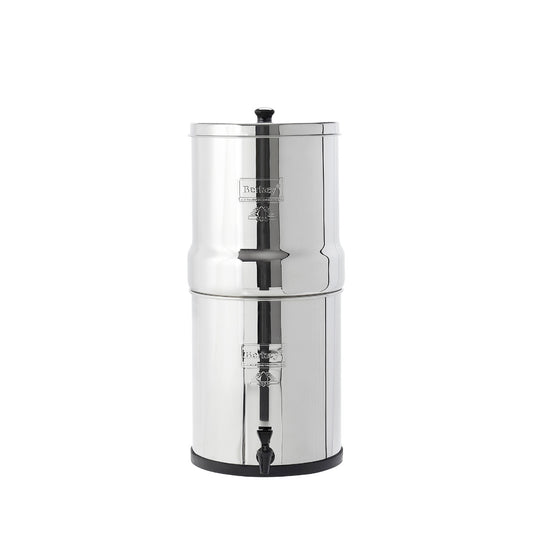
- $249.00
Travel Berkey Water Filter
Out of stock
- $278.00
Big Berkey Water Filter
- $305.00
Royal Berkey Water Filter
- $60.00
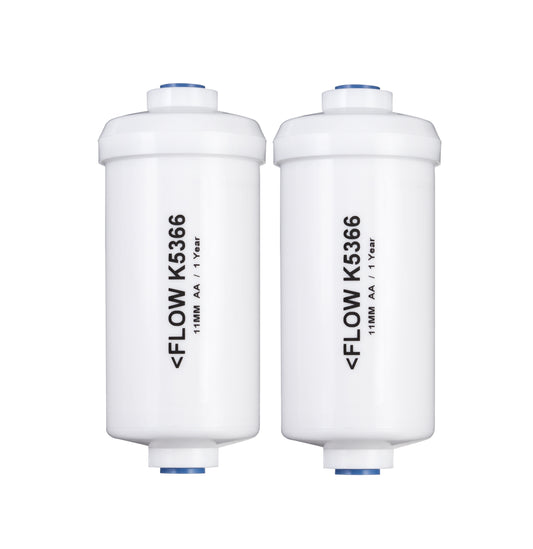
PF-2 Fluoride and Arsenic Water Filters (2) Fits Black Berkey Filters Only
- $120.00
Black Berkey Filters
What Does A Berkey Water Filter Remove?
Top 3 ways a Berkey Water Filter will benefit your life
Drink To Your Health
Berkey water filter systems are far superior to other filtration systems because they remove harmful pathogenic bacteria, cysts, parasites, and unhealthy chemical contaminants such as Chlorine to levels higher than 99.99%, while at the same time leaving in the essential minerals your body needs.
Did you know that over 60% of US municipal water is fluoridated?
Berkey water filter systems also distinguish themselves from many other filtration systems by having the capabilities to significantly reduce fluoride via the "PF" line of filters.
Affordability
Each durable Black Berkey Water filter will last up to 3000 gallons (6000 gallons per set of 2).
This is much longer than the majority of water filter solutions on the market.
At 10 gallons per week, this equates to more than 11.5 years of healthy clean drinking water!
Including the fluoride filters, 1 gallon of Berkey water costs just 7 cents!
Stop and think how much money you could save by the simple reduction in bottled water purchases by regularly using water filtered by your Berkey water filter.
Versatility
Berkey Water Filter systems are capable of purifying both treated water (municipal/city water) and untreated raw water from such sources as remote lakes, streams, stagnant ponds, and water supplies in foreign countries.
The micro-pores within the self-sterilizing and re-cleanable Black Berkey water filter purification elements are so small that pathogenic bacteria are simply not able to pass through them.
Due to the fact that the Berkey water filters do not require electricity and are portable, they become a lifesaver during times of flooding, loss of electricity, and other life threatening emergencies.
Subscribe to our newsletter
To be notified of any future discounts or holiday specials
A letter From Berkey Water
At Berkey, we understand that choosing the right water filter for you and your family can be a daunting task. Made in the USA, Berkey Water Filters are the gold standard of gravity filtration, thanks to their long established reputation in the industry combined with their outstanding filtration test results. Please don`t hesitate to contact us if you have any questions about Berkey filtration, would like to learn more about our deals for bulk Berkey water filter purchases, or our discounts for charity organizations and missionaries.
Latest posts
Chemicals Formed During Water Treatment Process Responsible for 5% of European Bladder Cancer Cases Annually
Every year, over 6,500 European residents get bladder cancer as a result of exposure to chemical compounds that form during the water treatment process, contributing to around 5% of bladder cancer reported in Europe annually, according to the results of a research project led by scientists at the Barcelona Institute for Global Health (ISGlobal) that analyzed the presence of trihalomethane (THMs) compounds in drinking water across 26 countries in the European Union. Trihalomethanes are byproducts that form when drinking water is disinfected to kill off harmful pathogens that could potentially make us sick. Previous studies have found a link between long-term exposure to trihalomethanes — whether via inhalation, ingestion or absorption through the skin — and a higher risk of bladder cancer. For the latest study, which was recently published in the scientific journal Environmental Health Perspectives, the authors analyzed recent data reflecting THM levels in European drinking water and estimated how much exposure to these contaminants in drinking water contributed to bladder cancer cases in Europe. According to study coordinator Cristina Villanueva, a researcher at ISGlobal, the greatest challenge the authors faced was collecting sufficient data on national THMs levels from every country in the European Union; an issue she hopes will be resolved in the future. The authors sent questionnaires to those responsible for managing the water quality of municipal drinking water supplies, requesting data on total trihalomethanes levels as well as concentrations of individual THMs (bromoform, bromodichloromethane, chloroform and dibromcohloromethane) at water treatment facilities, as well as various points in the distribution network and at the consumers tap. This was supplemented with additional data sourced elsewhere such as scientific journals, reports and publicly available online data.Data on THMs levels from 2005-2018 were collected for 26 countries within the European Union — with Romania and Bulgaria being the only two exceptions due to limited available data — accounting for drinking water serving 75% of the European population. The study revealed that THM levels differ considerably between countries. While the average level of THMs in drinking water (11.7 μg/L) was well below the EU safety standard of 100 μg/L, the maximum reported levels for nine countries did exceed the maximum permissible limit. Countries with maximum THMs readings that exceeded the EU safety recommendation include Poland, Hungary, Italy, Cyprus, Portugal, Spain, Estonia, the United Kingdom and Ireland. Bladder Cancer Link For the study, the researchers estimated the number of bladder cases attributable to exposure to THMs in drinking water using a "statistical calculation linking average levels of trihalomethanes with the international information available of bladder cancer incidence rates for each country." The authors estimated that a total of 6,561 bladder cancer cases were attributable to THMs exposure in the EU each year. While the number of attributable cases differed considerably between countries, the authors found that the number of attributable cases was highest in Spain (1,482 cases) and the United Kingdom (1,356 cases), which was partly due to the larger populations of these two countries and their higher incidence of bladder cancer. The countries that had the highest percentage of bladder cancer incidences attributable to trihalomethane exposure were Cyprus (23%), Malta (17%), Ireland (17%), Spain (11%) and Greece (10%); while Lithuania (0.4%), Austria (0.4%), Germany (0.2%), Netherlands (0.1%), and Denmark (0%) had the lowest."Over the past 20 years, major efforts have been made to reduce trihalomethanes levels in several countries of the European Union, including Spain", said Manolis Kogevinas, a researcher at ISGlobal and a co-author of the study . "However, the current levels in certain countries could still lead to considerable bladder cancer burden, which could be prevented by optimizing water treatment, disinfection and distribution practices and other measures." To reduce the incidence of bladder cancer resulting from TMHs exposure, the researchers recommend that the focus should be on reducing THMs levels in countries that have the highest average THMs levels. The authors estimate that if THMs levels of the 13 countries with the highest average levels were reduced to the EU average, 2,868 cases of bladder cancer (i.e. 44% of the 6,500 current annual bladder cases attributable to THMs) could potentially be prevented. Journal Reference Iro Evlampidou, et al. Trihalomethanes in Drinking Water and Bladder Cancer Burden in the European Union. Environmental Health Perspectives, January 2020. https://doi.org/10.1289/EHP4495.
Read more-
![Chemicals Formed During Water Treatment Process Responsible for 5% of European Bladder Cancer Cases Annually]()
Aluminum may Promote Higher Levels of Lead in Drinking Water
Aluminum is a chemical included in a water treatment agent (aluminum sulfate) that is often used by water utilities during the coagulation process to purify drinking water. Consequently, it is common in tap water. However, it has recently also been found in the deposits of lead scale that form on the inside of lead water pipes. While the presence of aluminum in water pipes is not surprising, nor a health issue at the levels observed by researchers, its presence could have other, as yet unknown, implications in terms of drinking water quality.In particular, Daniel Giammar, a Professor of Environmental Engineering in the McKelvey School of Engineering at Washington University in St. Louis, was curious as to how the aluminum was affecting the behavior of lead in the scale on the interior surface of the pipes. "As long as the lead is bound to the scale, it doesn't enter the water system," he explained.Giammar and his colleagues, including Guiwei Li, a visiting PhD student from the Chinese Academy of Sciences, conducted several laboratory experiments and discovered that aluminum can effect the solubility of lead when conditions are favorable. The results of the study were recently published in the scientific journal Environmental Science & Technology. As the paper has been nominated as the ACS Editor's Choice, online access to the paper is free to the public. For the study, the researchers used simplified models to assess how aluminum, phosphate and a combination thereof, affected lead placed in a container of water with a similar composition to that found in municipal water systems. Their primary aim was to gain a clearer understanding of how these chemicals affected the solubility of lead, or more specifically, how much lead would dissolve and enter the water when exposed to these chemicals. They found that the container into which aluminum only was added, the solubility of lead remained unchanged, with concentrations of lead dissolving into the surrounding water at around 100 micrograms/L. In the container into which phosphate only was added, the solubility of lead decreased significantly from around 100 micrograms/L to less than 1 microgram/L. In the container into which both phosphate and aluminum were added, lead levels decreased from around 100 micrograms/L to around 10 micrograms/L of water. While lead concentrations of 10 micrograms/L do not exceed the safety standards for drinking water, Giammar points out that lead levels are still higher than those observed in the container without aluminum."This showed us things that were surprising," he said. "Some people would have thought that aluminum wasn't doing anything because it's inert. But then in our work, we saw that it actually affects lead solubility." "This tells us what our next experiment should be," said Giammar, who together with his team plan to expand this study by conducting similar experiments on real lead water pipes next.Journal Reference Guiwei Li, Yeunook Bae, Anushka Mishrra, Baoyou Shi, and Daniel E. Giammar. Effect of Aluminum on Lead Release to Drinking Water from Scales of Corrosion Products. Environmental Science & Technology; 2020 54 (10), 6142-6151; DOI: 10.1021/acs.est.0c00738
Read more-
![Aluminum may Promote Higher Levels of Lead in Drinking Water]()


Loading...