
Best Water Filter for an RV: Inline, Canister, or Countertop Gravity?
Last updated: October 06, 2026 By
Dan DeBaun
By
Dan DeBaun
Short answer: The best RV water setup uses two filters. A hose filter at the campground spigot protects your plumbing and cuts chlorine taste. A countertop gravity filter inside handles the water you drink and cook with. If you can only buy one, buy the one for the water you swallow.
For most RVs, a 1.5 gallon gravity filter like the Travel Berkey fits beside the sink, needs no hookup or power, and keeps working on tank water when you are parked without hookups.
Every campground has different water. One week it is city water with a strong chlorine smell. The next it is a well with iron stains in the sink. In between, you are drinking whatever is in the fresh tank. An RV water filter has to handle a new water source every few days.
This guide covers what is in campground water, the three types of RV filters, and how to combine them. We sell one of these filter types, so we have tried to be clear about where each option is strong and where it falls short, including ours.
What Is in Campground Water?
In short: campground water is treated, drinkable water from a town system or a permitted well. The usual problems are taste, smell, grit, and hardness, plus whatever the local supply is allowed to leave in.
RV parks must supply potable water, meaning water that meets drinking water standards. It comes from one of two places. Parks near towns use the city supply. That water is treated with chlorine or chloramine, and it can carry the same things any city tap carries: disinfection byproducts, traces of lead from old pipes, PFAS in some regions, and farm chemicals in rural areas. Parks far from town often run their own well. Well water is less likely to taste like chlorine but more likely to carry sediment, hardness, iron, manganese, or a sulfur smell.
You can often tell what you are dealing with before you hook up. A pool smell means heavy chlorine. Orange or black stains around the spigot mean iron or manganese. White crust means hard water. Grit in a clear hose fitting means sediment, usually from old park plumbing.
One limit applies to every filter in this guide: none of them override a water advisory. If a park or utility says the water should not be consumed, no RV filter, including the ones we sell, changes that. Use another approved source until the notice is lifted.
The Three Types of RV Water Filters
RV water filters fall into three groups, and each does a different job. This matters because many RV owners buy a hose filter thinking it is a drinking water filter. It is not.
1. Inline hose filters
These are the blue or white cylinders that screw onto the campground spigot ahead of your hose. The most common one is the Camco TastePURE. It uses a 20 micron sediment screen plus granular activated carbon and KDF media, costs about $17 to $25, and lasts roughly 500 gallons or one season. Clear2O and others make similar units.
They do two things well. They cut chlorine taste and smell, and they catch grit before it reaches your pump and fixtures. They are cheap enough to replace every trip.
Here is what they do not do. A 20 micron screen is coarse, and the small amount of carbon inside only touches the water for a split second at hose pressure. Hose filters are not built for lead, PFAS, VOCs, pharmaceuticals, or anything else dissolved in the water, and their makers do not claim otherwise. Think of an inline filter as plumbing protection with a taste benefit.
2. Canister systems
Canister systems are the step up. One to three filter housings sit on a bracket between the spigot and your hose. The best-known is the Clearsource Premier. It has a 5 micron carbon block first stage and a 0.2 micron absolute second stage, flows 6 gallons per minute or more, and costs about $500. Cartridges last about six months.
The appeal is that every drop entering the RV gets filtered at full flow, including shower and dish water. The tradeoffs are price, bay space, a required pressure regulator, and freeze risk in cold weather. Even a good carbon block at 6 gallons per minute has limited contact time. For dissolved chemicals, a canister beats a hose filter but is still a whole-RV compromise, not a drinking water solution.
3. Countertop gravity filters
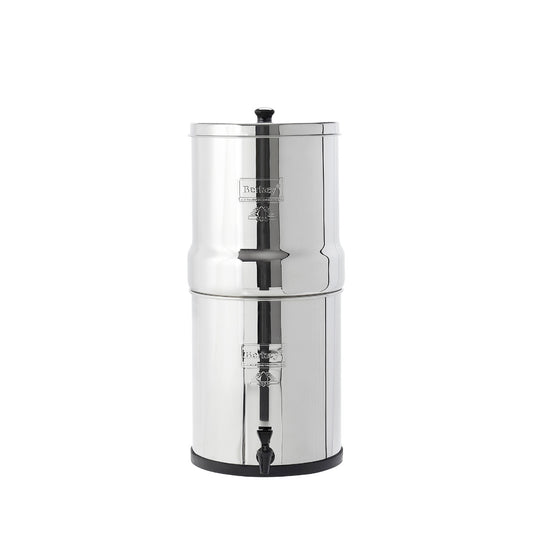
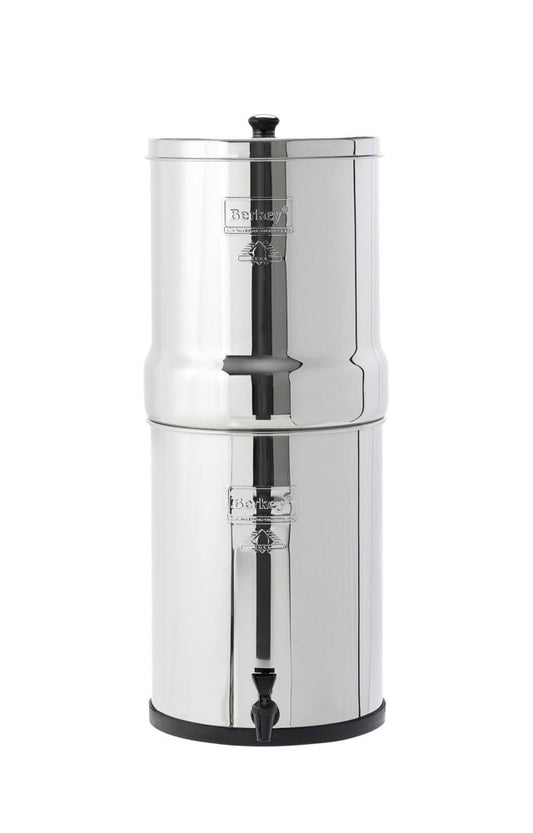
A gravity filter sits on the counter. You pour water in the top, it drips slowly through the filter elements, and it collects in the bottom chamber with a spigot. Berkey, ProOne, and Alexapure are the main brands. All are stainless steel and come in sizes from about a quart to several gallons.
Gravity filters only treat the water you drink and cook with. They do nothing for your shower or plumbing. In return, they do the one thing the other two types cannot. Water moves through the element slowly, so it stays in contact with the filter media for minutes instead of a split second. That is what lets a gravity element be lab tested against lead, PFAS, VOCs, and herbicides at meaningful levels. They also need no hookup, no pressure, and no power, so they keep working on tank water when you are parked without hookups.
The tradeoffs are real. A gravity filter takes counter space next to the sink, and most RVs have little to spare. It is slow, usually 1 to 4 gallons per hour. And it has to be emptied and secured before you drive.
How the Three Types Compare
| Feature | Inline hose filter | Canister system | Countertop gravity filter |
|---|---|---|---|
| What it treats | All water entering the RV | All water entering the RV | Drinking and cooking water only |
| Sediment | Yes, coarse (about 20 micron) | Yes, fine (0.2 to 5 micron) | Yes, at the element |
| Chlorine taste and odor | Partial | Yes | Yes |
| Lead, PFAS, VOCs, herbicides | Not designed for these | Limited, depends on cartridge and flow | Yes, with published lab testing (varies by brand) |
| Works without a hookup | No | No | Yes |
| Flow rate | Hose speed | 6+ gallons per minute | 1 to 4 gallons per hour |
| Typical cost | $17 to $30 | $300 to $500+ | $230 to $370 for RV sizes |
| Replacement | Every season or about 500 gallons | About every 6 months | Every few years (3,000 to 6,000 gallons per set) |
| Protects RV plumbing | Yes | Yes | No |
| Space needed | None | Storage bay | Counter or dinette |
Hard water note: none of these filters soften water. Hardness minerals pass right through carbon and gravity elements. If scale is your main problem, you need a portable RV water softener, which is a separate device.
The Setup That Works
Most full-timers end up with the same layered setup. We recommend it too.

- Pressure regulator at the spigot. Set it to 45 to 60 PSI. Campground pressure can spike well above what RV plumbing is rated for. A regulator protects your lines and any filter housing after it.
- Hose or canister filter after the regulator. This is the filter for all the water coming into the rig: shower, dishes, toilet, and the fresh tank. Its job is grit and chlorine taste, not drinking water quality. A $20 hose filter is enough for weekend trips. If you live in the RV and run showers and dishes on campground water every day, a canister system is the better choice here. It filters finer, flows faster, and its cartridges last months instead of weeks, so it costs less per gallon over a season.
- Gravity filter inside. This is the water you drink, brew coffee with, and cook with. Fill it from the sink faucet. That water has already passed through the spigot filter, so the elements last longer.
- Sanitize the fresh tank every 6 to 12 months and after storage. Use about a quarter cup of unscented bleach per 15 gallons of tank capacity, let it sit 4 to 12 hours, then flush until the smell is gone. Tank water that sits in the heat for weeks is one of the top causes of bad-tasting RV water, and no filter fixes a dirty tank.
If budget or space forces a choice, start with the filter for the water you swallow. Your plumbing can handle a little grit. You would rather not.
Choosing a Gravity Filter for an RV
Three things matter most in an RV: footprint, capacity for the people on board, and how the unit travels.
Measure your clearance first. Many RV sink counters have 16 to 20 inches between the counter and the upper cabinets. A gravity filter needs its full height plus a few inches to lift the lid and refill. If the sink is tight, use the dinette or a shelf near the door. Some owners keep the filter in a bin while driving and set it up at camp.
Match capacity to people, not to the RV. Two adults drinking and cooking use about 1 to 1.5 gallons of filtered water a day. A 1.5 gallon unit filled each evening covers that. A family of four is better off with 2-3 gallons.
Plan for travel day. Drain both chambers, nest the top chamber inside the bottom if your model allows it, and secure the unit in the sink, a padded bin, or a cabinet. Leave the elements installed. If flow slows after the elements sit dry for a while, re-priming them takes 5 to 10 minutes.
Do not let it freeze. Filter elements of any brand can crack if the water inside them freezes. Empty the system and bring the elements indoors before a cold snap.
Which Berkey Fits an RV?
We carry three Berkey sizes that make sense in an RV. All three use the same elements and are tested to the same reduction levels, so the choice is only about size and how you travel. Every new Berkey system ships with Black Berkey Elements while supplies last. Black Berkey Elements are not sold as standalone replacements; the authorized replacement is the Berkey Phoenix Element.


| Model | Travel Berkey | Go Berkey Kit | Big Berkey |
|---|---|---|---|
| Best for | Couples and small families in most RVs | Solo travelers, vans, tight counters | Families of 3 to 4, full-timers with counter space |
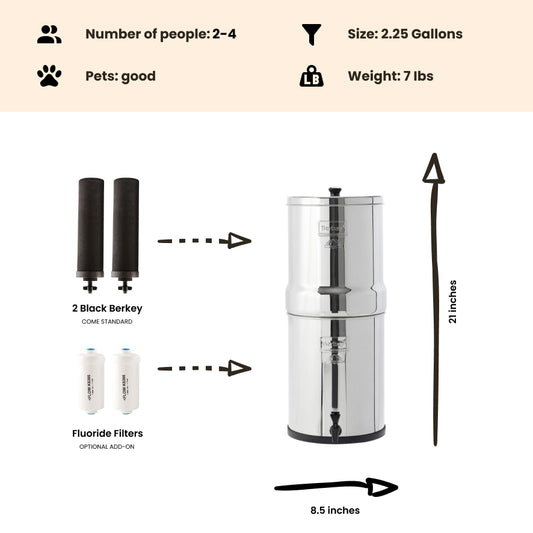
| Capacity | 1.5 gallons | 1 quart | 2.25 gallons |
| Height and diameter | 18 in by 7.5 in | 14 in by 4 in (10 in nested) | 19.25 in by 8.5 in |
| Flow rate | Up to 2.75 gallons per hour | Up to 1 gallon per hour | Up to 3.5 gallons per hour (2 elements) |
| Element life | 6,000 gallons per pair | 3,000 gallons (single element) | 6,000 gallons per pair |
| PF-2 fluoride and arsenic add-on | Yes | No | Yes |
| Price | $327 | $234 | $367 |
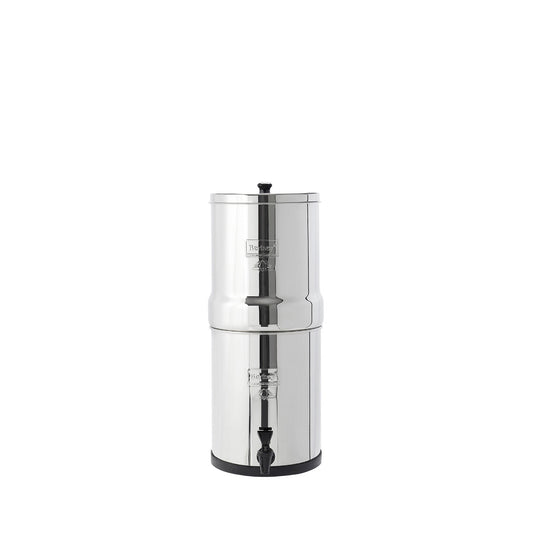
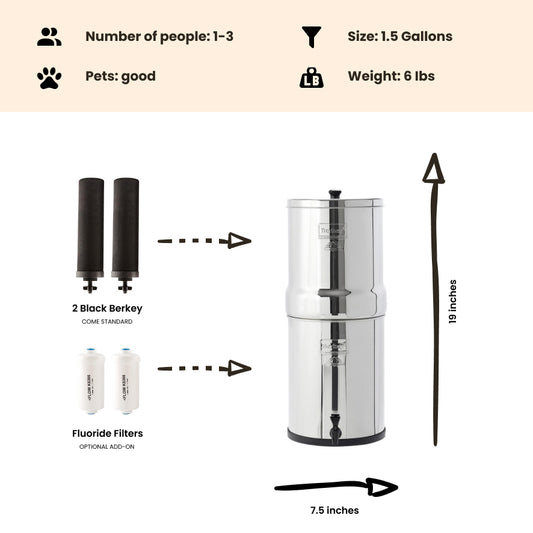
The Travel Berkey is the RV default. At 18 inches tall and 7.5 inches wide, it is the smallest system that still holds two elements, so it filters almost three times faster than the Go Berkey. The top chamber nests inside the bottom for travel, and it takes the optional PF-2 filters if fluoride or arsenic is a concern where you camp.
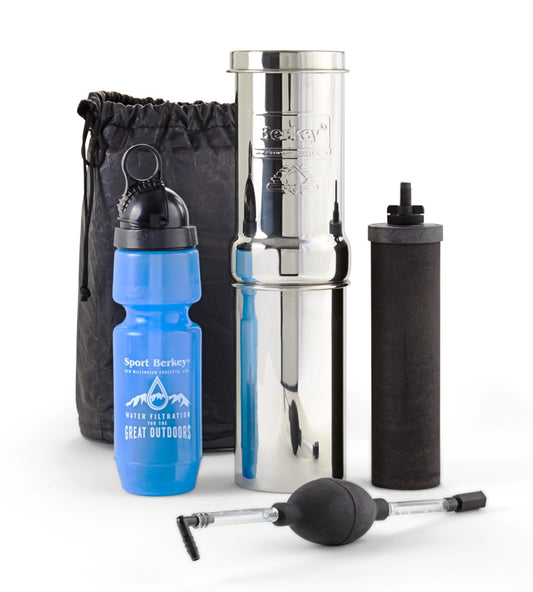
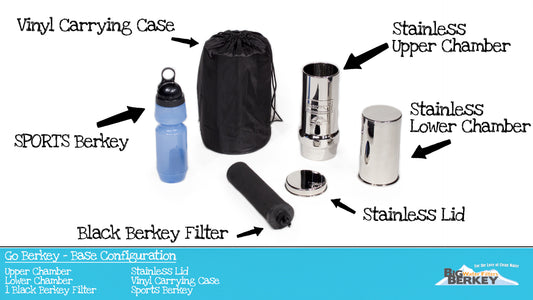
The Go Berkey Kit is for one or two people with almost no counter. It weighs 2.4 pounds, packs down to 10 inches, and comes with a carrying case and a 22 ounce Sport Berkey bottle. One element means about a gallon an hour, which is fine for one person and slow for a family. It does not take PF-2 filters.
The Big Berkey is for full-timers who cook. The extra three quarters of a gallon means one fill covers a family's day, and it can be upgraded to four elements for faster flow. It needs about 21 inches of clearance to refill comfortably, so measure the space by the sink before ordering.
Filter cost works out to about 2 cents per gallon over the life of a set of elements, a fraction of what bottled water costs on the road. Not sure which size fits your rig and crew? The system selector quiz narrows it down in under a minute.
For the full list of what the elements have been tested against, see the Black Berkey contaminant list and the Berkey Phoenix contaminant list, each with links to the lab reports.
Ready to set up your RV water?
Shop Travel Berkey Take the Size QuizFree shipping to the lower 48. Lifetime warranty on stainless steel chambers and hardware purchased here. 30-day returns on unused product.
Frequently Asked Questions
Can I use a Berkey in an RV?
Yes. The Travel Berkey is the most common RV choice because it holds two elements in an 18 inch footprint and nests for travel. Fill it from the sink faucet, drain it before driving, and keep it from freezing. It needs no hookup, pressure, or power, so it works the same on full hookups or on the fresh tank.
Do I still need a hose filter if I have a gravity filter?
For the plumbing, yes. A gravity filter only treats the water you pour into it. A hose or canister filter at the spigot catches sediment before it reaches your pump, water heater, and fixtures, and it cuts most of the chlorine taste in shower and dish water. The two do different jobs.
Is a hose filter enough for drinking water?
It improves taste and catches grit, and for many weekend campers that is enough. It is not built for dissolved contaminants like lead, PFAS, VOCs, or pharmaceuticals, and the makers do not claim it is. If those concern you, add a drinking water filter with published lab testing for them.
How do I secure a gravity filter while driving?
Empty both chambers, nest the top chamber inside the bottom, and set the unit in the sink, a padded bin, or a latched cabinet. Leave the elements installed. If flow slows after a long dry stretch, re-prime them, which takes 5 to 10 minutes.
Does hard water hurt a gravity filter?
Hardness minerals pass through the elements without damaging them, but they can leave a film in the bottom chamber over time. Wipe the chambers with a mild vinegar solution when you clean them. If scale is a constant problem at your usual parks, a portable RV water softener at the spigot is the fix. No drinking water filter softens water.
What size gravity filter do two full-timers need?
A 1.5 gallon unit filled once a day covers two adults drinking, making coffee, and cooking. The Travel Berkey is the usual pick. Step up to 2.25 gallons for three or more people, or if you refill bottles for hiking and pets.
Will a Berkey fit under RV cabinets?
Measure first. Many RV sink counters have 16 to 20 inches of clearance. The Travel Berkey is 18 inches tall and needs a few extra inches to lift the lid, so it often lives on the dinette or a nearby shelf instead. The Go Berkey Kit at 14 inches fits almost anywhere.
Sources
- Camco TastePURE KDF/Carbon RV Water Filter product specifications (20 micron, GAC and KDF media): campingworld.com
- Clearsource Premier RV Water Filter System specifications (two-stage, 5 micron carbon block and 0.2 micron absolute, 6 to 6.5 GPM): clearsourcerv.com
- TechnoRV, A Complete Guide to RV Water Quality Filtration Systems (tank sanitizing ratio, pressure regulator range, replacement intervals): technorv.com
- RV LIFE, Is Your RV Water Filter Enough for Safe Drinking Water? (filter categories, NSF/ANSI 42 vs 53, advisory guidance): rvlife.com
- U.S. EPA, Consumer Confidence Reports (how to look up a local water system's annual quality report): epa.gov/ccr
- Berkey product specifications: Travel Berkey, Go Berkey Kit, and Big Berkey product pages on this site.

Dan DeBaun
-
-
Regular price $327.00Regular priceUnit price per
-
Our most popular system. Serves 1 to 4 people.
Regular price From $367.00Regular priceUnit price per -
Regular price From $408.00Regular priceUnit price per
-
Regular price From $451.00Regular priceUnit price per
-
Regular price From $478.00Regular priceUnit price per
-
Regular price $332.50Regular priceUnit price per
$350.00Sale price $332.50Sale