Updated September 2026
Nitrogen fertilizer applied to farmland can keep leaching into groundwater as nitrate for 50 to 100 years after it was used, according to long-term isotope tracking research, and nitrate is now the most widespread regulated contaminant found in US drinking water wells. A national USGS analysis of 320 streams found that where groundwater supplies a large share of winter flow, nitrate levels are still trending upward in twice as many streams as they're trending down, even in areas where farmers have cut fertilizer use. That's the legacy nitrogen problem: contamination caused by fertilizer applied decades ago, still working its way into the water supply today.
Quick answer: Fertilizer nitrogen that isn't taken up by crops doesn't disappear. Some of it stays locked in agricultural soil for 30-plus years and continues seeping into groundwater as nitrate on a slow, multi-decade timeline. Research tracking labeled nitrogen from crops fertilized in 1982 found roughly 12 to 15% of it still present in the soil three decades later, still migrating toward groundwater. The EPA's enforceable limit for nitrate in drinking water is 10 mg/L, and independent lab testing shows Berkey Phoenix filter elements reduce nitrate by 99.0% and nitrite by more than 99.9% (Atom Testing Laboratory). Black Berkey elements have not been independently lab-tested for nitrate specifically, so this data applies to Phoenix elements.
The 100-Year Timeline: What the Isotope Tracking Study Found
The clearest evidence that fertilizer nitrogen lingers for decades comes from a study led by Mathieu Sebilo at the Universite Pierre et Marie Curie in Paris and Bernhard Mayer, head of the Applied Geochemistry Group at the University of Calgary's Department of Geoscience, published in the Proceedings of the National Academy of Sciences. The researchers used nitrogen-15, a stable isotope, to tag fertilizer applied to wheat and sugar beet crops in France in 1982, then tracked where that specific nitrogen ended up over the following 30 years.
They found that 61 to 65% of the tagged fertilizer was taken up by the crops during the study period. But 12 to 15% remained locked in the organic matter of the soil three decades later, and 8 to 12% had already seeped downward as nitrate. The researchers project that seepage will continue for another 50 years or more, meaning roughly 15% of the nitrogen applied in 1982 is expected to reach groundwater across a window of about 100 years total. "There's a lot of fertilizer nitrogen that has accumulated in agricultural soils over the last few decades which will continue to leak as nitrate towards groundwater," Mayer said of the findings.
This Isn't Isolated: USGS Data Shows It's a National Pattern
A follow-up question the 2013 isotope study couldn't answer on its own is whether legacy nitrogen is actually showing up as a measurable trend across US waterways, or whether it's a localized phenomenon. USGS researchers Henry Johnson and Edward Stets addressed that directly in a national analysis of 320 streams across the contiguous United States, examining winter low-flow conditions from 2002 to 2012, when groundwater (rather than surface runoff) dominates stream flow.
In streams where groundwater supplied more than 40% of winter nitrate loads, upward nitrate trends outnumbered downward trends by roughly 2 to 1, despite decades of nutrient management efforts by farmers and regulators. The USGS's conclusion was that accumulated "legacy nitrogen," slowly released from groundwater and wastewater effluent, explains why nitrate keeps climbing in some watersheds even as current-year fertilizer application has leveled off or declined. Elevated concentrations above 2 mg/L clustered in fertilizer-intensive agricultural regions and high-density urban areas alike.
How the Nitrogen Piles Up in Farmland Soil in the First Place
Separate research led by Nandita Basu and Kim Van Meter at the University of Waterloo helps explain the mechanism behind that accumulation. Analyzing more than 2,000 soil samples across the Mississippi River Basin, the team found nitrogen systematically building up in agricultural soils over time, often at depths of 10 to 40 inches below the surface rather than in the topsoil layer most people picture. Their modeling suggested this accumulated "legacy" nitrogen could keep leaching into freshwater systems for more than 30 years after a farm stops applying nitrogen fertilizer entirely.
"A large portion of the nitrogen applied as fertilizer has remained unaccounted for over the last decades," Basu said. "The fact that nitrogen is being stored in the soil means it can still be a source of elevated nitrate levels long after fertilizers are no longer being applied." Van Meter and her co-researchers pointed to increased soybean cultivation and changes in tillage practices, on top of fertilizer volume itself, as contributing factors over the roughly 80-year window their data covered.
Why this matters for homeowners, not just farmers: Legacy nitrate isn't limited to fields actively being fertilized right now. A well or municipal source downstream of land that was farmed decades ago can still be affected today, which is part of why nitrate testing matters even in areas where current agricultural activity looks minimal.
The Des Moines Water Works Case: What Actually Happened
The clearest real-world example of legacy nitrate's cost is Des Moines Water Works in Iowa, one of the largest utilities affected by nitrate pollution in the Raccoon and Des Moines River watersheds. In 2015, the utility sued drainage districts in three upstream counties, arguing they should be held responsible for nitrate levels running more than double the federal drinking water standard. A federal court dismissed the case in March 2017 after the Iowa Supreme Court ruled that drainage districts have sovereign immunity from damage claims under state law, so the lawsuit itself did not succeed.
What didn't go away is the underlying problem the lawsuit was about. Des Moines Water Works still operates one of the largest nitrate removal facilities of its kind in the world, built specifically to keep pace with periodic nitrate spikes in its source rivers, and the utility continues to report elevated nitrate events during high-runoff periods. More recent state-level monitoring shows the same regional pattern: Minnesota's 2023 to 2024 drinking water report found that while over 99% of the state's public water systems stayed under the federal nitrate limit, concentrations above 3 mg/L (well under the legal limit but a meaningful marker of agricultural influence) were concentrated in the state's southwestern, southeastern, and central farming regions.
What Regulators Consider Safe, and Why Some Wells Still Exceed It
The EPA's enforceable Maximum Contaminant Level for nitrate in drinking water is 10 mg/L, measured as nitrogen, set specifically to protect against methemoglobinemia (commonly called blue baby syndrome), a condition where nitrate interferes with oxygen transport in infants' blood and can be fatal in severe cases. Nitrite, a related but chemically distinct compound, carries its own separate MCL of 1 mg/L because it's more directly reactive in the bloodstream at much lower concentrations.
Private wells are where the risk shows up most. A USGS survey of shallow household wells in agricultural areas found more than one in five exceeded the federal nitrate standard, and private wells aren't subject to the same mandatory testing rules that apply to public water systems. If you're on a private well anywhere near current or historically farmed land, nitrate is one of the more likely contaminants worth testing for directly, rather than assuming it isn't present because your area doesn't look agricultural today.
Does Berkey Remove Nitrate and Nitrite?
Yes, with an important distinction between Berkey's two current filter elements. Phoenix New Millennium Edition elements, independently tested by Atom Testing Laboratory, reduce nitrate by 99.0% and nitrite by more than 99.9%. Black Berkey elements have their own independent nitrite result, greater than 95% reduction, but have not been independently lab-tested for nitrate specifically, so the nitrate figure below applies to Phoenix elements only.
Scroll to see full results
| Contaminant |
Influent |
Effluent |
Reduction |
| Nitrate (Phoenix) |
42 µg/L |
0.3 µg/L |
99.0% |
| Nitrite (Phoenix) |
3.8 µg/L |
<0.1 µg/L |
>99.9% |
| Nitrite (Black Berkey) |
Independent lab testing |
>95% |
Nitrate and nitrite are chemically different compounds, and lab testing needs to confirm each separately rather than assuming a filter effective against one automatically handles the other. Full test conditions and the complete lab reports are on the Berkey test results page and the Black Berkey Complete Contaminant List.
What To Do If Your Well Tests High for Nitrate
This lab data reflects controlled testing at a specific challenge concentration, not every possible real-world scenario. If a well test comes back well above the 10 mg/L nitrate MCL, especially in a household with infants, pregnant women, or anyone mixing water into infant formula, the safer immediate step is switching to a confirmed nitrate-free water source (bottled or otherwise) while arranging retesting after filtration to confirm the level has actually come down, rather than assuming any single-pass filter result applies to your specific water. Reverse osmosis is also worth considering for households with consistently high source-water nitrate, since it's a different removal mechanism than gravity filtration and is well established for nitrate specifically.
Frequently Asked Questions
How long does nitrogen fertilizer contaminate groundwater after it's applied?
Research tracking isotope-labeled fertilizer nitrogen found it can continue leaching into groundwater as nitrate for 50 to 100 years after application. About 12 to 15% of fertilizer nitrogen applied in one growing season was still present in agricultural soil three decades later, continuing to migrate downward.
Is nitrate contamination getting better or worse in US water?
Mixed, and worse in some areas than fertilizer trends alone would suggest. A USGS analysis of 320 streams found that where groundwater dominates winter stream flow, nitrate levels are trending upward in roughly twice as many locations as they're trending down, a pattern researchers attribute to decades of accumulated legacy nitrogen still working through the soil rather than current-year application.
What is the legal limit for nitrate in drinking water?
The EPA's enforceable Maximum Contaminant Level is 10 mg/L for nitrate, measured as nitrogen, and 1 mg/L for nitrite. Both limits exist primarily to protect infants from methemoglobinemia, commonly known as blue baby syndrome.
Did Des Moines Water Works win its nitrate lawsuit against upstream farm drainage districts?
No. The lawsuit, filed in 2015, was dismissed by a federal court in March 2017 after the Iowa Supreme Court found the drainage districts had sovereign immunity from the claims. The utility's underlying nitrate problem didn't go away with the dismissal; Des Moines Water Works still operates one of the largest nitrate removal facilities in the world to manage periodic nitrate spikes in its source rivers.
How common is nitrate contamination in private wells?
A USGS survey of shallow household wells in agricultural areas found that more than one in five exceeded the federal nitrate standard. Private wells aren't subject to the routine mandatory testing that public water systems undergo, so nitrate can go undetected for years without homeowner-initiated testing.
Do Berkey filters reduce nitrate?
Berkey Phoenix New Millennium Edition elements, independently tested by Atom Testing Laboratory, reduced nitrate by 99.0% (from 42 µg/L to 0.3 µg/L) and nitrite by more than 99.9%. Standard Black Berkey elements have not been independently lab-tested for nitrate specifically, so this data applies to Phoenix elements, the current authorized replacement element.
Is nitrate the same thing as nitrite?
No. They're related nitrogen compounds but chemically distinct, and the EPA regulates them under separate limits (10 mg/L for nitrate versus 1 mg/L for nitrite) because nitrite is more directly reactive in the bloodstream at lower concentrations. Lab testing needs to confirm reduction of each separately.
What should I do if my well tests high for nitrate?
If a test comes back well above the 10 mg/L MCL, especially in a household with infants or anyone preparing infant formula, switch to a confirmed nitrate-free water source immediately and retest after any filtration step to confirm the level actually dropped rather than assuming it did. For consistently high source-water nitrate, reverse osmosis is also worth considering alongside gravity filtration, since it works by a different removal mechanism.
See the Full Independent Lab Data
Nitrate and nitrite results are part of Phoenix's 200+ contaminant testing panel, backed by downloadable lab reports.
Dan DeBaun
Dan has spent 18 years in the water filtration industry and holds an engineering degree and an MBA from Rutgers University. He owns and operates BigBerkeyWaterFilters.com, the leading US Berkey dealer. See independent media coverage of Berkey testing and reporting.


 By
Dan DeBaun
By
Dan DeBaun




this is very interesting, I just got your post on fb...the deal here is that I live in the middle of wheat fields..thousands of acres of it, they fly over and spray fertilizer and herbicide, they drive over the fields and do the same..every year at least twice I get bad tummy, and I was hoping it wasn't the water from my well..what do you advise?
Hi Jeanna -
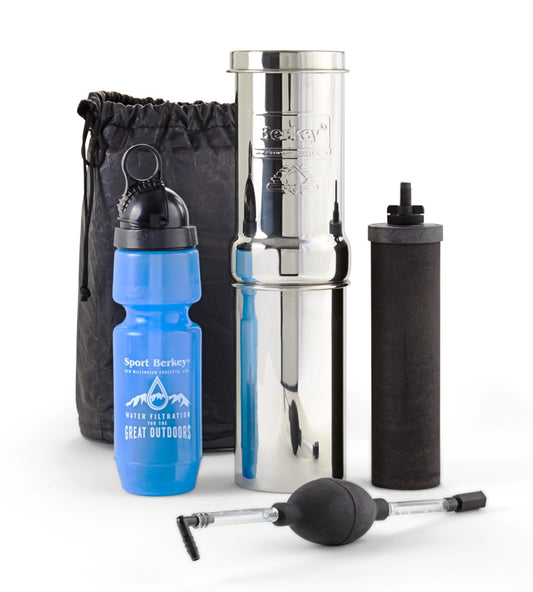
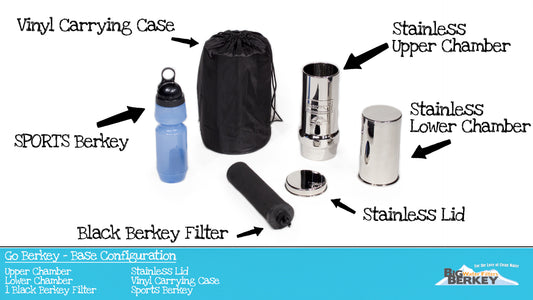
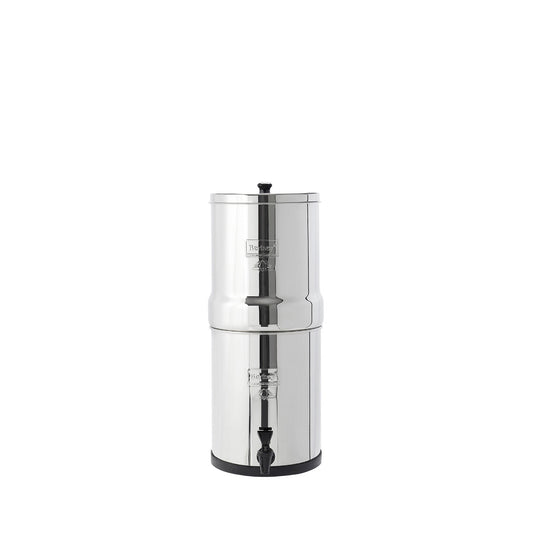
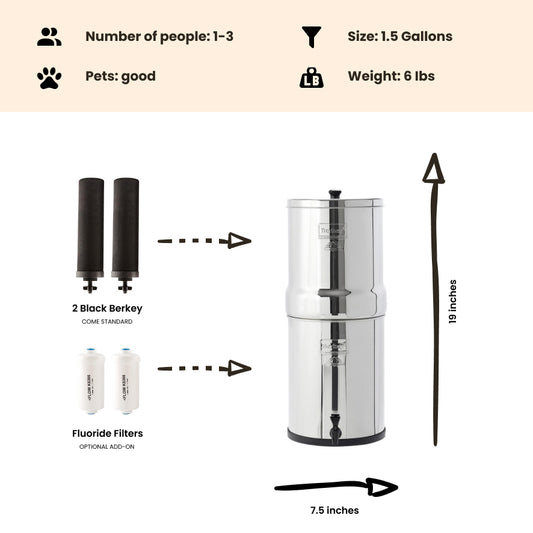
Any of the systems equipped with the black berkeys that come standard will remove herbicides/pesticides from your water.
Thanks
Dan
Hi Jeanna -
Any of the systems that come standard with the black berkey will be able to remove these pesticides/herbicide contaminants from the water.
Thanks
Dan