The CDC recommends fluoride in tap water at 0.7 milligrams per liter, and the American Dental Association (ADA) and American Academy of Pediatrics (AAP) call it safe and effective. Critics have long questioned it over consent, dose control and possible effects on children's brain development. Since 2024, a federal review, a court case, two state bans and a new EPA review have revived the debate.
The short version
- US cities have added fluoride to water since 1945 to reduce tooth decay. About 63% of Americans get fluoridated tap water.
- A 2024 federal review linked fluoride above 1.5 mg/L to lower IQ in children. It did not have enough data to judge 0.7 mg/L.
- Utah and Florida stopped community fluoridation in 2025. The EPA is reassessing fluoride's health effects.
What Water Fluoridation Is, and the Numbers People Mix Up
Fluoride is a mineral found naturally in rocks, soil and most groundwater. Fluoridation means a utility adjusts the fluoride in public water to a level meant to prevent cavities.
Grand Rapids, Michigan, became the first city to do this on January 25, 1945, according to the CDC. The National Institute of Dental and Craniofacial Research reports that tooth decay among the city's children fell by more than 60% over the following 10 years.
By the end of 2022, about 209 million people, or 62.8% of the US population, received fluoridated water, per CDC statistics.
One milligram per liter (mg/L) equals one part per million (ppm).
| Number |
Who sets it |
What it is for |
| 0.7 mg/L |
US Public Health Service (2015) |
The recommended level for adding fluoride. It replaced a 1962 range of 0.7 to 1.2 mg/L that varied by climate. |
| 2.0 mg/L |
EPA secondary standard (not enforceable) |
A guideline to help prevent tooth discoloration and pitting in children. |
| 4.0 mg/L |
EPA maximum contaminant level (enforceable, set in 1986) |
The legal limit, set to protect against bone disease, including bone pain and tenderness. |
Sources: EPA secondary standards, EPA primary standards.
The Case for Fluoridation
-
Fewer cavities. The CDC says fluoridated water reduces cavities by about 25% in children and adults.
-
Low cost. The CDC estimates communities save an average of $32 per person per year on cavity treatment.
-
Works alongside toothpaste. The CDC says water keeps a low level of fluoride in the mouth all day, and using it with toothpaste protects more than either alone.
-
A public health milestone. The CDC named it one of the ten great public health achievements of the 20th century, as the NIDCR notes.
-
Safe at 0.7 mg/L. In November 2025, the AAP said evidence does not support harm to brain development at the recommended level.
The Case Against, or for Caution
The best-known opponent is the Fluoride Action Network (FAN), an advocacy group. FAN's main points, as it lays them out:
-
Consent. Adding fluoride treats a whole community for a health purpose without each person agreeing to it.
-
Dose cannot be controlled. People drink very different amounts of water, so intake varies widely.
-
The benefit is mostly topical. They argue fluoride works mainly on the tooth surface, so toothpaste beats swallowing it.
-
Other countries do without it. FAN says most of Western Europe does not fluoridate water and that decay rates there also fell.
-
Vulnerable groups. They say bottle-fed babies can get far more fluoride than breastfed babies, and that people with kidney disease clear fluoride more slowly.
-
Brain development. They cite studies linking higher fluoride exposure to lower IQ in children.
What the Newer Research Says
The 2024 federal review on IQ
In August 2024, the National Toxicology Program (NTP) concluded with moderate confidence that higher fluoride exposure, including drinking water above 1.5 mg/L, is linked to lower IQ in children. It found there was not enough data to say whether 0.7 mg/L affects IQ. It found no evidence of effects on adult thinking, and it was not designed to test fluoridated water alone.
The 2025 JAMA Pediatrics analysis
In January 2025, scientists from the NTP's parent institute published a meta-analysis in JAMA Pediatrics, which pools results from earlier studies. It combined 74 studies from 10 countries. None were from the United States, and 52 were rated at high risk of bias. Higher fluoride was linked to lower IQ scores overall. Below 1.5 mg/L in water, no clear link was found. Studies that measured fluoride in urine found a link even below 1.5 mg/L in urine.
Reactions split. In one editorial, Bruce Lanphear called the evidence not definitive but strong enough to treat fluoride as a neurotoxicant. In another, Steven Levy urged caution, citing flaws such as single urine samples, as STAT reported. The ADA said it gave no reason to change US practice, since the studies involved natural fluoride levels more than double the US recommended amount.
Two 2026 US studies
In April 2026, a PNAS study of more than 10,000 Wisconsin residents found community fluoridation was not linked to lower teen IQ or later-life thinking, Science News reported. A critic noted it missed exposure before birth and in infancy. In August 2026, a study of 2,514 US children in the American Journal of Epidemiology linked higher fluoride in public water during pregnancy, starting near 0.7 mg/L, to lower problem-solving and memory scores. Its authors said this shows an association, not proof of cause, per Ohio State University.
How big is the cavity benefit today?
An October 2024 Cochrane review found the benefit has shrunk. Studies from before 1975 showed about 2.1 fewer decayed baby teeth per child. Recent studies from the UK and Australia showed about 0.24 fewer, an uncertain estimate that may mean no benefit. The authors linked the change to the spread of fluoride toothpaste since the 1970s.
Dental fluorosis
Dental fluorosis is a change in tooth enamel from too much fluoride while teeth form, which only happens up to about age 8. The CDC describes it in the US as mostly mild and cosmetic, such as faint white spots.
In national survey data from 1999 to 2004, about 41% of children ages 12 to 15 had some fluorosis, up from about 23% in 1986 to 1987. Only 3.6% had moderate or severe cases, according to the National Center for Health Statistics. Newer 2011 to 2016 data showed higher rates, including 14.4% of youth ages 6 to 19 with moderate or severe cases, but a 2019 federal quality review reporting them urged caution because examiners may have scored cases differently over time.
Bone cancer and thyroid research
Bone cancer. A 2006 Harvard study found a possible link between fluoride in drinking water during childhood and osteosarcoma, a rare bone cancer, in boys but not consistently in girls. Its authors called the analysis exploratory. A 2011 follow-up from the same research program measured fluoride in bone samples and found no link. Of seven case-control studies on fluoride in drinking water and osteosarcoma, six found no link, according to a 2020 review.
Thyroid. A 2015 study of nearly 8,000 general practices in England found higher than expected rates of diagnosed underactive thyroid in areas with fluoride above 0.7 mg/L. Critics noted that it compared areas rather than individual people, and the authors could not account for fluoride from other sources. A 2017 Canadian study of national health survey data, which measured fluoride in urine and tap water, found no link between fluoride exposure and thyroid function.
What Has Changed in Law and Policy Since 2024
| Date |
Event |
| Sep 24, 2024 |
A federal judge orders the EPA to begin rulemaking on fluoridation under the Toxic Substances Control Act (TSCA). |
| Apr 7, 2025 |
The EPA announces a fast-tracked fluoride review. The HHS Secretary says he will tell the CDC to stop recommending fluoridation. |
| May 7, 2025 |
Utah's statewide ban takes effect. |
| Jul 1, 2025 |
Florida's law ending fluoridation takes effect. |
| May 21, 2026 |
A federal appeals court sets aside the 2024 court order. |
| Aug 3, 2026 |
The EPA releases its plan for a new fluoride health assessment. |
| Nov 2026 |
The plaintiffs ask the appeals court to rehear the case. |
The court case
In Food & Water Watch v. EPA, Judge Edward Chen of the Northern District of California found that 0.7 mg/L posed an unreasonable risk of reduced IQ in children under TSCA. He ordered the EPA to start rulemaking but did not say what the rule must be, as this legal summary explains. On May 21, 2026, the Ninth Circuit vacated that order on procedural grounds. In an unpublished decision, it said the lower court overstepped by holding a second trial on evidence the parties had not chosen to present. It sent the case back to be decided on the first trial's record, without ruling on whether 0.7 mg/L is risky. In November 2026, the plaintiffs asked the Ninth Circuit to rehear the case.
Federal agencies
The EPA limit is still 4.0 mg/L. Its August 2026 plan focuses on children's brain development and dental fluorosis. A draft will be open for public comment; no date has been set. The review would otherwise not have been due until 2030, per the EPA.
As of November 2026, the CDC's fluoridation pages still recommend 0.7 mg/L. In October 2025, the FDA said unapproved prescription fluoride products that are swallowed should not be used in children under 3, or in older children not at high risk of decay.
States
Utah's law, the first statewide ban, also lets pharmacists prescribe fluoride. Florida followed with a law that restricts certain water additives without naming fluoride, as NBC News reported. As of September 2026, no other state had passed a statewide ban that year, according to CareQuest Institute, a pro-fluoridation oral health group. It reported that bills to ban fluoridation or repeal fluoridation requirements stalled or died in 21 states, while New York passed a law requiring 90 days' notice and public comment before a municipality stops fluoridating.
How to Check Your Own Water
-
Zip code lookup. Enter a 5-digit zip code in our fluoridation lookup tool to see an estimate, based on CDC data, of how much of the surrounding area's population gets fluoridated water. It shows a county figure where CDC publishes one and a statewide figure where it does not, so it is not a reading for your exact address.
-
CDC's My Water's Fluoride. This CDC tool shows fluoride data for utilities in states that take part. It may show a target level rather than a live reading.
-
Your Consumer Confidence Report. Community water systems must send customers an annual water quality report by July 1. Call your utility or use the EPA's search tool.
-
Private wells. Natural fluoride levels vary, and some areas run high. Only a lab test can measure it, per the CDC, and your local health department can tell you where to test. Virginia Cooperative Extension recommends a certified lab.
Options If You Want Less Fluoride
According to the ADA's Fluoridation Facts, working reverse osmosis and distillation units reduce most of the fluoride in water. Some activated alumina and bone char filters can reduce significant amounts. Most carbon filters do not. Results depend on the filter's type, quality and age.
For formula, the CDC notes ready-to-feed formula is low in fluoride, and low-fluoride bottled water labeled distilled or demineralized is another option. The CDC suggests telling your dentist if you mostly drink low-fluoride water.
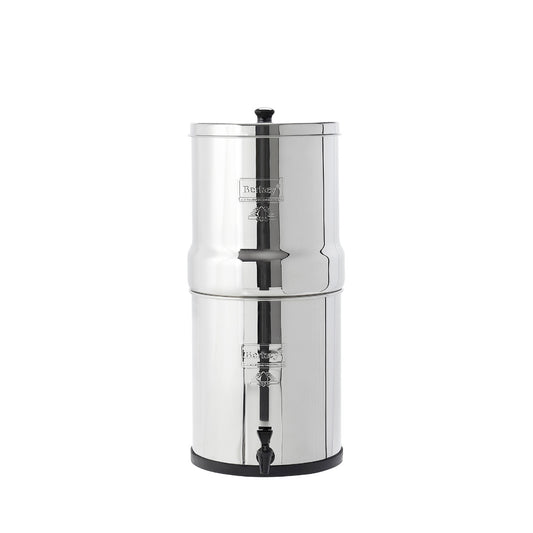
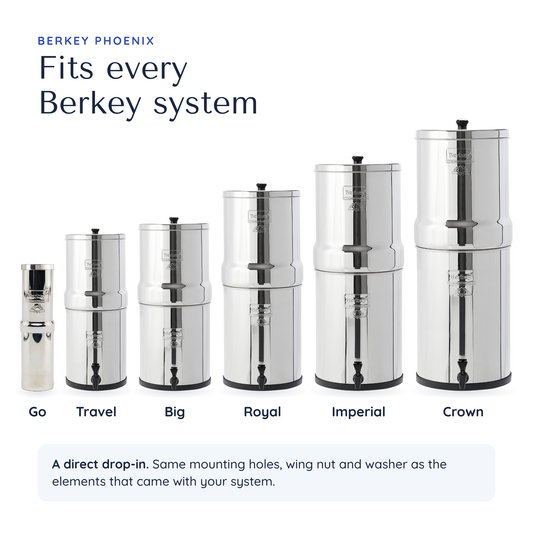
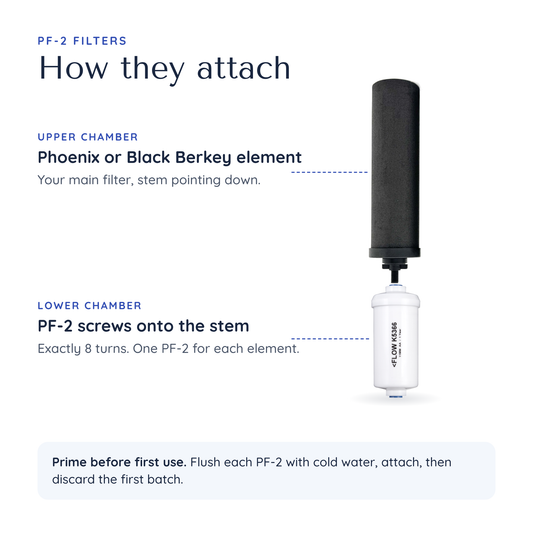
Berkey gravity systems offer an add-on option. Berkey PF-2 filters use activated alumina, attach inside a Berkey system, and pair with Black Berkey or Berkey Phoenix elements. They are tested for fluoride reduction of up to 99.75% and last 1,000 gallons or one year. See how Berkey fluoride filters work for test details.
If you have decided you want less fluoride in your water, our guide To Fluoridate or Not covers fluoride exposure in more detail and what a Berkey system with PF-2 filters can do about it.
Frequently Asked Questions
Is fluoride in drinking water safe?
The CDC recommends fluoride at 0.7 mg/L to prevent cavities, and the ADA and AAP say that level is safe. Critics say the evidence on children's brain development is not settled.
What is the legal limit for fluoride in tap water?
The EPA's enforceable limit is 4.0 mg/L, which protects against bone disease. A separate, non-enforceable guideline of 2.0 mg/L aims to prevent tooth staining. The recommended level for adding fluoride is 0.7 mg/L.
Does fluoride lower IQ?
The NTP concluded with moderate confidence that exposures above 1.5 mg/L are linked to lower IQ in children. It found too little data to say whether 0.7 mg/L has any effect. Two 2026 US studies reached different conclusions, and scientists disagree on how to weigh the evidence.
Which states have banned fluoride in water?
Utah and Florida ended community water fluoridation in 2025. As of September 2026, no other state had passed a statewide ban, though many cities and towns make their own decisions.
Do water filters reduce fluoride?
Reverse osmosis and distillation reduce most fluoride. Some activated alumina and bone char filters reduce significant amounts. Most standard carbon filters do not.
Is fluoridated water safe for baby formula?
The CDC says mixing formula with fluoridated water may raise the chance of mild fluorosis if formula is the main food. Ready-to-feed formula or low-fluoride bottled water lowers that chance.

 By
Dan DeBaun

 Out of stock

 Out of stockRegular price From $308.00Regular priceUnit price per





I just bought a big berkey, and now I am told that these filters do not remove fluoride. Please reply.
"Remember that only distilling water will remove fluoride, even if companies claim their filters will remove fluoride, it can't be true as Charlotte Gerson has always said, the fluoride molecule is just to tiny for filters to filter it out. Steam distilling is the only way to be sure it is 100% filtered. "
Hi Barbara -
This is not accurate, alumina does filter out fluoride from the water, and why it must be contained in a separate filter to be effective. The PF-2 filters have are tested to show these removal rates.
Thanks
Dan
Please advise if works as a reverse osmosis type filtration? Or does it at least reduce the flouride to a level of 0ppm????? I was informed to be careful what system I buy to eliminate flouride as alot only reduce the amount and do not eliminate it. I want it eliminated completely. Email me if possible or somehow please let me know before I spend this amount of money on something that is not what I am looking for and misleading. Thank you so much for your time and answers in advance
Hi Tiff -
The Berkeys are gravity filter systems and reduce fluoride up to approx the 99.75% mark with use of the <a href="https://www.bigberkeywaterfilters.com/pf-2-arsenic-and-fluoride-water-filters-2.html" rel="nofollow">PF-2 filters</a>.
Thanks
Dan
I am curious about my city water. Peachtree City, Ga 30269
Hi every one,
There is a website www.fluoridealert.org
This site, amongst other info, lists all communities in north america that have already stopped adding fluoride to there drinking water. This list is growing faster and faster.
They want people sick and dumb. Fluoride lowers your I.Q