Access to clean drinking water matters, and the right filter depends entirely on what's in your water, how much of your home you want treated, and how much space and budget you have. There is no single "best" water filter for everyone. Below we compare five well-regarded filters across five different categories: gravity-fed countertop, whole-house, whole-house for well water, portable, and pitcher.
Quick picks: Best gravity-fed/countertop: Big Berkey. Best whole-house: Aquasana EQ-1000. Best whole-house for well water: Home Master HMF3SDGFEC. Best portable: Travel Berkey. Best pitcher: ZeroWater 10-Cup Ready-Pour.
How to Choose the Right Water Filter
Before comparing products, it helps to know what you're actually filtering for. If your water smells, tastes off, or is discolored, you likely already suspect a problem. Other contaminants, like lead, PFAS, or pesticides, don't announce themselves and require testing to detect.
If your water comes from a public system, your annual Consumer Confidence Report (included with your water bill or available through the EPA's website) lists what's been detected. If you're on a private well, there's no CCR, so the only way to know what's in your water is to send a sample to a state-certified laboratory.
What to look for
-
Independent certification. Look for testing from NSF International, ANSI, or the Water Quality Association, not just marketing language claiming a product filters "to NSF/ANSI standards." A genuine certification names the specific standard and the specific contaminants covered.
-
Matched to your water. A filter is only as useful as its match to your actual water report. A whole-house sediment filter won't help with fluoride, and a pitcher won't soften hard water.
-
Design type. Whole-house systems treat every tap, including showers and laundry. Point-of-use systems (gravity filters, pitchers, faucet filters) treat only drinking water, and cost far less to buy and run.
-
Power source. Gravity-fed systems need no electricity or plumbing, so they can be moved between rooms, taken on trips, or set up in a rental without any installation. Whole-house and pitcher systems generally don't need power either, but most rely on your home's water pressure to function.
-
Ongoing cost. Factor in replacement filter cost and frequency, not just the sticker price. A cheaper system with frequent, expensive replacement filters often costs more over several years than a pricier system with a longer filter life.
-
Warranty. Check what's covered on the housing itself versus the filter cartridges, since these are usually warrantied separately.
Best Gravity-Fed / Countertop: Big Berkey
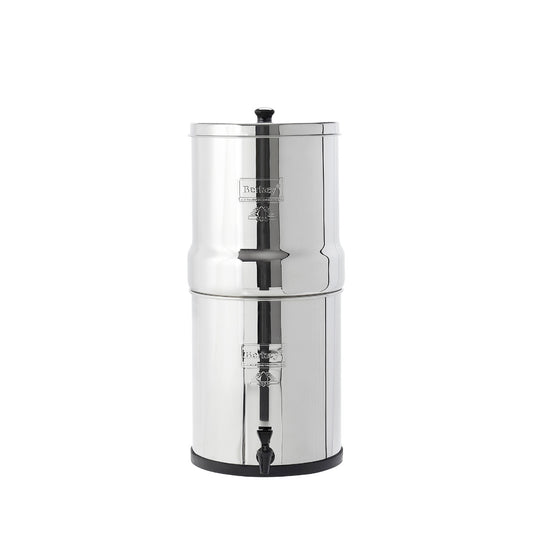
Big Berkey Water Filter
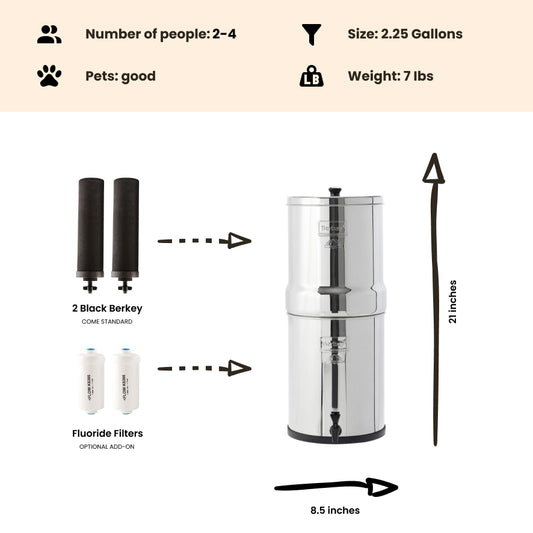
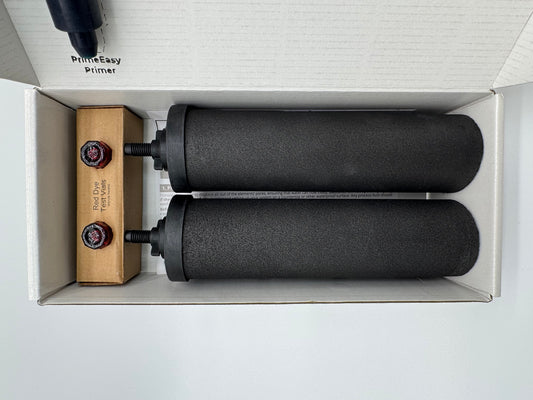
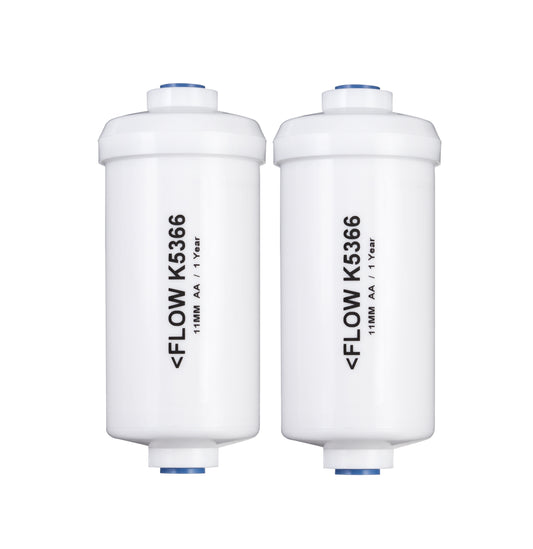
The Big Berkey is a two-chamber, gravity-fed system that needs no electricity or plumbing hookup. It holds 2.25 gallons and ships standard with 2 Black Berkey Elements, rated for 6,000 gallons per pair and independently tested against 200-plus contaminants including lead, PFAS, chlorine, pesticides, and pharmaceuticals. Because of an ongoing EPA regulatory matter, Black Berkey elements are currently unavailable as standalone replacements; the Berkey Phoenix New Millennium Edition, made by the same manufacturer, is the current in-stock replacement option and carries NSF/ANSI 42 and 372 certification.
Pros
- No power or plumbing required, fully portable
- Up to 4 elements can be added to speed flow to 7 gallons/hour
- Optional PF-2 elements add fluoride and arsenic reduction
- Runs at roughly 2 cents per gallon over the life of the elements
- Lifetime warranty on stainless steel and hardware when purchased from bigberkeywaterfilters.com
Cons
- With 2 elements, a full 2.25-gallon batch takes roughly an hour to filter through
- Treats drinking water only, not water used for bathing or laundry
Best Whole-House: Aquasana EQ-1000
Aquasana Whole House Water Filter (EQ-1000)
The Aquasana EQ-1000 filters every tap in the house through a three-stage system: a 5-micron sediment pre-filter, a copper-zinc oxidation and mineral stage, and a final activated-carbon stage. It's rated to reduce chlorine by up to 97% along with lead, mercury, herbicides, pesticides, and VOCs, and carries a 10-year or 1,000,000-gallon filter life with a flow rate up to 11.8 gallons per minute.
Pros
- Treats water at every fixture in the home, not just drinking water
- Very long filter life relative to other whole-house systems
- Optional UV add-on and salt-free softener alternative available
Cons
- Requires professional installation into your home's main water line
- Higher upfront cost than point-of-use systems
- Whole-house sediment and carbon filtration doesn't address biological contamination on its own; pair with disinfection (UV or chlorination) if your water source requires it
Best Whole-House for Well Water: Home Master HMF3SDGFEC
Home Master Whole House Three-Stage Filter
Well water carries different problems than municipal water, mainly sediment, iron, manganese, and hydrogen sulfide odor. The Home Master HMF3SDGFEC is built specifically for that: a 4-layer sediment filter (25 to 1 micron), a radial-flow iron and manganese reduction stage, and a coconut-shell carbon stage for taste and odor, rated for 100,000 gallons at up to 15 gallons per minute.
Pros
- Purpose-built for well water problems that municipal-focused filters don't address
- High flow rate, minimal pressure drop
- Straightforward 3-stage design, easier to maintain than more complex systems
Cons
- Doesn't address biological contamination; well owners should test annually and add disinfection separately if needed
- Best used as a pre-filter ahead of a dedicated drinking water system if your well water also has chemical contaminants
Best Portable: Travel Berkey
Travel Berkey Water Filter
The Travel Berkey is the compact sibling to the Big Berkey: 1.5-gallon capacity, 18 inches tall, 7.5-inch diameter, built for 1 to 3 people. It uses the same 2 Black Berkey Elements at up to 2.75 gallons per hour, and the upper chamber nests inside the lower for packing. It's TSA-compliant when empty.
Pros
- Smallest footprint in the Berkey lineup, fits apartments, RVs, and carry-on luggage
- Same filtration technology and 6,000-gallon element life as the larger systems
- No power needed, designed for everyday use with municipal tap water and private well water
Cons
- Smaller reservoir means more frequent refills for households over 3 people
Best Pitcher: ZeroWater 10-Cup Ready-Pour
ZeroWater 10-Cup Ready-Pour Pitcher
For the lowest upfront cost and simplest use case, the ZeroWater 10-Cup Ready-Pour uses 5-stage filtration and is IAPMO-certified to reduce lead, chromium, and PFOA/PFOS. It ships with a TDS meter so you can see when the filter needs replacing rather than guessing on a fixed schedule, and the Ready-Pour spigot lets you dispense while it's still filtering.
Pros
- Lowest upfront cost of any option on this list
- Fits in the refrigerator, no installation or plumbing
- Built-in TDS meter shows filter life in real time
Cons
- Smallest capacity, needs frequent refilling for a full household
- Filter life varies significantly with your water's starting TDS level, can mean frequent replacements on harder water
Side-by-Side Comparison
| Filter |
Category |
Capacity / Coverage |
Power Needed |
Best For |
| Big Berkey |
Gravity-fed countertop |
2.25 gal, 1-4 people |
None |
Drinking water, no plumbing changes |
| Aquasana EQ-1000 |
Whole-house |
Every tap, 1,000,000 gal |
Water pressure only |
Treating chlorine and chemicals at every fixture |
| Home Master HMF3SDGFEC |
Whole-house, well water |
Every tap, 100,000 gal |
Water pressure only |
Well water sediment, iron, and odor |
| Travel Berkey |
Portable gravity-fed |
1.5 gal, 1-3 people |
None |
Small spaces, travel, RVs |
| ZeroWater 10-Cup |
Pitcher |
10 cups |
None |
Lowest cost entry point, renters |
Our Take
These five filters solve different problems, so the "best" one depends on your situation. If you want to treat every fixture in your home, a whole-house system is the only option that does that; Aquasana for general municipal water, Home Master for well water. If you're looking for the best all-around value for drinking water specifically, without a plumbing modification and without being tied to your home's water pressure or electricity, the Big Berkey is our pick. It costs more upfront than a pitcher but runs at a fraction of the cost per gallon over time, works anywhere, and needs no installation.
For renters or anyone testing the waters on filtration for the first time, the ZeroWater pitcher is the lowest-friction way to start.
Do the Filters Above Remove the Same Things?
No, and this is the most common point of confusion when comparing filters across categories. Whole-house systems are built to reduce chlorine, sediment, and common chemical contaminants across large volumes of water quickly. Gravity-fed systems like the Berkey line use a slower, multi-stage media designed to reduce a very wide range of contaminants, including heavy metals and PFAS, to low levels. Pitchers generally target the contaminants most people care about most (lead, chromium, PFAS) at the lowest cost. None of these categories are interchangeable; match the filter type to the problem you're solving.
For the full breakdown of what a Berkey system specifically reduces, with lab sources, see our Black Berkey complete contaminant list or our overview of what contaminants a Berkey removes. To understand how gravity filtration works mechanically compared to other filter types, see what is a gravity-fed water filter.
Frequently Asked Questions
What is the single best water filter for most households?
For most households looking to filter drinking water without a plumbing modification, a gravity-fed system like the Big Berkey offers the best balance of contaminant reduction, running cost, and flexibility. If you want every tap in your home treated, a whole-house system is a different category entirely and serves a different need.
What is the best whole-house water filter?
The Aquasana EQ-1000 is a strong general-purpose whole-house option for municipal water, with a long filter life and a high flow rate. For well water specifically, the Home Master HMF3SDGFEC is purpose-built for sediment, iron, and manganese.
What is the best portable water filter?
The Travel Berkey is our pick for portability. It uses the same filtration media as the full-size Big Berkey in an 18-inch, 1.5-gallon system that's TSA-compliant when empty.
What is the best water filter pitcher?
The ZeroWater 10-Cup Ready-Pour is our pick among pitchers, thanks to its 5-stage filtration, IAPMO certification for lead, chromium, and PFOA/PFOS, and a built-in TDS meter that shows real filter life instead of a fixed schedule.
Do gravity-fed water filters need electricity or plumbing?
No. Gravity-fed systems like the Big Berkey and Travel Berkey work entirely by gravity, with no electricity, water pressure, or plumbing connection required, which is why they suit apartments, rentals, RVs, and travel as well as everyday kitchen use.
How do I find out what's actually in my water before choosing a filter?
If you're on a public water system, check your annual Consumer Confidence Report, included with your water bill or available through the EPA's website. If you're on a private well, there's no CCR, so send a sample to a state-certified laboratory for testing.
Are whole-house filters better than a gravity-fed system like Berkey?
They solve different problems rather than one being categorically better. Whole-house systems treat every fixture, including showers and laundry, but require professional installation and a larger upfront investment. Gravity-fed systems treat drinking water specifically, need no installation, and can be moved or taken anywhere.
What should I look for in independent certification claims?
Look for a specific standard and specific contaminants named by an accredited body like NSF International, ANSI, or the Water Quality Association, rather than general marketing language claiming a product meets "NSF/ANSI standards" without naming which standard or what was tested.

 By
Dan DeBaun
By
Dan DeBaun






What to do since the Black Berky water filters are not sold at the need of this year?
Hi Sharon -
We currently have them in stock and available on our site.
Thanks
Dan