Last updated: September 17, 2026 | By Dan DeBaun
Cloudy drinking water has two very different explanations depending on where it came from. Cloudy water straight from the tap is usually trapped air, which is harmless and clears from the bottom of the glass up within a minute or two. If it stays cloudy, it is turbidity: fine particles held in suspension, which research has linked to a higher risk of stomach illness even at levels within regulatory limits. Cloudy water from a new gravity filter such as a Berkey is a different thing entirely. It is almost always break-in dust from new filter media, it is not a sign of contamination, and the fix is to keep flushing the system until the water runs clear. This article covers both, including whether the cloudy first batches from a new Berkey can upset your stomach, and what to check if cloudiness does not go away.
Quick answer: Cloudy tap water that clears in a glass within a couple of minutes is air and is fine to drink. Cloudy tap water that stays cloudy is turbidity and is worth a call to your utility. Cloudy water from a new Berkey is harmless break-in media dust: discard the first 2 to 3 full batches, rinse the lower chamber between them, and it clears. Some people find the carbon-tinted first batches leave them feeling a little queasy, which is exactly why the manufacturer says not to drink them.
Cloudy Tap Water: Air, Turbidity, or Hardness?
Fill a clear glass from the tap and set it on the counter. What happens next tells you most of what you need to know.
-
It clears from the bottom up within a minute or two. That is dissolved air coming out of solution, common in cold weather, after plumbing work, or when the water is under high pressure. It is harmless.
-
It stays cloudy or has visible particles. That is turbidity: sediment, silt, rust from pipes, or organic matter in suspension. Turbidity itself is not necessarily dangerous, but it is a signal, and it is the case the research below is about.
-
It leaves a white film or spots as it dries. That is calcium and magnesium from hard water. It is a nuisance for fixtures and appliances, not a health concern.
If your tap water is persistently cloudy and the glass test rules out air, contact your water utility. Turbidity spikes often follow water main breaks, heavy rain, or hydrant flushing, and utilities are required to monitor for it. Follow any boil water advisory your utility issues, and see our guide on what to do during a boil water advisory.
What the Research Says About Turbidity and Stomach Illness
The reason turbidity deserves attention comes from a 2017 review by Dr. Anneclaire De Roos and colleagues at Drexel University's Dornsife School of Public Health, published in Environmental Health Perspectives. The team examined more than a dozen earlier studies from cities in North America and Europe that compared daily drinking water turbidity readings against daily reports of acute gastrointestinal illness (AGI), meaning vomiting and diarrhea.
Most of the studies found a link. The expected part was that the association showed up in cities with relatively high turbidity, often in unfiltered supplies. The surprising part was that several studies, including one in Philadelphia focused on children and older adults, found the association at turbidity levels well below regulatory limits. Suspended particles can shelter microorganisms from disinfectants during treatment, and cloudiness can also signal that runoff has carried sediment and other pollutants into the source water.
De Roos was careful about what the review does and does not show. Epidemiological studies of this kind cannot prove cause and effect, and the strength of the association varied by city, season, and treatment method. Her conclusion was that turbidity data is a cheap, useful screening tool for utilities to spot conditions that make a supply vulnerable, not that every cloudy glass is a health threat. For a household, the practical version is simple: persistent cloudiness from the tap is a reason to ask questions, not to panic.
Why Is My Berkey Water Cloudy?
If the cloudy water is coming out of a new Berkey system, or one you have just fitted with new elements, the cause is almost never your source water. It is dust from new filter media washing out during the first few fills, a normal part of break-in for any carbon or media-based filter. There are two sources, and they look slightly different.
Scroll right to see the full table.
| What you see |
Where it comes from |
Is it harmful? |
When it clears |
| White or milky cloudiness, white film in the lower chamber |
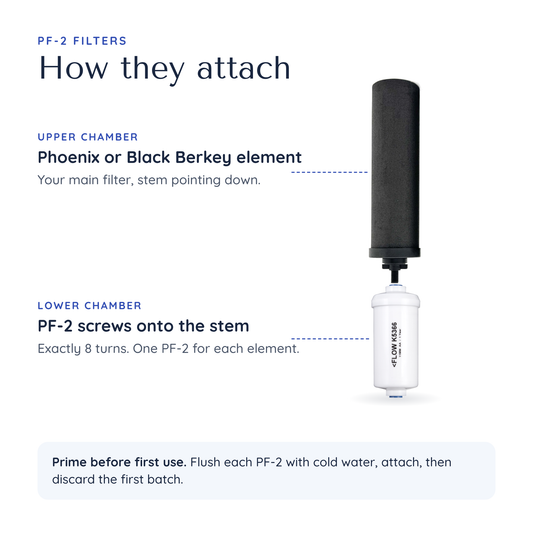
Activated alumina media dust from new PF-2 fluoride and arsenic filters
|
No. Activated alumina is inert and not water-soluble; it is the same media used in municipal fluoride treatment. It is not associated with stomach symptoms. |
Typically 2 to 3 full batches, occasionally up to 10 |
| Grey tint, faint earthy or charcoal taste, black specks on the element surface during priming |
Fine carbon particles from new Black Berkey or Phoenix elements |
Not harmful, but fine carbon can make water taste earthy and leave some people feeling a little queasy |
Typically 2 to 3 full batches; carbon dust on the element itself washes off during priming |
Activated carbon is inert. It is the same material used in medical settings for its adsorption properties, and the tiny amount that washes out of a new element is a small fraction of what is used in those settings. What it can do is change the taste and texture of the first batches, and some people report mild queasiness after drinking them. That is the whole reason the manufacturer's instructions say to discard the break-in water. The water from a properly flushed, primed, and maintained system is clear, tastes clean, and is not something that should upset anyone's stomach.
How to Flush a New Berkey Until It Runs Clear
-
Confirm the elements are primed. Each Black Berkey or Phoenix element needs to be primed individually before installation, and so does each PF-2 filter. An element that was rushed through priming sheds more dust and filters slowly. See the priming guide and the PF-2 priming guide.
-
Fill the upper chamber and let the full batch pass through. Discard it. Do not drink break-in water.
-
Rinse the lower chamber before refilling. This is the step most people skip, and it is what speeds the process up. Media dust settles in the lower chamber, and if you leave it there each new batch picks it back up.
-
Repeat until a glass of filtered water is completely clear. Two to three batches is typical. On rare occasions, particularly with a full set of PF-2 filters, it can take up to 10.
Once the water runs clear it stays clear. If it does not, the cause is something other than break-in, covered next.
Cloudy Water That Does Not Clear After Break-In
-
Elements not fully primed. The most common cause. Remove the element and prime again until the entire exterior wall is beading water evenly.
-
Lower chamber due for a cleaning. The lower chamber is a stored-water container, and like any container it needs washing. Clean the stainless steel chambers with mild dish soap every 1 to 3 months, sooner for larger households, and any time the system has sat unused for more than a week. Full steps are in the Berkey cleaning guide. Never use soap on the filter elements themselves.
-
Hard water calcium. A white film in the lower chamber that appears weeks after break-in is calcium from your source water. It is harmless, and it is a signal that the elements are due for a scrub under cold running water.
-
Hot water through the elements. Hot or boiling water damages the filter media. Use cold water only.
-
Spigot. Disassemble and wash the spigot with the chambers. Deposits collect inside the spigot body.
If someone in your household has ongoing stomach symptoms after the system has been fully flushed and cleaned, or has fever or symptoms beyond mild discomfort, see a doctor and get your source water tested. Do not assume the filter is the explanation, and do not assume it is not.
Frequently Asked Questions
Can cloudy tap water make you sick?
It depends on the cause. Cloudiness from trapped air clears in a glass within a minute or two and is harmless. Persistent cloudiness is turbidity, and a 2017 Drexel University review of more than a dozen studies found a link between drinking water turbidity and stomach illness, in some cities even at levels below regulatory limits. Persistent cloudy tap water is worth a call to your utility.
Why is my Berkey water cloudy?
With a new system or new elements, it is break-in dust from the filter media: white or milky from activated alumina in PF-2 fluoride filters, or grey with an earthy taste from fine carbon in Black Berkey or Phoenix elements. Discard the first 2 to 3 full batches, rinsing the lower chamber between them, and it clears. If cloudiness persists after that, re-prime the elements and clean the chambers.
Can a Berkey water filter make you sick?
Water from a properly primed, flushed, and maintained Berkey should not upset your stomach. The discomfort some people report happens in the first days with a new system, from drinking the cloudy break-in batches that carry fine carbon particles. Those batches are meant to be discarded. If symptoms continue after the system has been fully flushed and the chambers cleaned, see a doctor and have your source water tested rather than guessing.
Is the white film in my Berkey lower chamber harmful?
No. During break-in it is activated alumina dust from new PF-2 filters, which is inert and not water-soluble. Weeks or months later it is calcium from hard source water. Rinse the chamber in either case, and treat the calcium version as a reminder that the elements are due for a scrub.
How many times should I flush a new Berkey before drinking the water?
Discard full batches until a glass of filtered water is completely clear, rinsing the lower chamber between batches. Two to three batches is typical. With a full set of PF-2 filters it can occasionally take up to 10.
Why does my Berkey water taste earthy or like charcoal at first?
Fine carbon particles from new elements. The taste clears with the same 2 to 3 break-in flushes that clear the cloudiness. If an earthy taste returns months later, the chambers are due for cleaning or the elements need a scrub under cold running water.
Bottom Line
Cloudy water from the tap is either harmless air or a turbidity signal worth a phone call, and the glass test tells you which. Cloudy water from a new Berkey is break-in media dust, not contamination: flush until clear, rinse the lower chamber between batches, and do not drink the first batches, since the fine carbon in them is what leaves some people feeling queasy. Once the water runs clear it stays clear, and if it does not, priming and a chamber cleaning fix nearly every case.

 By
Dan DeBaun








Having stomach issues already would drinking milky tap water make the condition worse?
Hi Budgett -
We would recommend you consult your doctor for a professional opinion.
Thanks
Dan
Great unit! Looks great in our kitchen.