Fracking can affect nearby drinking water, but EPA's own 2016 national assessment found this happens only under specific, identifiable circumstances, not as a general rule. EPA's final report on the hydraulic fracturing water cycle concluded that impacts on drinking water resources can occur, and named six specific conditions where it is more likely: water withdrawals during scarce water periods, large spills reaching groundwater, inadequate well construction allowing gas or fluid migration, direct injection of fracturing fluids into groundwater, insufficient wastewater treatment before surface discharge, and unlined disposal pits. EPA also stated plainly that it could not calculate how often these impacts actually occur nationally, due to data gaps. That combination, real identified pathways, but no basis for a blanket national risk claim, is why testing your specific well matters more than your ZIP code.
This article covers what to actually test for if you live near oil and gas activity, a four step decision path to follow before you buy any filter, and an honest look at what a gravity water filter can and cannot address once you have real test results in hand.
How Fracking Can Affect Drinking Water
EPA's six circumstances above collapse into three practical categories homeowners should understand, and they call for different responses.
Well construction and casing problems
If a gas well's casing or cement barrier fails, gas or fluids can migrate into a shallow aquifer near the wellbore. This is a localized, mechanical failure, not a broad regional effect, and it is the pathway most directly tied to a specific nearby well rather than fracking as a general practice.
Surface spills and wastewater handling
Fracking fluid, produced water, and wastewater are handled at the surface in tanks, lined pits, and during transport. Spills, overflows, and transport accidents are the most commonly documented contamination events, and they affect the specific watershed or property where they occur rather than every well in a region.
Naturally occurring contaminants
Not every contaminant found in a well near drilling activity came from drilling. Methane, arsenic, and other naturally occurring substances are already present in groundwater in many parts of the country independent of oil and gas activity. A USGS groundwater study in Hood and Parker Counties, Texas, for example, linked elevated methane in local wells to natural geologic sources rather than nearby gas production. This is exactly why a water test matters more than a location on a map. It tells you what is actually in your water and, with a pre drilling baseline test, whether a change occurred at all.
Being direct about this: living near a fracking site does not mean your water is contaminated. It means you have a specific, known reason to test for a specific, known set of contaminants. That is a very different, and much more manageable, situation.
What to Actually Test For
The U.S. EPA recommends every private well be tested annually for total coliform, nitrates, total dissolved solids, and pH, regardless of location. Wells near gas drilling activity should add a specific panel: the EPA names chloride, sodium, barium, and strontium as the indicators to test for near gas drilling operations, because these are the chemical fingerprints of oil and gas brine and produced water.
Ohio State University's extension program, which has published detailed guidance for private well owners near shale development, breaks the panel into three tiers:
Swipe to see all columns →
| Tier |
What it covers |
Why it matters |
| Tier 1, minimum panel |
Barium, chloride, magnesium, potassium, sodium, strontium, sulfate, total dissolved solids, specific conductivity |
Chloride and sodium are the primary markers of oil and gas brine intrusion |
| Tier 2, additional |
Calcium, hardness, total alkalinity, pH, iron, manganese, total suspended solids, bromide |
Rounds out a full water chemistry picture and catches unrelated plumbing or geology issues |
| Tier 3, most comprehensive |
BTEX compounds (benzene, toluene, ethylbenzene, xylene) and dissolved methane |
The pathway most specific to drilling and completion activity, worth the extra cost if a well is within roughly 1,500 feet of a wellhead |
Testing rules and required setback distances vary significantly by state. Ohio requires operators to sample wells within 300 feet of a proposed well in urbanized areas and within 1,500 feet of a horizontal wellhead. Pennsylvania's presumption of liability for water supply contamination covers wells within 2,500 feet of an unconventional gas well for a set period after drilling, which is why Pennsylvania operators typically pre test wells in that radius. Texas, Colorado, and other producing states set their own distinct rules. Check your own state's oil and gas or environmental agency for the requirements that apply to your property.
Cost is often the reason people skip testing entirely, so here is a realistic range. A basic mail in lab kit covering 30 to 50 common parameters typically runs $120 to $200. A more complete panel covering 50 or more analytes, including metals, runs $199 to $400. PFAS testing specifically is usually a standalone add on, often around $300 to $350, which is another reason to only add it when you have a specific reason to suspect it rather than ordering it by default.
On PFAS specifically: only test for it and act on it if there is a supportable reason to, such as a known nearby release, a state health advisory, or a neighbor's confirmed positive test. Treat it as a possibility to rule out, not a default assumption, the same way you should not assume every well near drilling automatically has elevated chromium 6 without a test confirming it. If you want the deeper background on chromium 6 specifically, including California's compliance standard, see our separate guide to chromium 6 in drinking water.
Test Before You Filter: A Four Step Decision Path
-
Check your baseline first, if you can. If drilling has not started yet near you, test now. It is the single most useful thing you can do, since it is the only way to prove a later change was actually caused by nearby activity.
-
Use an accredited lab, not a mail in strip kit, for anything beyond routine coliform and nitrate screening. Your state's environmental or health department maintains a list of certified labs. For general guidance on reading results and choosing a lab, see our overview of at home and lab based water testing options and how to interpret whether your results mean your water is safe to drink.
-
Match the filter, or the fix, to the confirmed contaminant. Not before. A filter chosen based on a news headline instead of a lab result is a coin flip.
-
Retest after treatment if contamination was confirmed, to verify the fix actually worked, and retest periodically afterward if you are on a well near ongoing drilling or production activity.
If your results come back clean, or show only the general well water issues covered in our guide to whether well water is safe to drink and common well water testing indicators, you likely do not need to do anything specific to fracking at all.
When Is a Gravity Water Filter Useful After a Water Test?
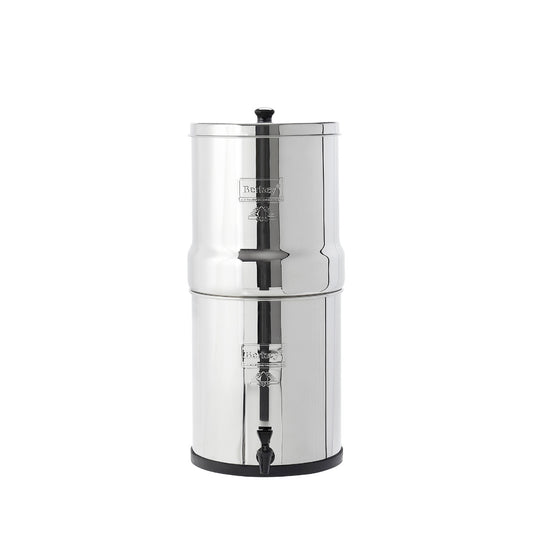
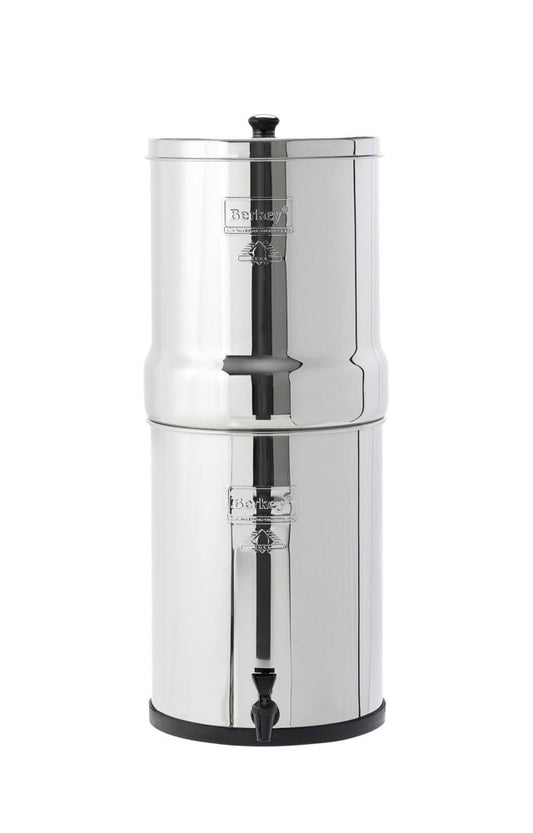
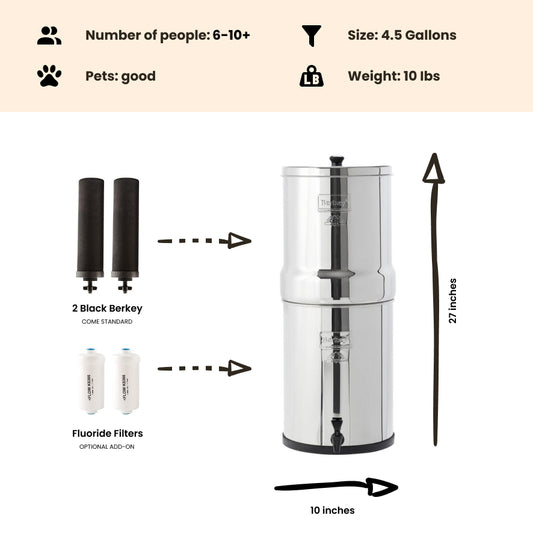
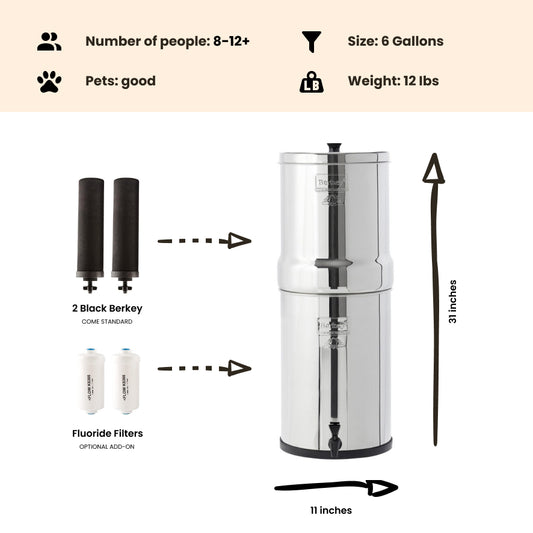
Once you have a confirmed contaminant, a gravity filter is a strong option for some of what shows up on that tiered testing panel, and the wrong tool for other parts of it. Berkey filter elements are independently tested against 200+ contaminants overall. Here is exactly what that testing shows for the specific contaminants tied to fracking, and where those elements are not the answer.
A note on which element the numbers below come from: Phoenix Gravity Elements are the current standalone replacement filter and the ones linked below. Complete Berkey systems still ship with Black Berkey elements included. Some of the broader legacy test data, including the full heavy metals panel and petroleum compounds, was run on Black Berkey elements using the same filtration media Phoenix elements use, while barium and the current chromium figure below come from testing run specifically on Phoenix elements. Where the two elements have been tested separately for the same contaminant, we cite the specific one.
What the lab data supports
Swipe to see all columns →
| Contaminant group |
Result |
Source |
| BTEX and other VOCs (benzene, toluene, ethylbenzene, xylenes, and 51 other volatile organic compounds) |
All 55 VOCs tested, including all four BTEX compounds individually, reduced to below the lab's detection limit (0.025 mg/L) |
CVR Labs Report #25030011.01, March 2025 (Phoenix Gravity) |
| Heavy metals (including chromium, arsenic, lead, barium) |
Phoenix Gravity elements reduced chromium to below detection limit (more than 99.5%) against a 0.2 mg/L spike, confirmed by a separate continuous influent/effluent test at 97.21% reduction from a higher starting concentration. Barium reduced by 99.9%+. Black Berkey elements reduced chromium by 99.9% and a broad panel of other heavy metals by 99% or better. |
CVR Labs Report #25030011.01 and Atom Testing Laboratory report (Phoenix Gravity); Envirotek Laboratories Report #14-260 (Black Berkey) |
| Pesticides (15 tested, including DDT variants, aldrin, dieldrin, endosulfan) |
All 15 reduced to below the lab's detection limit (0.00001 mg/L) |
CVR Labs Report #25030011.01, March 2025 (Phoenix Gravity) |
| Petroleum compounds (gasoline, diesel, crude oil, kerosene, mineral spirits, refined oil) |
99.9% reduction across all six petroleum compound categories tested |
Envirotek Laboratories Report #14-260 |
| PFAS (PFOA, PFOS, and 7 related PFAS compounds) |
99.9%+ reduction, from 1.0 µg/L to below 0.002 µg/L, which is below the EPA's 4 ppt limit for PFOA and PFOS |
Envirotek Laboratories Report #16-296-PFOA |
| Chloride |
98.2% to 99.6% reduction depending on element tested |
Envirotek Laboratories Report #14-260; Atom Testing Laboratory report |
Full lab reports for these and 200+ other contaminants are downloadable on our test results page, the VOC, pesticide, and heavy metal results specifically are on our Phoenix VOC, pesticide, and metals results page, and broader current Phoenix element data is on our Phoenix lab results page.
Where gravity filtration is not the right answer. Total dissolved solids and salinity are not meaningfully reduced by gravity carbon and ceramic filtration, Black Berkey and Phoenix elements included. If your well shows high TDS or brine-type salinity from surface spill intrusion, you need reverse osmosis or whole home treatment, not a gravity filter. Dissolved methane is a gas, not a filterable liquid contaminant, and requires well venting or professional mitigation, not a countertop or gravity system. And while barium and BTEX testing are well supported by lab data, strontium has not been independently tested on these elements specifically. If a lab confirms strontium in your water, ask your lab or a water treatment professional for a filtration option verified for that specific contaminant, and retest after treatment to confirm it worked.
Where to Get Help
-
EPA, Protect Your Home's Water, general and drilling-specific private well testing guidance
-
EPA, PFAS drinking water regulation status, current limits and pending rule changes
- Your state environmental or oil and gas agency, for local setback rules, operator-paid baseline testing requirements, and a certified lab directory. These vary significantly by state, so check your own state's requirements rather than relying on another state's rules
-
Ohio State University Extension's shale development water testing guide, a well documented example of a tiered baseline testing protocol, useful even outside Ohio as a model for what to ask your own lab for
See our full independent media coverage for additional third party context on Berkey testing and reporting.
Frequently Asked Questions
Does living near a fracking site mean my water is contaminated?
No. It means you have a specific, identifiable reason to test for a specific set of contaminants, chloride, sodium, barium, strontium, and in some cases BTEX and dissolved methane. A 2015 USGS review found no widespread, consistent contamination pattern nationally near unconventional oil and gas development.
What should I test my well water for if I live near oil or gas drilling?
At minimum, chloride, sodium, barium, and strontium, per EPA guidance. A more complete panel adds sulfate, total dissolved solids, and specific conductivity, and a tier 3 panel adds BTEX compounds and dissolved methane if your well is close to a wellhead.
When is the best time to test my well water near drilling activity?
Before drilling starts, if possible. A baseline test taken within a year before activity begins is the only reliable way to prove whether a later change in your water was actually caused by nearby drilling.
Can a Berkey water filter remove fracking related contaminants?
For most of the contaminants tied to fracking, yes. Independent lab testing shows all four BTEX compounds and 51 other VOCs reduced to below detection limit, 99% or better reduction of heavy metals including chromium and barium, petroleum compounds including diesel and crude oil, PFAS, and chloride. It does not meaningfully reduce total dissolved solids or salinity, and it does not address dissolved methane, which requires well venting rather than filtration.
Does a Berkey or Phoenix filter remove BTEX compounds like benzene and toluene?
Yes. Independent testing by CVR Labs in March 2025 found Phoenix Gravity elements reduced all 55 tested VOCs, including benzene, toluene, ethylbenzene, and all three xylene isomers, to below the lab's detection limit of 0.025 mg/L. BTEX is one of the tier 3 contaminant groups recommended for testing near active drilling.
Does a Berkey filter remove PFAS from fracking related contamination?
Independent testing shows Black Berkey elements reduced PFOA and 7 related PFAS compounds by more than 99.9%, from 1.0 µg/L to below 0.002 µg/L, below the EPA's current 4 ppt limit for PFOA and PFOS. PFAS is only worth testing for if there is a specific, supportable reason to suspect it, such as a known local release or a state advisory.
What if my well water tests high for total dissolved solids or salinity near a drilling site?
Gravity filtration, including Berkey and Phoenix elements, is not the right tool for high TDS or brine-type salinity. That requires reverse osmosis or a whole home treatment system, and you should work with a water treatment professional to size the right solution.
Is chromium 6 a standard fracking contaminant?
No, and it should not be treated as one by default. Chromium 6 can occur naturally in groundwater in some regions and separately from any drilling activity. Test for it specifically rather than assuming it is present because of nearby fracking. See our full guide to chromium 6 for the current regulatory background.
How often should I retest my well if I live near active drilling?
Ohio State University's extension guidance recommends two to three samples per year in different seasons to establish a reliable baseline, and retesting after any nearby drilling milestone or after installing a filtration or treatment system to confirm it worked.
About the author: Dan DeBaun is the owner of Big Berkey Water Filters and has spent over 18 years in gravity water filtration, with a background in engineering and an MBA. Read more
about Dan.


 By
Dan DeBaun
By
Dan DeBaun




I'm looking for a metal shower head to house a water filter.
My MultiPure plastic/nylon shower head water filter cracked.
Do you plan to make and sell a metal shower head to house a water filter?
"You may have seen this clip from the move Gasland:"
You meant "You may have seen this clip from the movie Gasland:"
Typographical error found on https://www.bigberkeywaterfilters.com/wordpress/fracking-water-contamination/fracking-our-drinking-water/
Hi JH -
At this point in time there is no plan to make a metal shower head filter. Thank you for the typo heads-up.
Thanks
Dan