No, Berkey PF-2 Fluoride and Arsenic Reduction Filters do not leach aluminum into your drinking water. The media inside PF-2 filters is activated alumina, a stable, non-water-soluble compound that is chemically distinct from aluminum metal. It has been used safely in municipal water treatment, pharmaceutical manufacturing, and food processing for decades, and the EPA removed aluminum oxide from its chemicals of concern list in 1988.
The confusion persists because some competitors and online sources conflate three separate things: elemental aluminum, aluminum oxide (alumina), and activated alumina. They are not the same. This article explains why, covers what standard lab tests actually measure, and shows you exactly how Berkey filter elements work so you can evaluate the claims yourself.
The short answer: Activated alumina is chemically inert in water. It does not dissolve. When lab tests appear to show aluminum in filtered water, that result is a measurement artifact of standard testing methodology, not evidence of leaching. Full explanation below.
What Is Activated Alumina and Why Is It Used in PF-2 Filters?
Activated alumina is a highly porous form of aluminum oxide (Al2O3). It is not aluminum metal. The difference matters the same way it matters that table salt (sodium chloride) is not the same as pure sodium, which reacts violently with water, or that water (H2O) is not the same as pure hydrogen or pure oxygen, both of which are flammable.
Activated alumina is produced by processing aluminum hydroxide at high temperatures, which creates a crystalline lattice structure with an enormous surface area. That structure is what makes it effective at adsorbing fluoride and arsenic from water as it passes through the filter media. The compound itself remains structurally intact throughout the filtration process.
Key properties of activated alumina relevant to water filtration:
- Not water-soluble under normal filtration conditions
- Chemically inert, meaning it does not react with water
- Biocompatible, with orthopedic and dental applications (hip joints, ceramic restorations) dating back decades
- Used in pharmaceutical-grade applications including desiccants and adsorbents in drug manufacturing
- Used in food processing equipment and as a food-contact material
- Employed in municipal water treatment systems worldwide for fluoride reduction
- Removed from the EPA's chemicals of concern list in 1988
The Berkey PF-2 Fluoride and Arsenic Reduction Filters use activated alumina as the primary media for reducing fluoride in water passing through your Berkey system. PF-2 filters are compatible with both Black Berkey Elements and Phoenix Filter Elements.
Why Do Some Water Tests Show Aluminum After Using PF-2 Filters?
This is the core of the controversy, and it comes down to how standard laboratory tests work. When a lab tests water for aluminum contamination, the procedure requires acid digestion: the sample is treated with acid to break apart all metal compounds before counting ions. That process separates the aluminum from the oxygen in aluminum oxide, then counts the freed aluminum ions as if they were soluble aluminum.
In plain terms: the lab procedure that tests for aluminum cannot distinguish between inert aluminum oxide and soluble aluminum metal. It treats both the same. So if trace amounts of aluminum oxide enter the water from the filter media during normal use, the test reports them as aluminum contamination even though they are not the same compound and do not carry the same health implications.
Standard aluminum water tests are designed to detect soluble aluminum ions, which are the form associated with health concerns. They are not capable of differentiating inert aluminum oxide from soluble aluminum. A positive result from this type of test does not confirm that harmful, soluble aluminum is present.
This is the same reason a TDS (total dissolved solids) meter reading will go up when PF-2 filters are installed, which some customers interpret as contamination. The meter is detecting additional ionic activity associated with the activated alumina media, not harmful dissolved solids being added to your water.
Aluminum vs. Alumina vs. Activated Alumina: What the Chemistry Actually Shows
Understanding this distinction requires looking at how the surface of aluminum oxide behaves when it contacts water. Research by Corrin (1963) established that pure aluminum reacts with water readily, but when coated with aluminum oxide, that reaction is blocked entirely. Aluminum oxide acts as a protective, chemically stable barrier.
When water molecules contact aluminum oxide, the aluminum and oxygen atoms on the surface actually move apart slightly. Rather than dissolving, the surface layer becomes hydrated and shifts into a chemically inert state. This is the same phenomenon that makes aluminum metal corrosion-resistant: the oxide layer that forms on its surface prevents further reaction with moisture or atmospheric oxygen.
An analogy that may help: pure chlorine is a toxic gas. Pure sodium is a reactive metal that ignites in water. Combined as sodium chloride, they form table salt, which the human body requires. The properties of a compound are not the properties of its individual elements.
Aluminum oxide is recognized in multiple industries for its biocompatibility and stability:
- Dental porcelain pigment in clinical use for over 60 years
- Ceramic substructure for dental restorations for over 25 years
- Orthopedic implant material (hip and knee joints) with documented long-term biocompatibility
- Ingredient in FDA-cleared sunscreen and cosmetic formulations
- Component of CD and DVD polishing compounds
- Abrasive in food-contact applications
How Berkey Filter Elements Work (Black Berkey and Phoenix)
The Black Berkey Elements and Phoenix Filter Elements are the primary filtration elements in a Berkey gravity system. PF-2 filters are add-on elements installed in the lower chamber, specifically for fluoride and arsenic reduction. Each plays a distinct role.
Black Berkey Elements
Black Berkey Elements use a proprietary blend of six or more media types working through four complementary mechanisms: microfiltration via tortuous path pores, adsorption, absorption, and ion exchange for heavy metals. The elements include silver for biological protection. They are independently tested against 200-plus contaminants and are the standard elements included with all new Berkey systems.
Phoenix Filter Elements
Phoenix Filter Elements use CTC-60 coconut shell granular activated carbon in a solid carbon block with a nanofiber composite. They carry NSF/ANSI 42 and NSF/ANSI/CAN 372 certifications from NABL-accredited ISO/IEC 17025:2017 certified laboratories. Phoenix Elements are the currently endorsed replacement option when Black Berkey Elements need replacing, with a lifespan of 5,500 gallons per pair. Lab results are publicly available at our Phoenix lab results page.
PF-2 Fluoride and Arsenic Reduction Filters
PF-2 filters are installed in the lower chamber of the Berkey system and work in series with the primary filter elements. They use activated alumina to reduce fluoride and arsenic from water that has already passed through the primary elements. PF-2 filters are compatible with both Black Berkey Elements and Phoenix Filter Elements. Each set of two PF-2 filters is rated for approximately 1,000 gallons before replacement. PF-2 filters carry a 6-month manufacturer warranty.
Priming time for new PF-2 filters is 5 to 10 minutes using the priming button method before first use.
The activated alumina in PF-2 filters is a separate media system from the Black Berkey and Phoenix primary filter elements. None of these elements contain soluble aluminum compounds. The concern about aluminum in drinking water relates to soluble aluminum salts from industrial runoff or municipal treatment byproducts, not aluminum oxide used in certified point-of-use filtration media.
Aluminum vs. Aluminum Oxide vs. Activated Alumina: Quick Reference
Scroll right to see full table
Scroll table to see all columns
| Property |
Aluminum Metal (Al) |
Aluminum Oxide (Al2O3) |
Activated Alumina |
| Water soluble |
Yes (reactive) |
No (inert) |
No (inert) |
| Health concern form |
Yes, as soluble ions |
No known concern |
No known concern |
| EPA chemicals list |
Monitored (SMCL 0.05-0.2 mg/L) |
Removed from list in 1988 |
Removed from list in 1988 |
| Used in water filtration |
No |
Base compound |
Yes, standard media |
| Biocompatible |
Debated at high concentrations |
Yes (dental, orthopedic use) |
Yes |
| Municipal water treatment use |
No |
Yes (coagulant-related) |
Yes, for fluoride reduction |
Independent Testing and Verification Resources
Berkey's approach to transparency is to make lab data publicly available so customers can evaluate the results themselves rather than taking marketing claims at face value. Full contaminant reduction test results are available on our test results and resources page. Phoenix Element lab results from NABL-accredited laboratories are available on the Phoenix lab results page.
Third-party recognition of Berkey filtration performance includes coverage by EWG, Food Network, CBS News, The Prepared, The Quality Edit, and the LA Times. Full documentation is on the media coverage page.
If you want to understand how fluoride reduction works and whether PF-2 filters are right for your water, see our detailed breakdown in Do Berkey Water Filters Reduce Fluoride?
Frequently Asked Questions
Do Berkey PF-2 filters leach aluminum into drinking water?
No. PF-2 filters use activated alumina, which is aluminum oxide, a stable compound that is not water-soluble under normal filtration conditions. It does not dissolve into filtered water. The EPA removed aluminum oxide from its chemicals of concern list in 1988.
What is activated alumina and is it the same as aluminum?
Activated alumina (aluminum oxide, Al2O3) is chemically distinct from aluminum metal. Aluminum metal is water-reactive and associated with health concerns at high concentrations. Aluminum oxide is inert, non-water-soluble, and biocompatible, with documented use in dental restorations, orthopedic implants, and food processing for decades. Treating them as the same material is a common source of misinformation.
Why do some water tests show aluminum after using PF-2 filters?
Standard laboratory tests for aluminum use acid digestion, which breaks apart aluminum oxide into its components before counting ions. This method cannot distinguish between inert aluminum oxide and soluble aluminum metal, so it reports both as the same result. The presence of aluminum oxide particles in filtered water is not equivalent to the presence of soluble aluminum ions, which are the form of concern for health.
Is activated alumina safe for drinking water filtration?
Yes. Activated alumina is the industry-standard media for fluoride reduction in point-of-use water filtration systems. It has been used in municipal water treatment worldwide for decades. It is also used in pharmaceutical manufacturing, orthopedic implants, and dental materials, where biocompatibility is a strict requirement.
Are PF-2 filters compatible with Phoenix Filter Elements?
Yes. PF-2 Fluoride and Arsenic Reduction Filters are compatible with both Black Berkey Elements and Phoenix Filter Elements. They install in the lower chamber of the Berkey system and work in series with whichever primary elements are in your upper chamber.
How long do PF-2 filters last and when should I replace them?
PF-2 Fluoride and Arsenic Reduction Filters are rated for approximately 1,000 gallons per set of two filters, or one year, whichever comes first. If you primarily want fluoride reduction, plan your replacement schedule based on your household's daily water usage. PF-2 filters carry a 6-month manufacturer warranty.
Does the EPA regulate activated alumina in water filters?
The EPA removed aluminum oxide from its chemicals of concern list in 1988, reflecting the scientific consensus that aluminum oxide does not carry the same health risks as soluble aluminum. The EPA does set a non-enforceable secondary maximum contaminant level (SMCL) for aluminum metal in drinking water at 0.05 to 0.2 mg/L. That standard applies to soluble aluminum, not to aluminum oxide used in filtration media.
My TDS meter reading went up after adding PF-2 filters. Is that a problem?
No. TDS meters measure total dissolved solids by detecting ionic activity, not by identifying what specific compounds are present. PF-2 filters introduce trace ionic activity from activated alumina media, which increases the TDS reading. This does not indicate contamination. TDS readings alone are not a reliable indicator of water quality or safety.
How do I prime new PF-2 filters before use?
New PF-2 filters require priming before first use to ensure proper performance. Using the included priming button, hold the filter under running water and allow water to pass through the media for 5 to 10 minutes. This saturates the activated alumina and prepares it for effective fluoride reduction.
Where can I find independent lab results for Berkey filter elements?
Full contaminant reduction test results for Black Berkey Elements are available on the Berkey test results and resources page. Phoenix Filter Element lab results from NABL-accredited ISO/IEC 17025:2017 certified laboratories are available on the Phoenix lab results page. Both are publicly accessible and downloadable.
Ready to Add Fluoride Reduction to Your Berkey System?
View Phoenix Filter Elements and downloadable lab results for full contaminant reduction data.
About the Author: Dan DeBaun
Dan DeBaun is the owner of BigBerkeyWaterFilters.com, the largest authorized Berkey dealer in the United States, operating since 2008. Dan holds an undergraduate degree in industrial engineering and an MBA in finance, both from Rutgers University. He writes on water quality, filtration science, and contaminant reduction for consumers making informed purchasing decisions.


 By
Dan DeBaun
By
Dan DeBaun

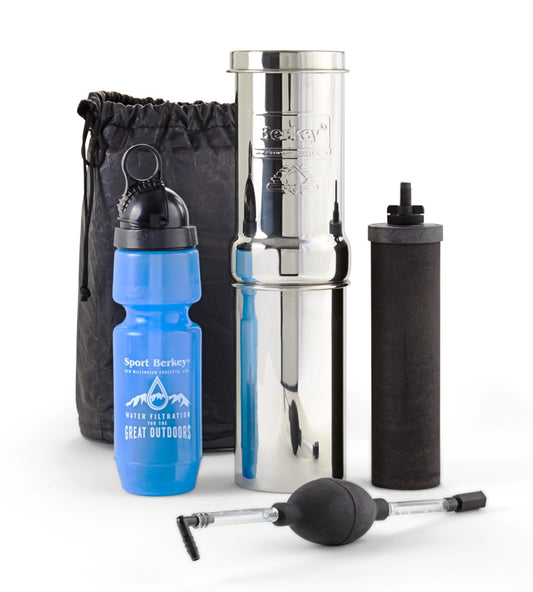
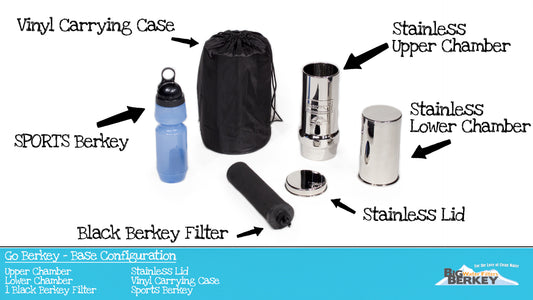
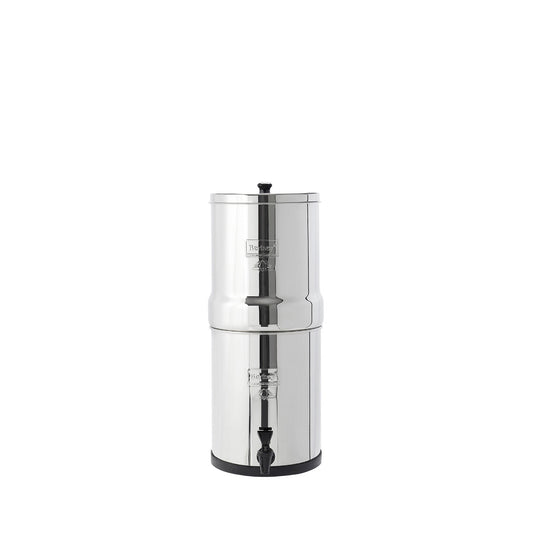
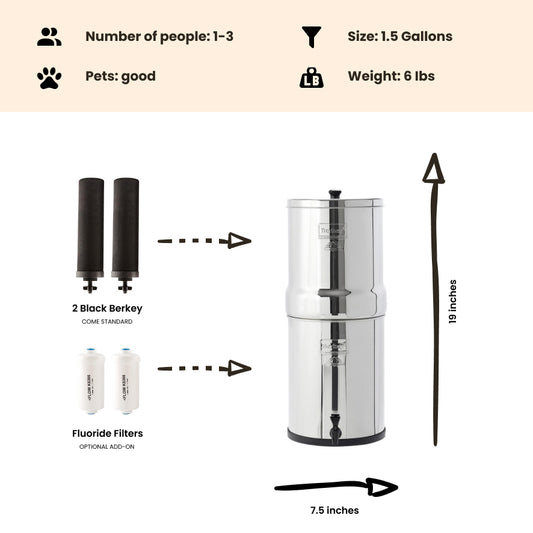
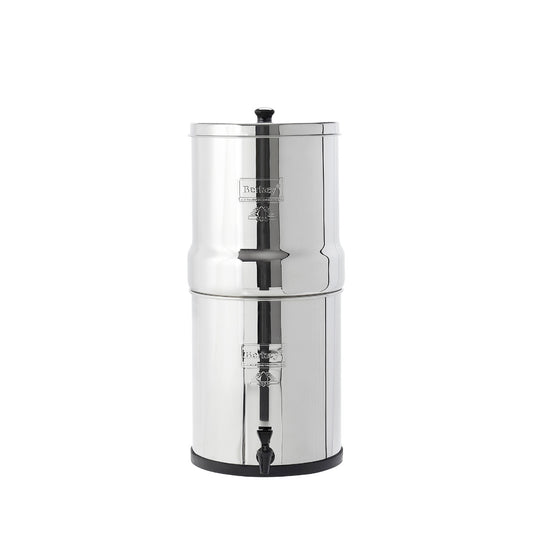
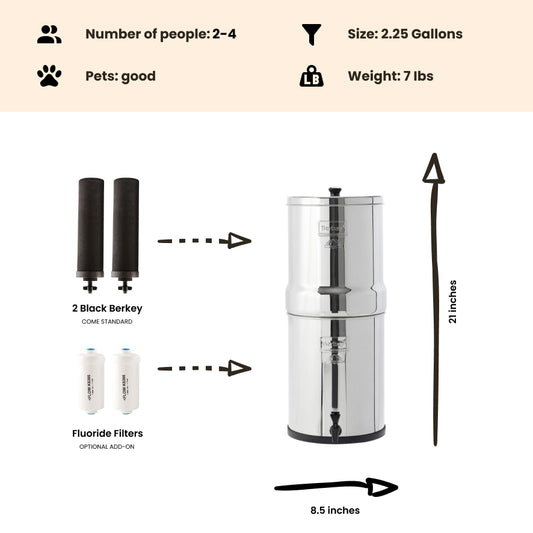

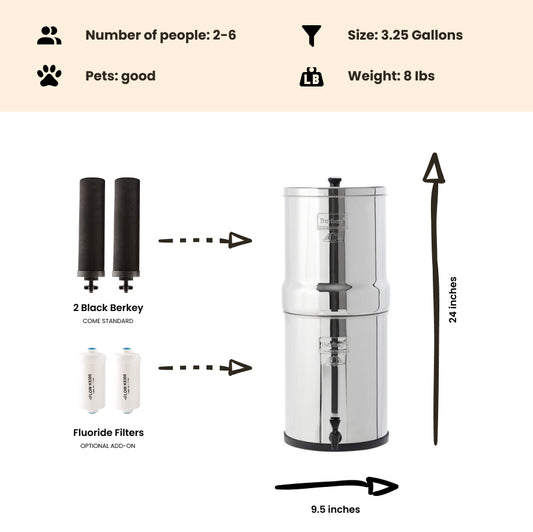
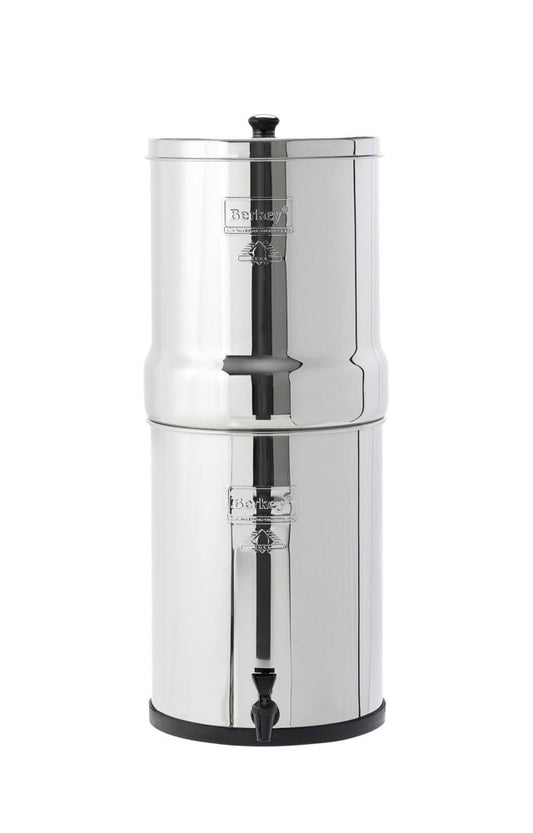
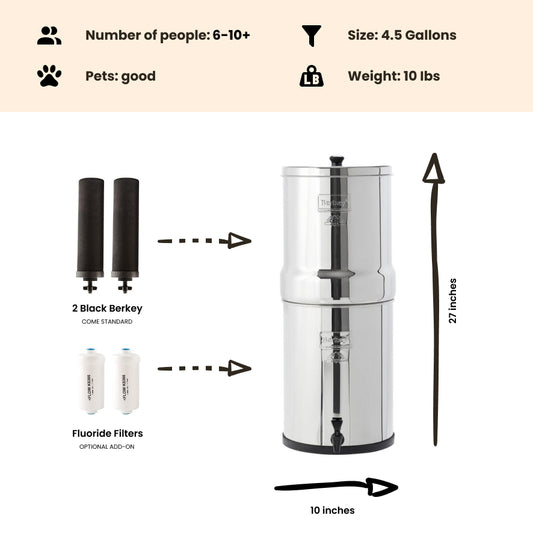
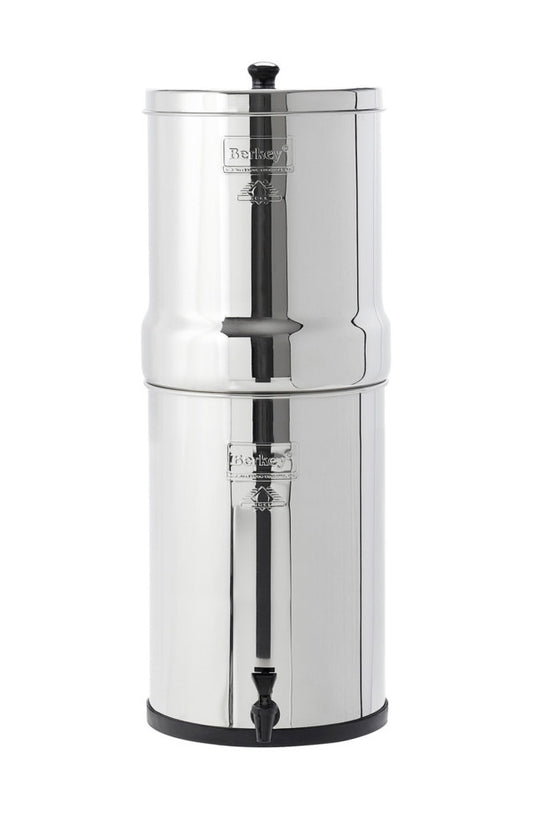
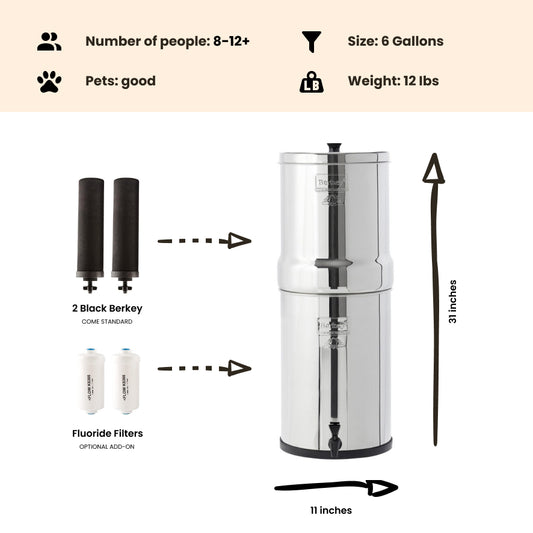

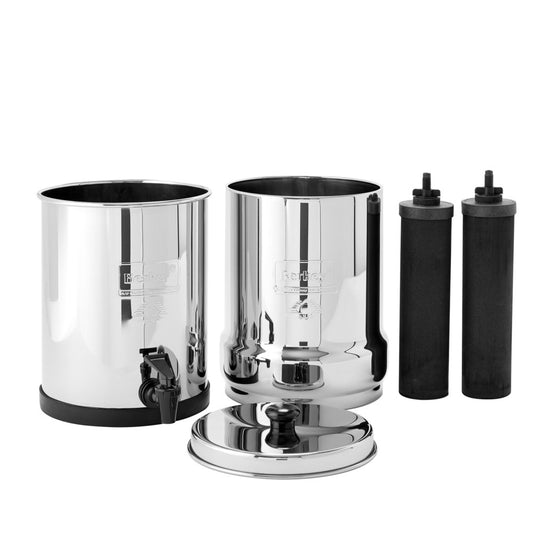


Why is the canister made of aluminum? I thought it was not good to drink out of aluminum water bottles or cook with aluminum pots and pans.
Hi Kathleen -
The systems are not made of aluminum but rather surgical grade 304 stainless steel.
Thanks
Dan