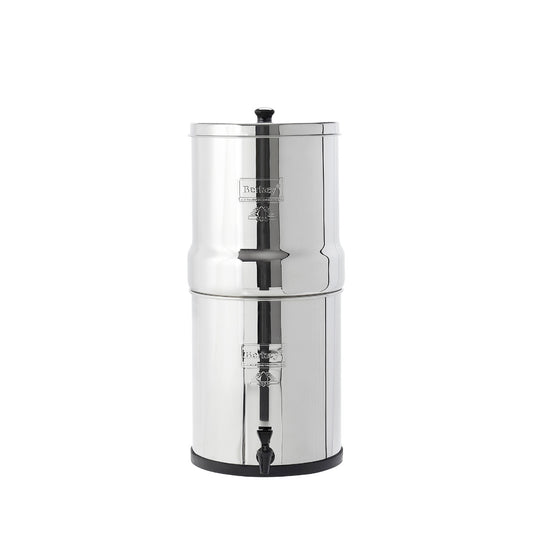
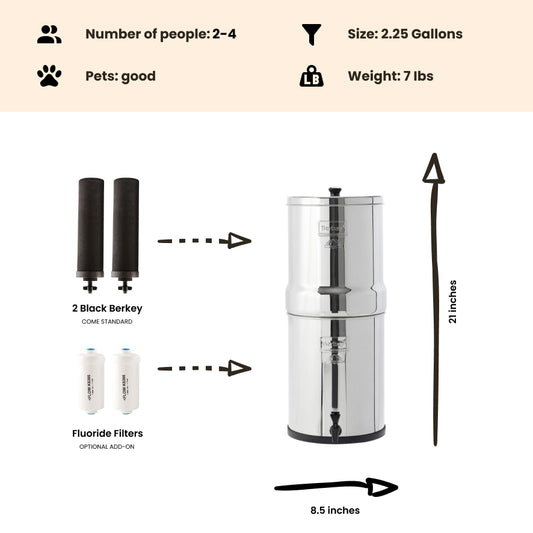
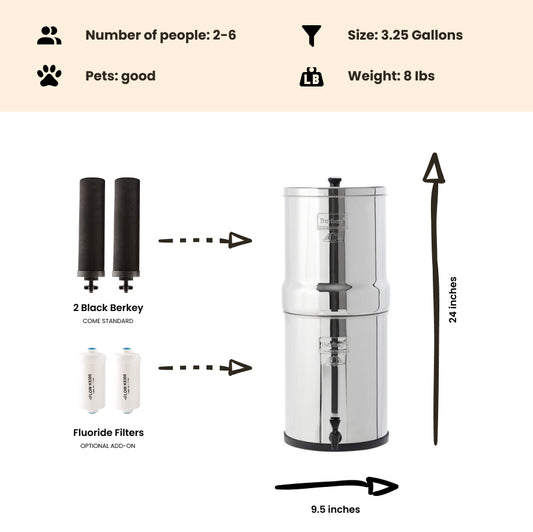
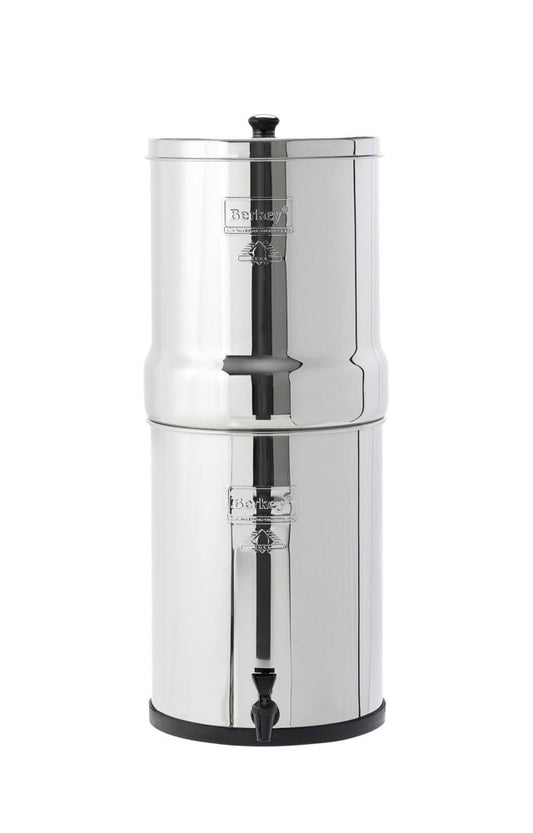
Yes, a Berkey gravity filter removes mercury. A Black Berkey element reduces mercury by more than 98.0%, and the in-stock Berkey Phoenix element by more than 99.0%, both to below the testing laboratory's detection limit, in independent lab testing. Below is what each lab report shows, how the filter captures mercury, and which element to use for your situation.
Does a Berkey Filter Remove Mercury?
Yes. Both the long-established Black Berkey element and the Berkey Phoenix element have been independently tested and shown to reduce mercury to non-detect, meaning the laboratory could not measure any mercury remaining in the filtered water. These are accredited third-party lab results, not manufacturer estimates, and you can review the full data on our test results page, alongside the third-party recognition listed on our media coverage page.
| Berkey element |
Mercury reduction |
Testing laboratory |
| Black Berkey Elements |
>98.0%, reduced to non-detect |
LA County ETL, EPA Method 245.1 (25 µg/L to <0.50 µg/L) |
| Berkey Phoenix Elements |
>99.0%, reduced to non-detect |
Atom Testing Laboratory, ICPMS (10 µg/L to <0.1 µg/L) |
How Much Mercury Does a Black Berkey Element Remove?
A Black Berkey element removes more than 98.0% of mercury, reducing it to below the laboratory's detection limit. It is the long-established Berkey gravity element.
Black Berkey lab result
Tested by the County of Los Angeles Environmental Toxicology Laboratory (Lab ID E1201232001, EPA Method 245.1, August 2012). A 25 micrograms per liter mercury challenge measured below 0.50 micrograms per liter after filtration, the lab's reporting limit.
The greater-than-98.0% figure is the floor that the 0.50 reporting limit allows at that challenge level, not a performance ceiling.
How Much Mercury Does the Berkey Phoenix Element Remove?
The Berkey Phoenix element removes more than 99.0% of mercury, also reducing it to non-detect. The Phoenix is the current Berkey gravity element available to order, certified to NSF/ANSI 42 and NSF/ANSI/CAN 372.
Berkey Phoenix lab result
Tested by Atom Testing Laboratory by ICPMS (April 2026). A 10 micrograms per liter mercury challenge measured below 0.1 micrograms per liter after filtration. The same report shows arsenic reduced by more than 99.5% and a full 16-metal panel reduced to or near non-detect.
You can see the complete Phoenix panel on the Phoenix complete contaminant list and the source reports on the Phoenix lab results page.
Black Berkey vs Phoenix for Mercury: Which Should You Use?
For mercury, both elements perform the same job: each reduces mercury to non-detect. The difference in their reported percentages, 98.0% versus 99.0%, comes from different challenge concentrations and detection limits in the two lab tests, not from one filter outperforming the other.
The practical answer comes down to what you can order. The Berkey Phoenix is the current Berkey gravity element available to order, certified and verified for mercury, so it is the in-stock option when you need elements. The Black Berkey is the long-established element with its own independent mercury testing. Both fit the same stainless systems in our Berkey systems collection.
A note on the numbers: a higher tested percentage does not mean better mercury performance here. Both elements brought mercury below what the laboratory could detect. We report each filter's verified figure rather than rounding them to a single marketing number.
How Does a Berkey Filter Remove Mercury?
Berkey elements remove dissolved mercury through a combination of activated carbon adsorption and ion exchange, the two mechanisms independently shown to capture heavy metals. Black Berkey elements use a proprietary blend of media built around microfiltration, activated carbon, and ion exchange, so they are not a simple carbon block. The Berkey Phoenix uses a coconut-shell carbon block engineered for the same broad heavy-metal reduction.
This is why a standard refrigerator or basic carbon pitcher filter is not a reliable choice for mercury: without ion exchange media, those filters are not designed to capture dissolved metals. You can see every contaminant each Berkey element has been tested against on the Black Berkey contaminant list.
Does a Berkey Remove Inorganic Mercury and Methylmercury?
The mercury that shows up dissolved in tap and well water is mostly inorganic mercury, and that is the form Berkey lab testing challenges the filter with and reduces to non-detect. Organic mercury that is dissolved in water is also subject to the same carbon adsorption.
One important limit: methylmercury, the most toxic form, reaches most people through eating large predatory fish, not through drinking water. A water filter does not change dietary exposure, so for fish-borne methylmercury the answer is following EPA and FDA fish-consumption guidance, covered in our guide to mercury in drinking water.
Do You Need the PF-2 Filter to Remove Mercury?
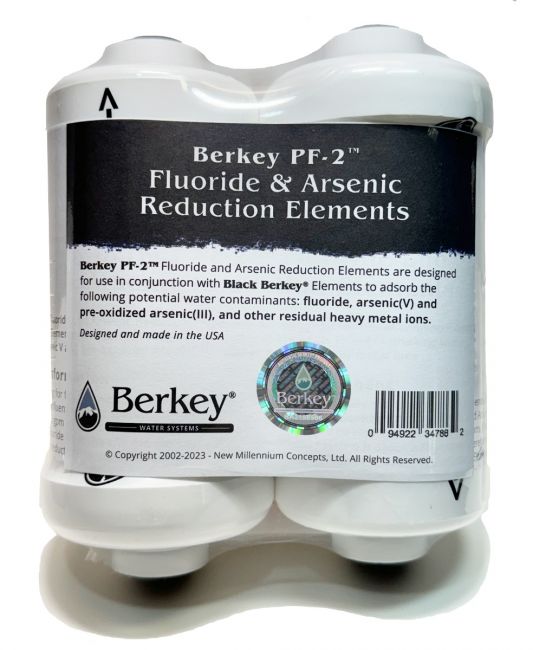
No. The PF-2 is an add-on designed for fluoride and arsenic reduction, and it is not required for mercury. The Black Berkey and Berkey Phoenix elements remove mercury on their own. The PF-2 is worth adding only if your water also has elevated fluoride, since the gravity elements reduce fluoride only partially.
What Mercury Problems Can a Berkey Not Solve?
A Berkey is the right tool for dissolved mercury in drinking water, but it is not the answer to every mercury situation.
-
Spilled or vapor mercury. A broken thermometer or fluorescent bulb releases mercury vapor, which is an air hazard you breathe, not a water problem. A water filter does nothing for it.
-
Methylmercury from fish. The most common exposure is dietary, from large predatory fish. No water filter changes that.
-
Very high or whole-house contamination. If a certified lab test shows mercury far above the EPA limit of 2 parts per billion, or you need every tap treated, talk to a water professional about point-of-entry treatment or reverse osmosis confirmed by retesting.
In every case, test first with a certified laboratory so you know the form and the level before choosing a solution.
Remove more than 99% of mercury at the tap with the in-stock Berkey Phoenix element, no power or plumbing required.
Shop Berkey Phoenix Elements
Frequently Asked Questions
Is a Berkey NSF certified for mercury removal?
The Berkey Phoenix element is certified to NSF/ANSI 42 and NSF/ANSI/CAN 372, which cover aesthetic effects and lead-safe materials, not mercury specifically. Mercury reduction is verified through independent laboratory testing rather than an NSF mercury certification.
How often should I replace Berkey elements to keep removing mercury?
A pair of Berkey Phoenix elements is rated for about 5,500 gallons, and a Black Berkey pair for about 6,000 gallons. Replacing on schedule keeps mercury reduction performing as tested.
Does a Berkey remove mercury along with lead and arsenic?
Yes. The same testing that confirms mercury reduction also shows strong reduction of lead and arsenic, with Phoenix arsenic verified at more than 99.5%. Berkey elements are tested across a wide heavy-metal panel, not mercury alone.
Will a Berkey remove mercury from private well water?
Yes, a Berkey reduces the dissolved mercury found in well water the same way it does for treated tap water. Because no agency tests private wells, well owners should get a certified mercury test first to confirm the level.
Is a Berkey better than a pitcher filter for mercury?
For mercury, yes. Most basic carbon pitcher filters lack the ion exchange media needed to capture dissolved metals, while Berkey elements are specifically tested for mercury reduction to non-detect.
Which Berkey system removes the most mercury?
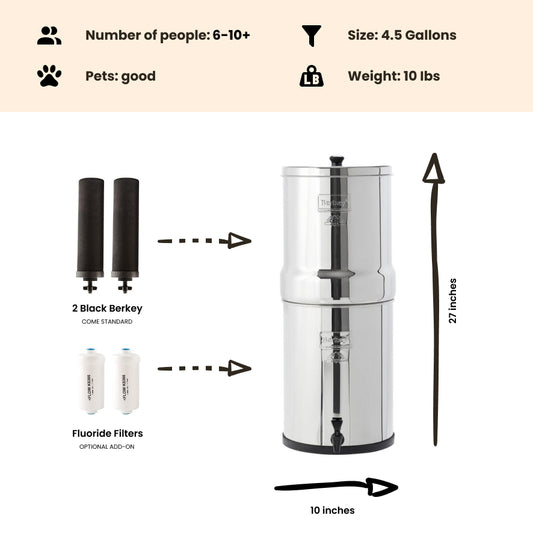
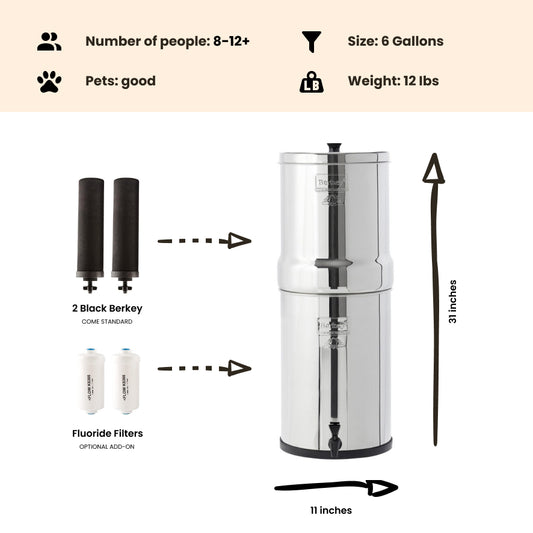
All stainless Berkey systems use the same filter elements, so mercury reduction is identical across sizes. The choice between a Big Berkey, Royal Berkey, or larger system is about capacity and household size, not filtration.
Which Berkey element should I order to remove mercury?
The Berkey Phoenix is the current Berkey gravity element available to order, certified to NSF/ANSI 42 and 372 and verified for mercury reduction to non-detect. The Black Berkey is the long-established element with its own independent mercury testing, and whichever element your system uses, mercury is reduced to non-detect.


 By
Dan DeBaun
By
Dan DeBaun