Arsenic in drinking water is a naturally occurring toxic metalloid that leaches from rocks and soils into groundwater. The EPA maximum contaminant level for arsenic in public drinking water is 10 micrograms per liter, with a stated long-term goal of zero. Long-term exposure even at low levels has been associated with cancer, cardiovascular disease, neurological effects, and developmental harm in children. The dominant exposure route is ingestion through tap water. An estimated 2 million Americans are exposed to arsenic in their drinking water at levels of concern, with private well users facing the greatest risk because well water is not federally regulated and is rarely tested.
Quick Answer
Arsenic is tasteless, colorless, odorless, and dangerous at low levels over time. The EPA limit is 10 ppb but the long-term goal is zero. Children, pregnant women, and well-water households face the highest risk. Testing is the only way to know if it is present. For background on filtration, see our arsenic water filter buying guide and brand-specific lab data in does Berkey reduce arsenic.
What Are Acceptable Levels of Arsenic in Water?
In 2006, the US Environmental Protection Agency revised the maximum contaminant level for arsenic in public drinking water from 50 parts per billion down to 10 ppb. The standard was tightened as scientific evidence accumulated on the long-term health impacts of chronic low-level arsenic exposure. The EPA's stated long-term goal for arsenic in drinking water is zero, because no safe level of arsenic exposure has been established.
The 10 ppb standard applies only to public drinking water systems. Private well water is not federally regulated for arsenic and is not routinely tested by any government agency. Well owners are responsible for their own testing. As a result, many well users have no idea if their water is contaminated, or to what degree.
EPA Arsenic Standards at a Glance
-
Public water systems: 10 ppb maximum (enforceable)
-
Long-term EPA goal: Zero
-
Private wells: Unregulated; testing is the well owner's responsibility
-
Bottled water (FDA): 5 ppb maximum
Health Effects of Arsenic in Drinking Water
Long-term exposure to arsenic in drinking water has been associated with a range of serious health outcomes by the World Health Organization, the EPA, and peer-reviewed research. The key documented effects include:
-
Cancer. Arsenic is a known human carcinogen. Long-term exposure has been linked to cancers of the skin, bladder, lung, liver, kidney, and prostate.
-
Skin lesions. Chronic exposure causes dark spots, thickening of the skin on palms and soles, and the development of new lesions or warts.
-
Cardiovascular disease. Chronic exposure has been associated with high blood pressure, hardening of the arteries, and increased cardiovascular mortality.
-
Diabetes. Long-term arsenic exposure has been linked to increased risk of type 2 diabetes.
-
Neurological effects. Arsenic exposure can damage the nervous system, causing numbness and tingling in the extremities.
-
Reproductive and developmental harm. Arsenic exposure during pregnancy is linked to birth defects, fetal mortality, and impaired physical and cognitive development in children. The effects can persist into adulthood.
Why Children Face Higher Risk From Arsenic
Children are not just smaller adults when it comes to arsenic exposure. Three factors make them more vulnerable:
-
Higher intake per pound of body weight. Children consume more water and food per pound of body weight than adults, which means a higher dose of arsenic per pound of body weight for the same water source.
-
Underdeveloped detoxification. Babies and young children have not yet developed full capacity for eliminating environmental toxins from their bodies, so the same dose stays in the system longer and does more damage.
-
Active developmental processes. Children's brains, immune systems, and other organs are actively developing. Toxic exposure during these windows can have lifelong consequences that the same exposure in an adult would not produce.
Symptoms of arsenic exposure in children may include red or puffy skin, changes in skin pigmentation, new skin lesions or warts, stomach aches, diarrhea, nausea, heart palpitations, muscle cramps, and tingling sensations in fingers or toes. Many of these symptoms are nonspecific and can be attributed to other causes, which makes water testing the only reliable way to identify arsenic as the source.
What Arsenic Does to Babies and Pregnant Women
Exposure to arsenic during pregnancy or in early childhood can significantly impact growth and development. Effects include poor physical and cognitive development, weakened immunity, and increased mortality later in life.
One study found that pregnant and breastfeeding mice given drinking water containing legal levels of arsenic (10 ppb, the current EPA limit) had disrupted lipid metabolism, leading to reduced nutrients in their blood and breast milk. The offspring showed significantly stunted growth. The study also found that arsenic exposure during pregnancy can contribute to fatty liver disease in the mother, which is associated with hypertension, diabetes, obesity, and high cholesterol.
A separate study found that babies exposed to arsenic in the womb face an increased risk of infection and respiratory illness in the first year of life. The combined evidence raises a serious question about whether the current 10 ppb EPA limit is sufficiently protective for pregnant women and infants, given the EPA's own stated long-term goal of zero.
Does Arsenic in Water Lower a Child's IQ?
Yes, exposure to arsenic in the womb and in early life has been found to affect brain development, resulting in lower IQ in arsenic-exposed children. Earlier research from Bangladesh and other parts of South Asia established the link between high arsenic exposure and reduced child intelligence. A US study conducted on children living in Maine, where arsenic levels in well water are known to be high, found that children exposed to arsenic in drinking water had significantly lower measured intelligence than peers with low-arsenic water sources.
Lower intellectual performance during the school years can translate into learning problems, academic difficulty, and ultimately limited career opportunities and earning potential in adulthood. The economic and human cost of childhood arsenic exposure compounds across a lifetime, which is one of the reasons the EPA's long-term goal is zero rather than the current 10 ppb enforceable limit.
Cancer Risk From Arsenic in Drinking Water
Arsenic is classified as a known human carcinogen. Peer-reviewed studies link arsenic exposure to cancer of the bladder, skin, lungs, liver, kidney, and prostate. The risk increases with cumulative exposure: people who drink large volumes of arsenic-contaminated water over years are roughly twice as likely to develop bladder cancer compared to those with limited exposure.
One study of private well owners in Vermont, Maine, and New Hampshire, where the regional bladder cancer rate is approximately 20% higher than the US average, confirmed that arsenic in drinking water raises bladder cancer risk substantially. The findings establish a dose-response relationship: the more arsenic consumed over time, the higher the cancer risk.
A separate study suggests that arsenic-related cancers may not appear until years after the initial exposure. This means communities exposed to elevated arsenic in the past can continue to experience higher cancer rates even after the contamination has been addressed, simply because the biological damage was done years earlier. For households on well water, this lag effect is a strong argument for testing now rather than later.
How to Detect Arsenic in Water
Arsenic in water has no color, taste, or smell. There is no way to know it is present without testing. For well water, the only reliable detection methods are:
-
Certified laboratory analysis. Collect a water sample and send it to a certified environmental testing lab. This provides the most accurate result, including the specific arsenic concentration in parts per billion. Costs are typically $20 to $80 per sample depending on the lab and the test scope.
-
At-home arsenic test kits. These typically indicate presence or absence rather than precise concentration. If a home test is positive, follow up with a certified lab to quantify the level.
-
Municipal Consumer Confidence Reports. For public water supplies, your annual CCR (available from your utility or on the EPA's website) includes arsenic among the reported contaminants.
Newer detection technology is emerging that may make arsenic testing more accessible. Researchers have developed a smartphone-paired biosensor accessory that detects arsenic in water using a biological detection method and presents contamination levels visually, similar to a cellphone signal bar display. The technology is not yet widely available commercially, but it points toward a future where on-site arsenic testing becomes more practical for well owners.
Areas With High Levels of Arsenic in US Water
Arsenic concentrations in US drinking water vary by region based on the underlying geology. Approximately 43 million Americans rely on private wells for their drinking water, and an estimated 2 million Americans are exposed to arsenic in drinking water at levels of public health concern.
The US Geological Survey monitors arsenic in groundwater and has published a national map of arsenic distribution. Key findings from USGS surveys include:
- About 7% of private wells tested in the US fail to meet the 10 ppb arsenic standard.
- New England (Vermont, New Hampshire, Maine) shows elevated risk, with approximately 20% of private wells contaminated.
- Maine has the highest documented well-water arsenic in the lower 48, with up to 45% of wells contaminated in some counties, affecting around 80,000 residents.
- Other regions with documented elevated arsenic in groundwater include parts of the Southwest (Arizona, New Mexico, Nevada), the Upper Midwest (Michigan, Minnesota, Wisconsin), the Pacific Northwest, and parts of California.
If your household relies on a private well, regardless of region, the responsible step is to test rather than assume. Geology varies at the local level, so even within low-risk states there are pockets of elevated arsenic.
How to Reduce Arsenic in Drinking Water
Several treatment methods can reduce arsenic in drinking water. The right choice depends on your arsenic concentration, your budget, and whether you are treating a single tap or your whole supply. Methods that work include gravity filtration with an independently tested element, reverse osmosis, activated alumina adsorption, and distillation. Methods that do NOT work include boiling (which actually concentrates arsenic as water evaporates), standard pour-through pitchers (most are not certified for arsenic), and short-flush running of the tap.
For a full side-by-side comparison of arsenic reduction options with 5-year cost analysis, certifications, and use-case recommendations, see our arsenic water filter buying guide. For the brand-specific question of whether Berkey gravity systems reduce arsenic, see does Berkey reduce arsenic for independent lab data on both Black Berkey and Berkey Phoenix elements. For broader context on heavy-metal reduction, see the heavy metals water filter guide and the full contaminant list a Berkey reduces.
For other heavy-metal contaminants you may want to address alongside arsenic, see our guides on lead in drinking water and chromium-6 reduction.
Protect Your Household From Arsenic
Test your water first, then choose the right filter. Independent lab data is available for both Black Berkey and Berkey Phoenix arsenic reduction.
Frequently Asked Questions
What causes arsenic in drinking water?
Most arsenic in drinking water comes from natural geological sources. Arsenic occurs naturally in rocks and soils and can leach into groundwater that supplies wells and municipal supplies. Industrial sources contribute in some regions, including historical mining activity, agricultural pesticide use (now largely discontinued), and certain manufacturing processes. The dominant source for most contaminated US water supplies is natural geology rather than industrial pollution.
Is arsenic in drinking water dangerous at low levels?
Yes. Long-term exposure to arsenic at levels below the current EPA limit of 10 ppb has been associated with increased cancer risk, cardiovascular disease, and developmental harm in children. The EPA's stated long-term goal for arsenic is zero precisely because no safe level of arsenic exposure has been established. The 10 ppb enforceable limit is a practical compromise between health protection and water treatment cost, not a level scientifically determined to be safe.
Can arsenic in water lower a child's IQ?
Yes. Multiple peer-reviewed studies have documented reduced intelligence in children exposed to arsenic in drinking water. Research conducted in Bangladesh, Mexico, and the US (including studies in Maine where well-water arsenic is elevated) consistently shows lower measured IQ in arsenic-exposed children compared to peers with low-arsenic water. The effects can persist into adulthood and translate into reduced academic performance and earning potential.
Does arsenic in drinking water cause cancer?
Yes. Arsenic is classified as a known human carcinogen by major health authorities including the WHO and EPA. Peer-reviewed studies link arsenic exposure to cancers of the bladder, skin, lungs, liver, kidney, and prostate. Risk increases with cumulative exposure, and arsenic-related cancers may appear years or even decades after the original exposure, meaning the health consequences can outlast the contamination.
How many Americans are affected by arsenic in drinking water?
An estimated 2 million Americans are exposed to arsenic in their drinking water at levels of public health concern. Approximately 43 million Americans rely on private wells, and around 7% of those wells fail to meet the EPA 10 ppb arsenic standard. Some regions, particularly New England (with Maine the most heavily affected), the Southwest, and the Upper Midwest, show much higher contamination rates than the national average.
Which US states have the highest arsenic in well water?
Maine has the highest documented well-water arsenic levels in the contiguous US, with up to 45% of wells in some counties exceeding the EPA 10 ppb limit. Other states with elevated arsenic in groundwater include New Hampshire, Vermont, Arizona, New Mexico, Nevada, Michigan, Minnesota, Wisconsin, parts of California, and the Pacific Northwest. The US Geological Survey publishes a national map showing arsenic distribution by region. Local geology varies, so households on private wells should test regardless of state-level risk.
What are the symptoms of long-term arsenic exposure?
Long-term arsenic exposure can cause skin lesions, changes in skin pigmentation, thickening of skin on the palms and soles, numbness or tingling in extremities, stomach issues, heart palpitations, and elevated risk of cardiovascular disease, diabetes, and cancer over time. Many early symptoms are nonspecific and easily attributed to other causes, which is why water testing rather than symptom-watching is the responsible way to identify arsenic exposure.


 By
Dan DeBaun
By
Dan DeBaun




It's great to hear that arsenic testing can be done for around $50 or so, not too expensive. My brother wants to make sure his new well is going to be very safe for him and his family. He needs to find a local contractor and plumber to work with that will be able to get this done properly.
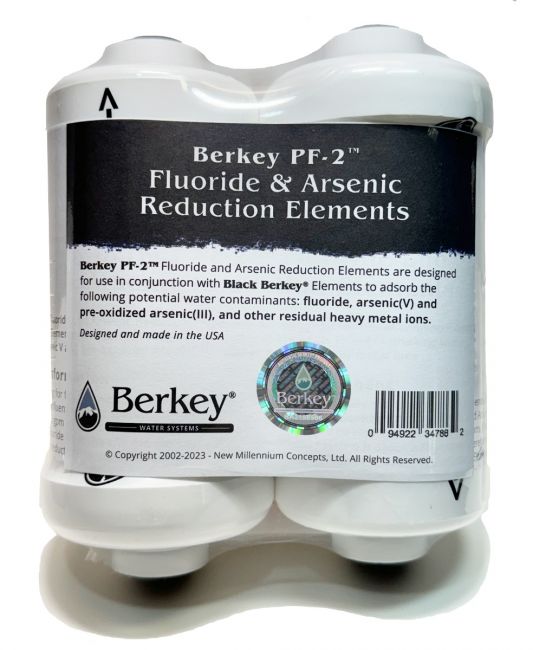
Why does the article say "I’m partial to Berkey water filters since they are distinguished for their arsenic removing filter technology and the systems last for many years without needing regular filter replacements typical of others on the market" when the fluride/arsenic filter specs say replace after every 1000 gallons??
Hi Jim -
This is in reference to other systems / filters that require either monthly, 6-month, or yearly replacements. The PF-2's last an average of 2 years for our customers.
Thanks
Dan
Do you have point of use arsenic removal for the shower?
Hi Laura -
No, I'm sorry, but we do not.
Thanks
Dan
Hiya! I simply want to give an enormous thumbs up for the nice information you could have right here on this post. I will probably be coming again to your blog for more soon.