Drinking water daily is essential for our health and wellbeing. But as tap water can contain a wide range of contaminants that can cause us harm, many consumers opt for purified water as a healthier option.
That leaves us with two alternatives: distilled and filtered water. While they are both forms of purified water, their qualities, characteristics, and health benefits differ. So which one's the best for you?
What Water Purification Process is Used to Produce Distilled Water and Filtered Water?
Two very different processes create these water types. One relies on distillation, while the other uses filtration.
Water Distillation
Distillation works by heating the water to create steam. A cooling system captures that steam and turns it back into liquid form, leaving most contaminants behind.
By stripping away bacteria, viruses, and heavy metals, this method results in highly pure water.
However, the process also removes the minerals found in filtered water, often giving it a flat taste. Labs and hospitals typically use it in settings where absolute purity is critical.
Here you can learn more about what distilled water is.
Water Filtration
By “filtered” we mean water that flows through various media, which catch impurities and contaminants like a microscopic net.
The filtration process relies on techniques like activated carbon filters, reverse osmosis, and ultraviolet (UV) purification.
These filters can remove a vast array of pollutants, from sediments and chlorine to bacteria and viruses, while often keeping the good stuff that contributes to the water's taste and health benefits.
People commonly use filtered water for drinking, cooking, and general household purposes.
You can learn more about what filtered water is here.
What is the Difference Between Distilled and Filtered Water?
Let's break down exactly how they compare.
Distilled Water Contaminant Removal
Distillation is a powerhouse for purifying water and strips out almost everything, including:
- Inorganic compounds such as salts (e.g., sodium, calcium, magnesium, and potassium), and heavy metals (e.g., lead, mercury, arsenic, and cadmium).
-
Pathogenic microorganisms such as bacteria, viruses, and parasites.
-
Chemicals such as chlorine and chloramines, industrial chemicals and solvents, and other volatile organic compounds (VOCs).
-
Organic compounds such as pesticides and herbicides, and pharmaceutical residues.
-
Radionuclides such as radium and uranium are often found in groundwater in certain areas.
-
Particulates and sediments, such as suspended particles like sand, silt, and rust. They don't vaporize and are left behind in the boiling chamber.
Distillation is effective at removing a wide range of contaminants, making it a reliable method for producing highly pure water. However, it can be less effective against certain volatile organic compounds (VOCs) that have boiling points lower than 100°C (like benzene or certain pesticides). In these cases, you might need additional filtration, such as activated carbon, to get rid of them entirely.
Characteristics and Uses of Distilled Water
Distilled water is a high-purity liquid, as the process removes almost all minerals and impurities, leaving only pure H2O.
This is beneficial for precise work in labs or medical facilities. The catch is that it can leave the water with a bland, flat taste due to the lack of minerals that give water its flavor.
Filtered Water Contaminant Removal
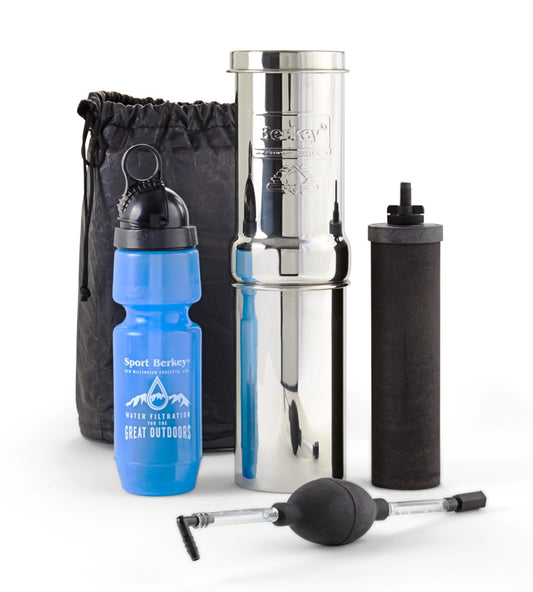
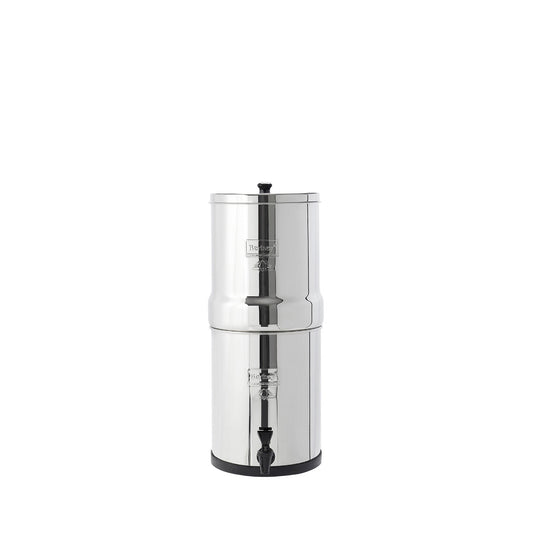
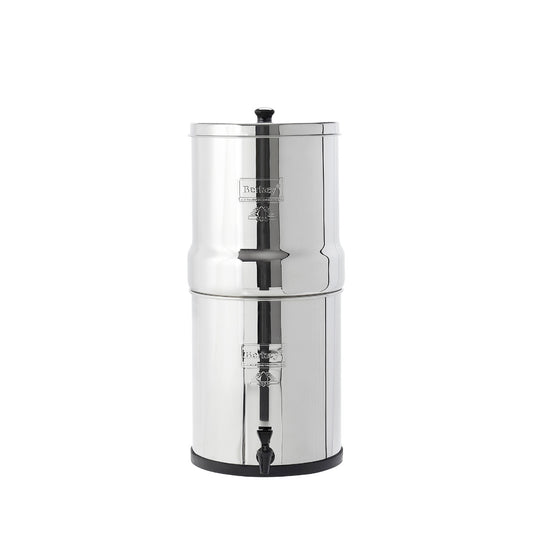
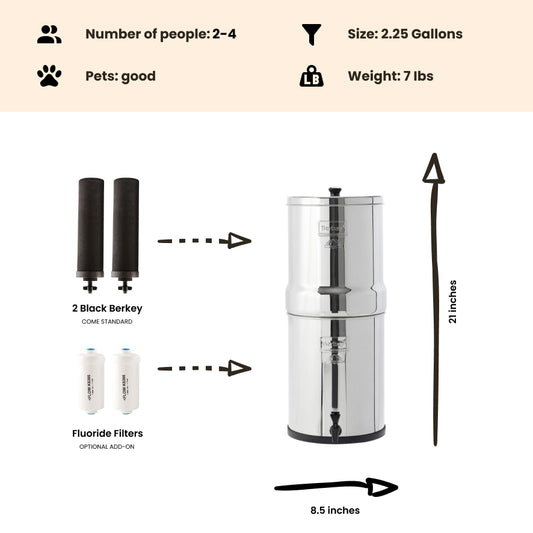
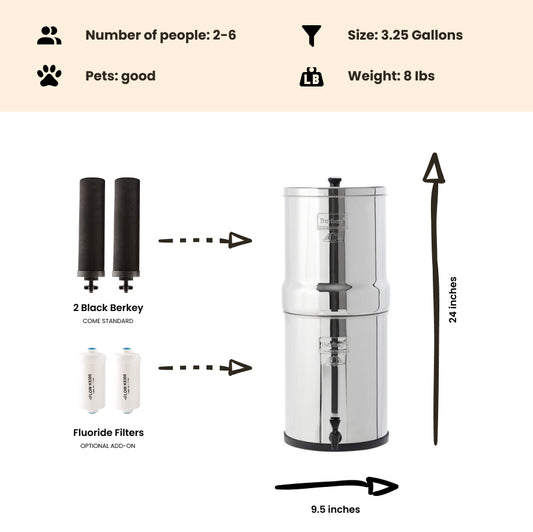
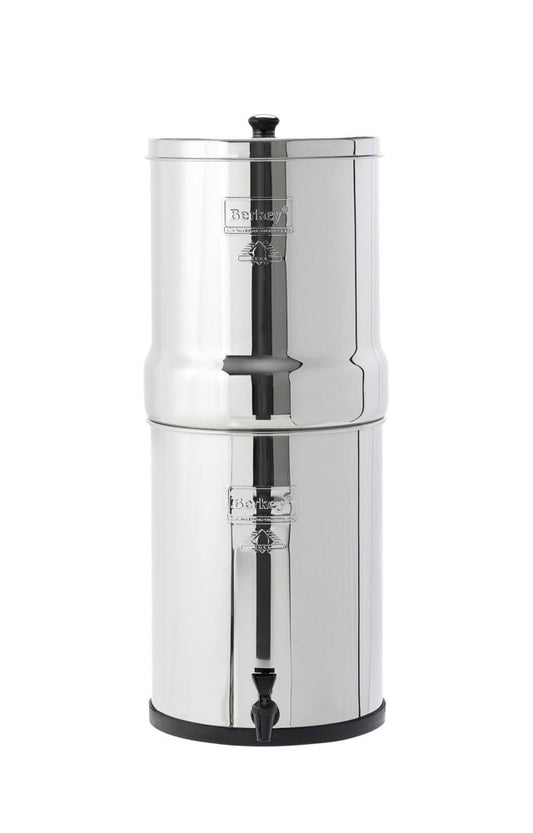
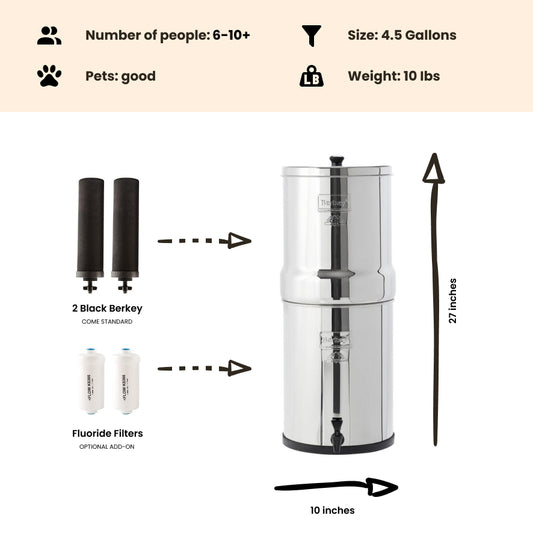
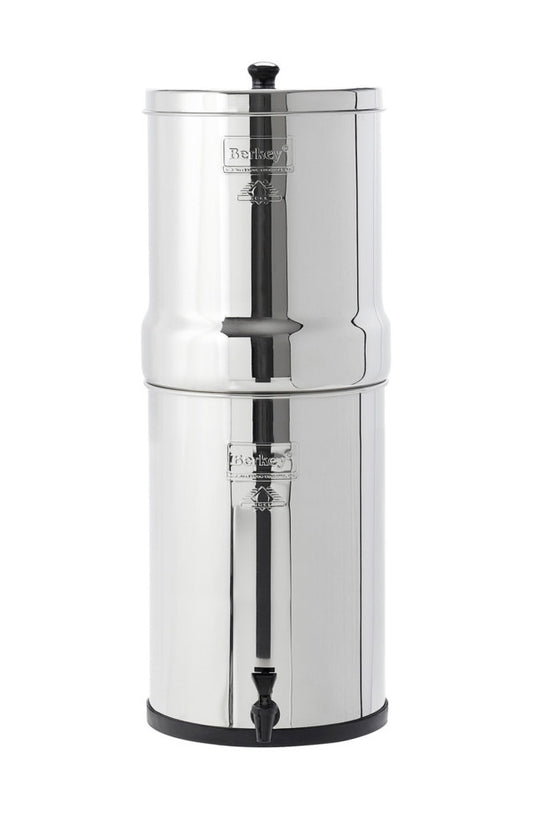
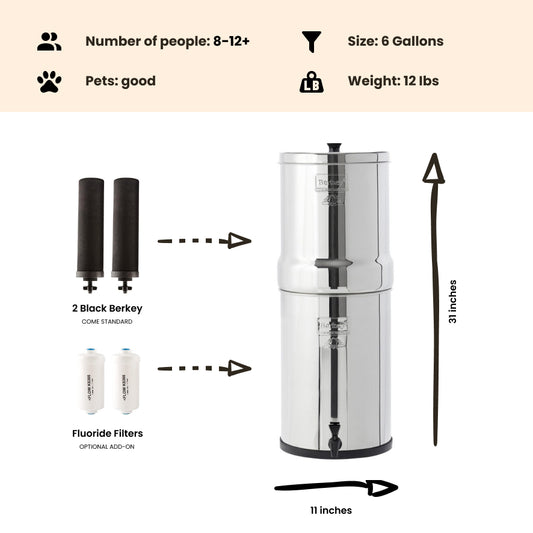
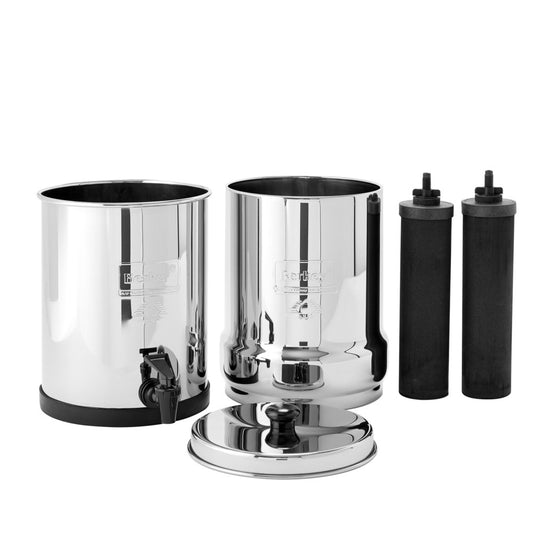
Filtration is highly effective at cleaning water. However, not all filters are created equal. Unlike distillation, filtration targets specific contaminants like chlorine and sediment while retaining minerals. High-quality systems, like the Berkey home water filtration system fitted with Berkey Phoenix filter elements, remove over 200 common drinking water contaminants. It tackles heavy metals, bacteria, chemicals, and even radionuclides. However, unlike distillation, filtration retains beneficial minerals that contribute to the taste of water and benefits our health.
Do Filters Remove 'Forever Chemicals' (PFAS)?
People are increasingly worried about per- and polyfluoroalkyl substances (PFAS/PFOA) in tap water. While standard carbon filters work better than others against these "forever chemicals," manufacturers rigorously test high-quality gravity filters to ensure they remove them to below detectable levels.
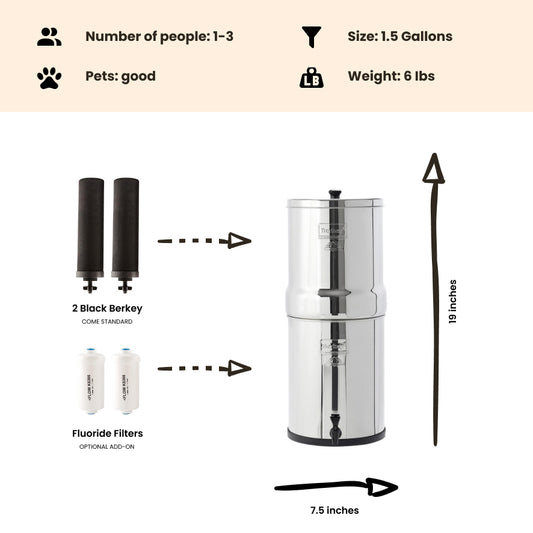
You might also need additional filters, such as the Berkey Phoenix fluoride and arsenic filters, to remove fluoride and arsenic if you are concerned about these contaminants in your tap water.
Characteristics and Uses of Filtered Water
You can customize water filtration systems to address specific water quality issues, making them perfect for home use. Depending on the filtration method, filtered water retains some minerals, which can improve the taste of the water and be beneficial for health.
As a result, filtered water generally tastes better than distilled water and is the healthier option due to the presence of minerals. Filtered water is great for drinking, cooking, and general household use. In our taste tests, we found that coffee brewed with filtered water tasted richer compared to the flat taste produced by distilled water.
Comparison Summary Between Distilled and Filtered Water
To make the differences easier to understand, here’s a side-by-side comparison of distilled and filtered water. This overview highlights how each option differs in purity, taste, cost, mineral content, and overall practicality.
|
Distilled Water
|
Filtered Water
|
|
Purity
|
High purity, nearly all contaminants removed.
|
High purity but retains some beneficial minerals; effectiveness depends on the filter type.
|
|
Taste
|
Flat or bland due to lack of minerals.
|
Often preferred for drinking due to retained minerals.
|
|
Uses
|
Ideal for laboratory, medical, and industrial applications requiring pure water.
|
Suitable for everyday household use, including drinking and cooking.
|
|
Cost & Convenience
|
Less convenient due to slow production time (home) or need to transport bottles (store).
|
Generally more cost-effective and convenient, with various filtration systems available for home use.
|
|
Mineral Content
|
None (completely removed).
|
Retained (beneficial for health/taste).
|
|
Energy Use
|
High energy (boiling process).
|
Low energy (gravity or pressure based).
|
As you can see, both methods produce purified water—but they do so in very different ways. To better understand this, let’s take a closer look at how costs and environmental impact compare.
How Do Costs and Environmental Impact Compare?
Distillation leaves a heavy environmental footprint because it is a high-energy process that requires boiling water continuously. While it produces no wastewater, the electricity costs make distilled water generally more expensive per gallon. In contrast, basic filtration is the most eco-friendly option, requiring low energy and producing no wastewater. Reverse osmosis sits between the two; it uses less energy than distillation but wastes a lot of water during the filtration process.
The choice between distilled and filtered water really comes down to whether you prioritize absolute purity or better taste and sustainability.
Which Water Should You Use for Appliances and CPAP?
Distilled water is the best choice for steam irons, humidifiers, CPAP machines, and car batteries. Because it lacks minerals, it prevents the scale buildup that can damage these devices over time.
On the other hand, filtered water is the better choice for brewing coffee or tea, as the retained minerals help bring out the flavor of the beans and leaves.
In short: use distilled water for appliances that require mineral-free performance, and filtered water for everyday drinking and cooking where taste and balanced mineral content matter most.
Can You Drink Distilled Water?
While you can drink distilled water without any side effects over the short term, it may not be safe to drink distilled water for extended periods. According to the World Health Organization (WHO), drinking demineralized water over time may cause health issues because it lacks the essential minerals your body needs.
Why You Should Use Filtered Water Instead of Distilled Water for Drinking
If you are concerned about the quality of your tap water, filtration should be your smartest choice for high-quality drinking water.
Drinking filtered water offers several benefits, including the health perks that come from the lack of contaminants, such as improved hydration, digestive health, and cognitive function. You also help the environment by reducing plastic waste, lowering greenhouse gas emissions, and saving water. This way, you support your own health and the health of the planet.
If you're ready to improve your drinking water, check out our Berkey water filter systems and choose the right filter for your home.
FAQ: Distilled Water vs. Filtered Water
1. Is distilled water the same as filtered?
No. Distilled water is boiled to steam and condensed, whereas filtered water runs through a sieve to catch contaminants.
2. What is the difference between distilled water and filtered water?
Distilled water contains no minerals or salts, whereas filtered water contains beneficial salts and minerals that your body needs to replace those lost through sweating and urination.
3. Can I use distilled water instead of filtered water?
Yes, but only for a limited time, as it does not contain the beneficial minerals your body needs to stay healthy.
Sources: