Boiling water reduces many disease-causing microorganisms, but it does not remove chemical contaminants such as heavy metals, pesticides, PFAS, or other industrial chemicals, and it can actually concentrate those contaminants further as water is lost to steam. If your water is affected by a boil water advisory or you're simply unsure about tap water quality, this guide covers exactly what boiling does and does not accomplish, and why chemical contaminants in everyday tap water call for a different tool.
Quick answer: Boiling makes water safer from a biological-contamination standpoint by reducing many disease-causing microorganisms, but it does nothing for heavy metals, PFAS, pesticides, or other dissolved chemicals, and it will not clarify cloudy or sediment-heavy water. For biological risk alone, boiling is often sufficient. For chemical contaminants, you need filtration.
What Boiling Water Actually Does
Bringing water to a rolling boil is an effective way to reduce many disease-causing microorganisms that can be present in an untreated or compromised water source. This is why boiling is one of the standard emergency recommendations during a boil water advisory or after a natural disaster disrupts normal water treatment.
Boiling Handles
- Many disease-causing microorganisms present in the water
- Biological contamination risk from a compromised or untreated source
Boiling Does Not Handle
- Heavy metals such as lead
- Pesticides, PFAS, and other industrial chemicals
- Dissolved minerals
- Suspended particles, sediment, or cloudiness
How Long Should You Boil Water?
Water typically reaches a boil at about 212°F (100°C) at sea level, though the exact boiling point drops as altitude increases. The general recommendation is to bring water to a full rolling boil and keep it there for at least one minute, longer at higher altitudes, to reduce the microorganisms most likely to be present.
Does Boiling Water Remove Chemicals or Heavy Metals?
No. Boiling water does not remove chemical contaminants such as lead, other heavy metals, pesticides, or PFAS. In fact, boiling can make these contaminants more concentrated, not less, since some of the water evaporates as steam while the dissolved chemicals stay behind in the remaining liquid.
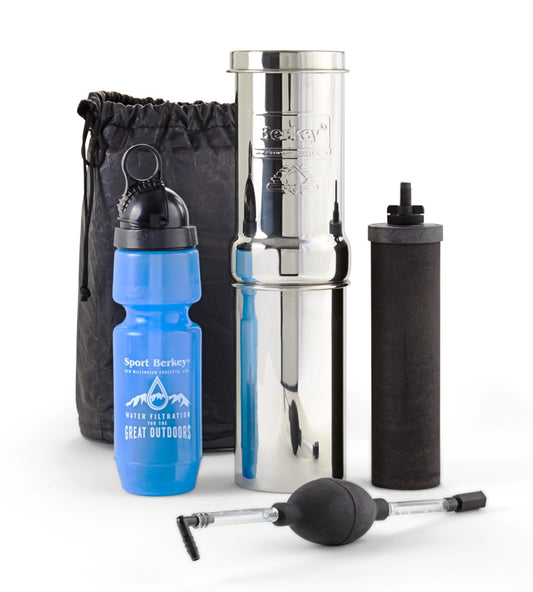
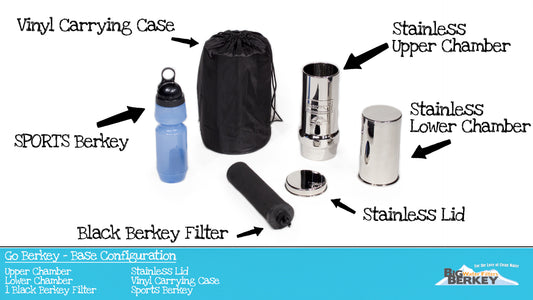
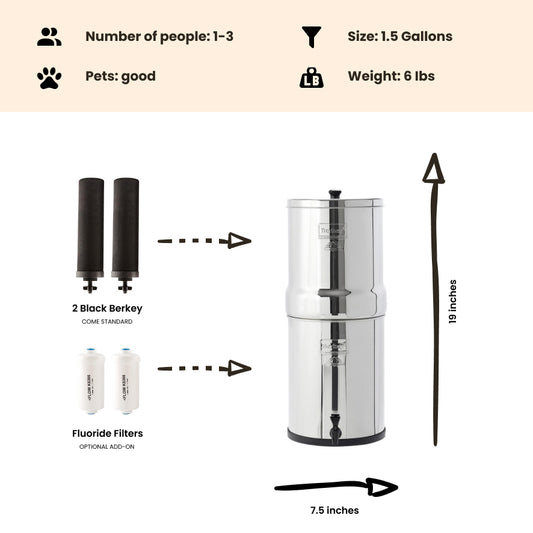
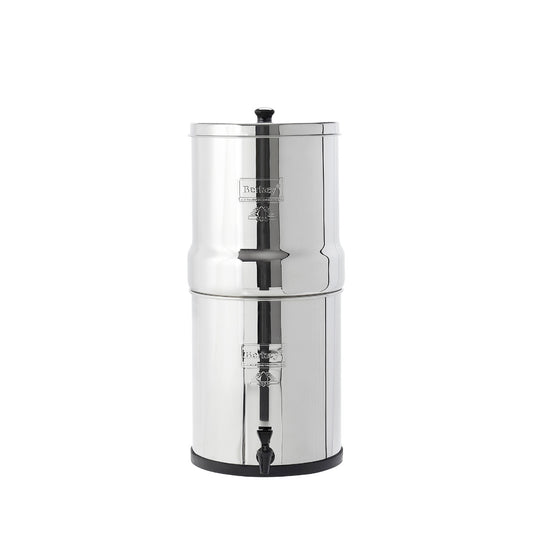
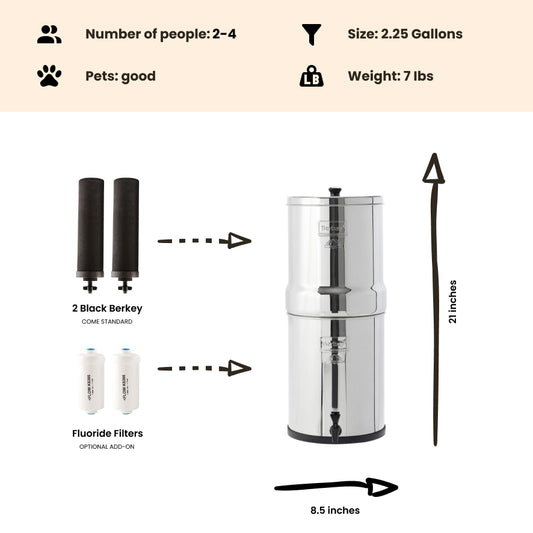
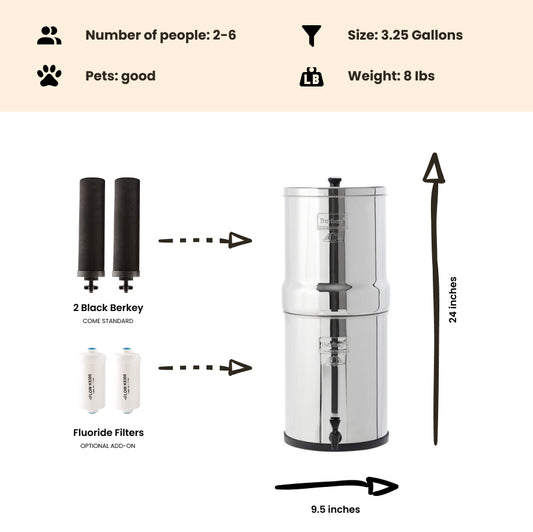
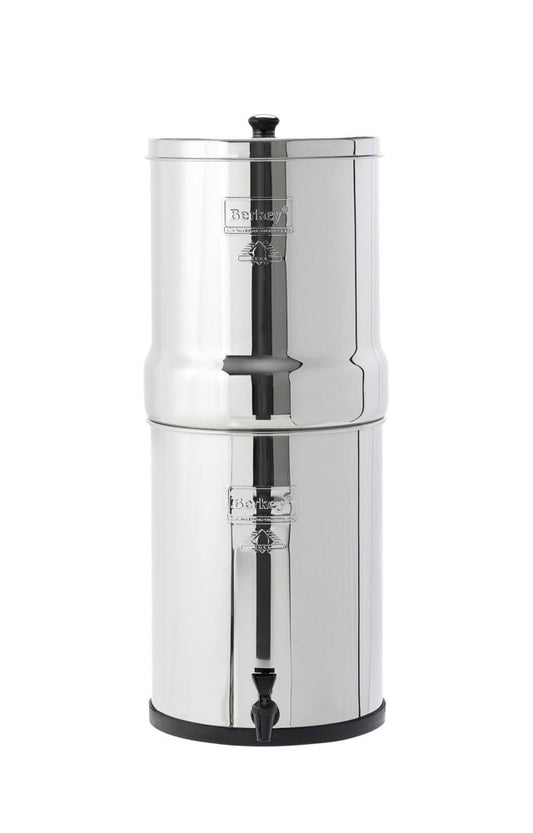
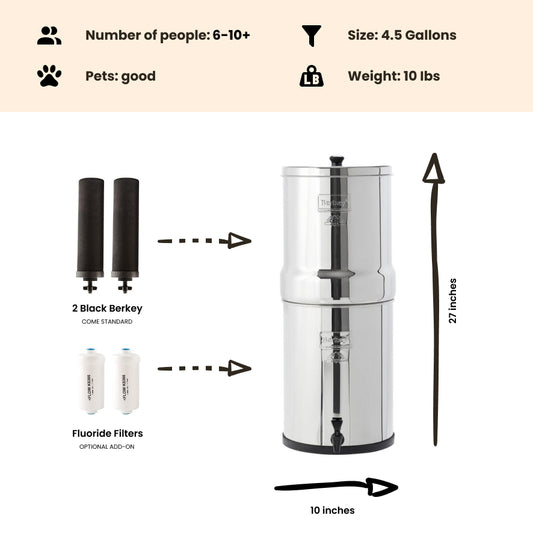
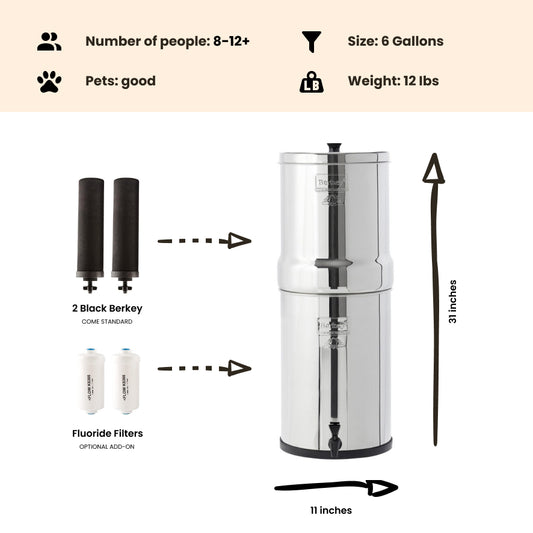
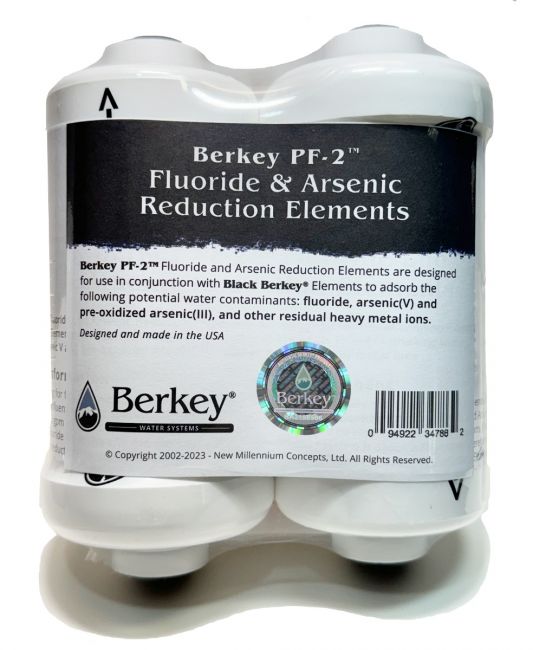
If chemical contamination is a concern, boiling will not solve it. A filtration system built to reduce a broad range of chemical and heavy metal contaminants from treated tap water is the tool for that job. Every new Berkey system ships with Black Berkey Elements while supplies last, and the authorized replacement is the Berkey Phoenix Element, an NSF/ANSI 42 and NSF/ANSI/CAN 372 certified element made by the same manufacturer. Both element types are independently tested on treated water and are built to reduce a wide range of chemical and heavy metal contaminants; see our full breakdown of what contaminants a Berkey removes for the complete lab-tested list.
Does Boiling Water Remove Minerals?
No. Naturally occurring minerals such as calcium, magnesium, and potassium are generally beneficial and contribute to water's taste. Boiling does not remove them, and can actually increase their concentration as water evaporates. In excess, these minerals contribute to water hardness, which can affect pipes and appliances over time, but boiling is not a hardness-reduction method. A water softener or a reverse osmosis system is the appropriate tool if mineral buildup is the specific concern.
Does Boiling Water Clarify Cloudy or Turbid Water?
No. Boiling does not remove suspended particles or sediment that make water look cloudy or discolored. If your water is visibly turbid, it's best to filter out the sediment before boiling, so the water is genuinely usable rather than just boiled and still cloudy.
What to Do Instead of Boiling Alone
During a boil water advisory, follow the utility's instructions: boil, or use bottled water, until the advisory is lifted. Chemical disinfection with chlorine tablets is another option for biological risk specifically, but like boiling, none of these approaches address chemical or heavy metal contamination.
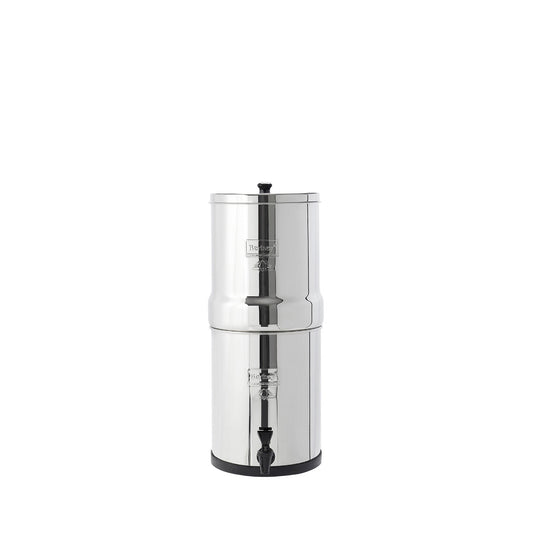
The chemical side of the problem is a normal-tap-water problem, not an advisory problem. Once your water is back to its treated, potable state, a gravity-fed filtration system such as a Berkey requires no electricity or plumbing and is built to reduce over 200 common drinking water contaminants in municipal and treated well water, including the chemicals and heavy metals that boiling leaves behind. Boiling is the tool for a biological advisory; filtration is the tool for what is in your tap water every other day.
Cover What Boiling Can't
See the full lab-tested contaminant list and find the right Berkey system for your household.
FAQ
Is boiling water enough to make it safe to drink?
It depends on what's in your water. Boiling reduces many disease-causing microorganisms, which is often the main concern during a boil water advisory. It does not address chemical contaminants such as pesticides, heavy metals like lead, or PFAS, so boiling alone may not be enough if chemical contamination is a possibility.
Does boiling water make it drinkable?
It depends on the quality of the water source. If the concern is biological contamination, bringing water to a rolling boil for at least one minute meaningfully reduces that risk. If the water source may also contain chemical contaminants, boiling alone will not make it fully safe.
How long do you need to boil water to reduce contamination?
At least one minute at a full rolling boil, longer at higher altitudes where water boils at a lower temperature.
How clean is water after boiling?
Boiling reduces many disease-causing microorganisms but does not clean water in a broader sense. It will not remove sediment or cloudiness, and it will not remove chemical contaminants or heavy metals, both of which can become more concentrated as water evaporates during boiling.
Is boiling water as good as filtered water?
No, they address different things. Boiling primarily reduces biological contamination. A high-quality filtration system such as a Berkey is built to reduce a much broader range of contaminants, including heavy metals, pesticides, PFAS, and other chemicals that boiling leaves untouched or even concentrates.
Does boiling water remove PFAS or forever chemicals?
No. PFAS and other industrial chemicals are not addressed by boiling, and boiling can concentrate them further as water evaporates. Reducing PFAS requires a filtration system independently tested for those specific compounds, such as Berkey's Black Berkey or Berkey Phoenix elements.


 By
Dan DeBaun
By
Dan DeBaun