Last updated: September 11, 2026 | By Dan DeBaun
The EPA's first enforceable drinking water limit for PFOA and PFOS, 4 parts per trillion each, took effect in April 2024 and the agency confirmed in April 2025 it is keeping those limits in place. In May 2026 the EPA proposed letting water systems extend their compliance deadline from 2029 to 2031; that proposal has not been finalized as of this update. Separately, the Environmental Working Group's contamination tracker has confirmed PFAS at 9,728 sites across all 50 states as of its most recent update, up from 712 sites in 49 states when this contamination first made national headlines in 2019. This article covers what's actually regulated today, where contamination has been found, and what removes PFAS from water you're already drinking.
What EPA currently regulates, and what it doesn't
EPA finalized National Primary Drinking Water Regulations for PFOA and PFOS in April 2024, setting a maximum contaminant level of 4 parts per trillion for each, the first enforceable federal limit either chemical has ever had. In April 2025, EPA's leadership confirmed it is upholding those two limits rather than rolling them back.
The rest of the original 2024 rule did not survive intact. EPA also set limits for PFHxS, PFNA, and GenX (HFPO-DA) at 10 parts per trillion each, plus a combined Hazard Index standard for water containing two or more of those three chemicals together with PFBS. On May 18, 2026, EPA published a proposed rule to rescind those additional limits, alongside a second proposed rule that would let utilities request an extension of the PFOA and PFOS compliance deadline from April 2029 to 2031. Public comment on both closed July 20, 2026. Neither has been finalized, and a separate court challenge to the 2024 rule (American Water Works Association v. EPA) is pending in the D.C. Circuit.
Practically, that means a water system can meet every current federal requirement while still supplying water with meaningful levels of PFHxS, PFNA, or GenX if the rescission goes through, since those limits are the ones on the chopping block.
Where PFAS contamination has been found
The first national estimate came from a 2016 Harvard analysis of EPA monitoring data, which found PFOA or PFOS at or above the agency's then-current 70 parts per trillion health advisory in public water systems serving about six million Americans, concentrated near military fire-training areas, industrial sites, and wastewater treatment plants. By 2017 the Environmental Working Group's tally of Americans with detectable PFAS in their tap water had reached 15 million, and the count has kept climbing as testing expanded.
The Environmental Working Group and Northeastern University's PFAS Project Lab maintain the most complete public record of confirmed contamination, an interactive map built from drinking water testing, military records, and industrial site data. Their count has grown sharply as testing has expanded: 610 sites in 2018, 712 sites across 49 states in 2019, 3,186 sites by 2023, and 9,728 sites across all 50 states as of their most recent update. That growth mostly reflects more testing turning up contamination that was already there, not a sudden new source of pollution.
Military and firefighter training bases remain one of the largest single categories, a legacy of decades of firefighting foam containing PFAS. Airports, industrial manufacturing sites, and landfills make up most of the rest. If you want to check a specific address or zip code, the EWG map is searchable directly.
Why state guidelines still matter
Before EPA's 2024 rule, there was no federal drinking water standard for any PFAS chemical, so a number of states set their own guidelines. A 2019 study in the Journal of Exposure Science & Environmental Epidemiology found that states varied widely: New Jersey set a combined PFOA and PFOS guideline of 13 nanograms per liter, well below EPA's pre-2024 non-enforceable health advisory of 70 nanograms per liter, while North Carolina's was as high as 1,000 nanograms per liter.
"In the absence of federal standards, states are developing their own guidelines, using different approaches to determine what a safe level in drinking water should be," said Dr. Laurel Schaider, an environmental chemist at the Silent Spring Institute and co-author of the study.
EPA's 2024 rule closed that gap for PFOA and PFOS specifically, both now have a federal floor stricter than most of the state guidelines the study compared. But for PFHxS, PFNA, GenX, and the many other PFAS chemicals EPA has not set an enforceable limit for, state-level guidelines are still the only regulatory protection in states that have them, and nonexistent in states that don't.
Does a water filter remove PFAS?
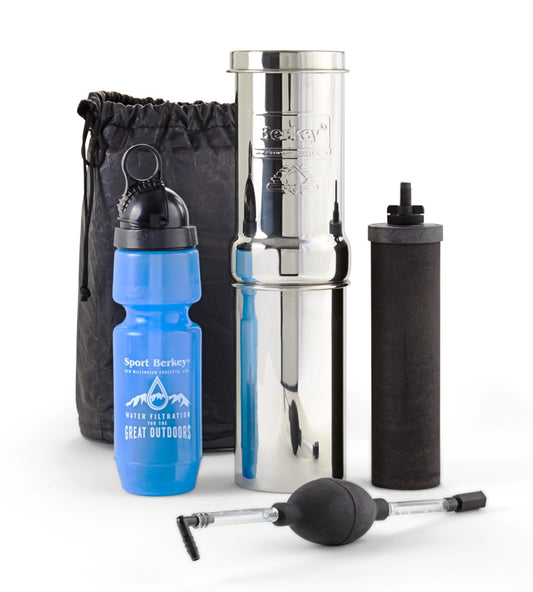
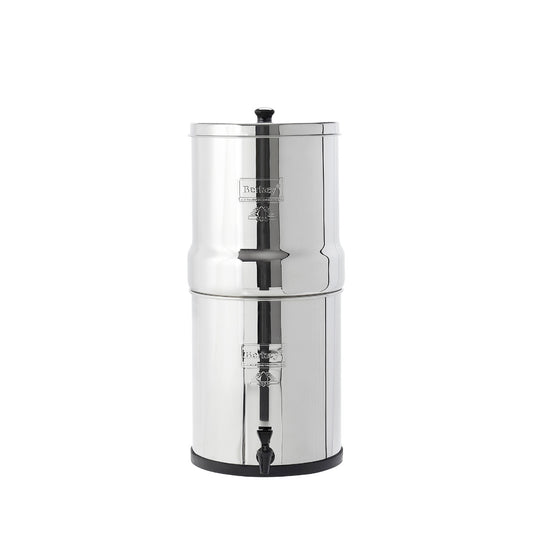
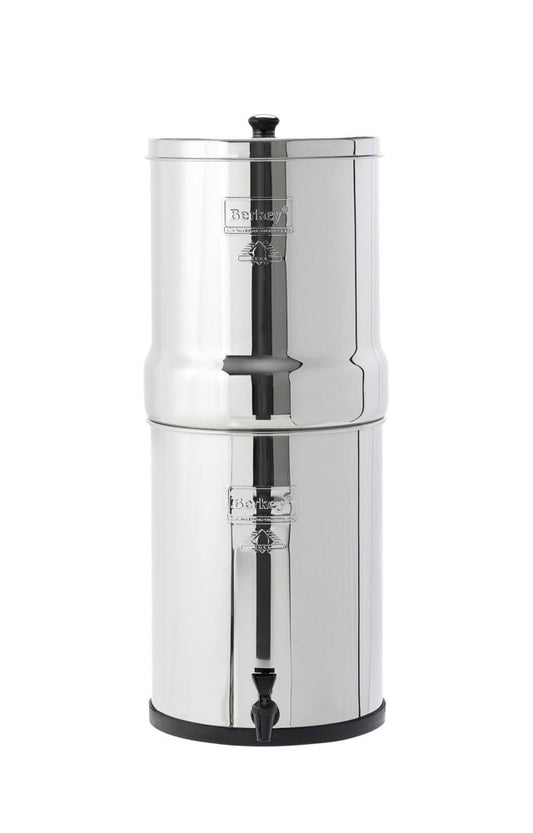
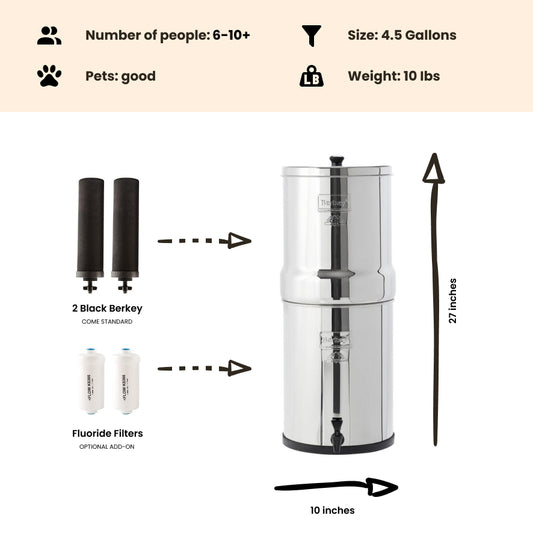
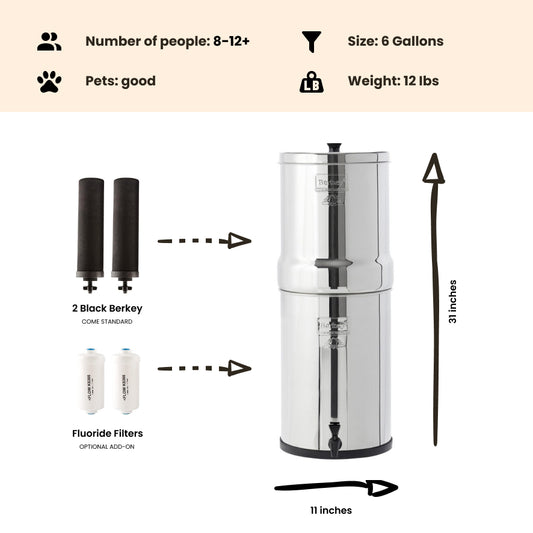
Independent lab testing on Black Berkey filter elements found they reduced PFOA from a spiked concentration of 1.0 microgram per liter to below 0.002 micrograms per liter, a reduction of more than 99.9%, well under EPA's 4 parts per trillion limit. The same test found comparable reductions across a panel of related PFAS compounds including PFOS, PFNA, and PFHxS. Full lab reports for Black Berkey and the current Phoenix filter elements are published on our test results page.
For a full breakdown of PFAS removal rates by chemical and by filter element, along with answers to common questions about GenX and other PFAS variants, see our dedicated Do Berkey Water Filters Remove PFAS and Forever Chemicals? guide.
What a filter can't do: a home water filter reduces PFAS in the water you drink, but it doesn't remove PFAS from the environment or the source contamination itself. If you're near a known contamination site, testing your specific water source is still the only way to know what's actually in it.
What to do if you're concerned about PFAS in your water
-
Check the EWG map for confirmed contamination near your address or water utility.
-
Check your state's guidelines if you're on a private well, since well water isn't covered by EPA's public water system rule at all.
-
Get your water tested by an accredited lab if you have any specific concern, testing is the only way to know your actual levels rather than a regional estimate.
-
Filter at the point of use with a filter independently tested against PFAS specifically, not just labeled "carbon filter," since not all carbon filtration performs the same on PFAS.
Frequently asked questions
What is the current EPA limit for PFAS in drinking water?
EPA's enforceable limit covers only PFOA and PFOS, each capped at 4 parts per trillion, finalized in April 2024 and upheld by EPA as of April 2025. The limits set in 2024 for PFHxS, PFNA, GenX, and the Hazard Index mixture are the subject of a May 2026 proposed rescission that has not yet been finalized.
How many PFAS contamination sites have been confirmed in the US?
The Environmental Working Group's tracker has confirmed PFAS contamination at 9,728 sites across all 50 states as of its most recent update, up from 712 sites in 49 states in 2019.
When do water utilities have to comply with the PFOA and PFOS limits?
The current deadline is April 2029. In May 2026 EPA proposed allowing systems to request an extension to 2031; as of September 2026 that proposal has not been finalized.
Do state PFAS guidelines still matter now that EPA has a federal rule?
Yes, for the PFAS chemicals EPA doesn't regulate. The federal rule only sets an enforceable limit for PFOA and PFOS. States with their own guidelines for PFHxS, PFNA, GenX, and other PFAS chemicals are still the only protection those chemicals have in states that set one.
Does a Berkey filter remove PFAS?
Independent lab testing found Black Berkey elements reduce PFOA and related PFAS compounds by more than 99.9%, to below EPA's 4 parts per trillion limit. Full lab reports and a complete FAQ are on our dedicated PFAS removal guide.
Is well water covered by EPA's PFAS rule?
No. EPA's rule applies to public water systems. Private wells aren't regulated by it, so if you're on a private well, testing your water directly is the only way to know your PFAS levels.
Bottom line
PFAS regulation has genuinely moved since this contamination first made headlines: PFOA and PFOS now have an enforceable federal limit, and the known scope of contamination has grown more than tenfold as testing has caught up. But the rule only covers two of the many PFAS chemicals in use, three more limits are proposed for rescission, and private wells aren't covered at all. Checking your specific water source, whether through the EWG map, your state's guidelines, or direct lab testing, still tells you more than any national average can.


 By
Dan DeBaun
By
Dan DeBaun




Today the House will consider amendments to the National Defense Authorization Act for FY 2020 that will quickly phase out military use of PFAS in firefighting foam and food packaging and would accelerate efforts to clean up military contamination.