Last updated: September 14, 2026
Filtered water is good for you when your tap water carries something you would rather not drink: lead from older plumbing, chlorine and its byproducts, PFAS, or simply a taste that keeps you reaching for bottled water instead. Municipal treatment makes water safe enough to meet federal limits, but "meets the limit" is not the same as "contains none." The EPA's own goal for lead in drinking water is zero, and it sets the enforceable action level at 15 parts per billion because zero is not achievable at the plant. A home filter closes that gap at the one tap that matters most, the one you drink from.
Quick answer: Filtering tap water is worth it for most households for seven reasons: it reduces lead and other metals that enter water after treatment, reduces chlorine and disinfection byproducts, reduces PFAS that many treatment plants do not yet remove, improves taste so you drink more, makes coffee, tea, and cooking taste the way they should, removes sediment and rust, and costs far less than bottled water while creating no plastic waste. The right filter depends on what is actually in your water, so check your utility's annual water quality report or test a sample first.
Why Is It Important to Filter Water?
Public water systems in the United States are regulated under the Safe Drinking Water Act and, for the most part, do a good job. The problem is what happens between the treatment plant and your glass, and what the rules do not yet cover.
-
Contaminants picked up after treatment. Lead does not come from the reservoir. It leaches from lead service lines, older solder, and brass fixtures inside homes, which is why a utility can pass its tests while an individual tap does not.
-
Disinfectant byproducts. Chlorine is added on purpose to kill microbes. When it reacts with organic matter in the water it forms trihalomethanes and haloacetic acids, both regulated, both still present at low levels in most chlorinated supplies.
-
Contaminants the rules are catching up on. The first federal PFAS limits were only finalized in April 2024. Utilities have until 2029 to comply, with a proposed option to extend to 2031. In the meantime the water is legal but not necessarily PFAS-free.
-
Taste and odor. Chlorine, sulfur, and minerals do not have to be unsafe to make water unpleasant enough that people substitute soda or bottled water.
Filtered water simply means tap water that has passed through a system designed to reduce specific contaminants before you drink it. What follows are the seven benefits that hold up to scrutiny, with the sources behind each.
1. Reduces Lead and Other Heavy Metals
Lead is the clearest case for a home filter, because it is added to water by the plumbing in and around your own house. The EPA sets a maximum contaminant level goal of zero for lead, noting it "can be harmful to human health even at low exposure levels," and the CDC states there is no known safe level of lead in a child's blood. The enforceable action level is 15 ppb (dropping to 10 ppb in November 2027), and a utility only has to act when more than 10 percent of sampled homes exceed it. Your home can be in the other 10 percent.
Arsenic (federal limit 10 ppb) is the other metal worth checking, especially on private wells in the West and Southwest. Point-of-use filters that are independently tested for lead and arsenic reduction can bring both down at the tap without touching the plumbing. Ask for the lab report, not the marketing claim.
2. Reduces Chlorine and Disinfection Byproducts
Chlorine is the reason US tap water is microbiologically safe, and no one is suggesting utilities stop using it. The trade-off is that chlorine reacts with naturally occurring organic matter to form disinfection byproducts. The EPA limits total trihalomethanes to 80 parts per billion and haloacetic acids to 60 ppb because long-term exposure is associated with elevated cancer risk. Residual chlorine itself is capped at 4 mg/L.
Activated carbon is very good at adsorbing both chlorine and its byproducts, which is why carbon-based filters are the standard recommendation for chlorinated municipal water. The side benefit is immediate: the swimming-pool smell disappears.
3. Reduces PFAS That Treatment Plants Do Not Yet Remove
Per- and polyfluoroalkyl substances, the so-called forever chemicals, are widespread enough that the EPA expects its April 2024 rule to reduce PFAS exposure in drinking water for roughly 100 million people. That rule set limits of 4 parts per trillion for PFOA and PFOS, but utilities have until 2029 to comply (the EPA has proposed allowing extensions to 2031), and conventional treatment (coagulation, filtration, chlorination) does not remove PFAS. Utilities are still designing and funding the granular activated carbon, ion exchange, or reverse osmosis systems needed.
Until that work is done, a home filter with published PFAS test results is the practical option. The EPA's own treatment technology fact sheet lists activated carbon as one of the effective methods, and several gravity and under-sink filters have been independently tested against PFOA and PFOS. For the US regulatory picture and a map of known sites, see our PFAS contamination guide.
4. Better Taste Means Better Hydration
This benefit is behavioral rather than chemical, and it is probably the one that improves the most lives. People drink more water when it tastes clean. Mild dehydration is enough to affect concentration, mood, and energy, and the most common reason people under-drink is that they do not like the water available to them. Filtered tap water that tastes as good as bottled removes the excuse.
Taste is also the easiest benefit to verify: fill two glasses, one filtered and one straight from the tap, and try them side by side. If you cannot tell the difference, your water may not need a filter for taste reasons, which is useful information too.
5. Coffee, Tea, and Cooking Taste the Way They Should
Chlorine and sulfur compounds carry into everything you make with water. Coffee professionals filter their brewing water as a matter of course, because chlorine flattens aroma and bitter compounds come through harder. The same applies to tea, and to anything that absorbs its cooking water: rice, pasta, beans, oatmeal, soup stock. Bakers notice it in bread, since chlorine can slow yeast activity. Filtering the water you cook with is a cheap upgrade to every meal.
6. Removes Sediment, Rust, and Turbidity
Water can look clear and still carry fine sand, silt, rust from iron mains, or scale shed by a water heater. After a main break or hydrant flushing you will often see it as cloudy or discolored water for a few hours. Sediment is mostly an aesthetic and plumbing issue rather than a health one, but it shortens the life of faucet aerators, ice makers, and coffee machines, and it can carry adsorbed metals with it. Any filter with a physical barrier, from a simple sediment cartridge to a gravity element, will catch it.
7. Costs Less Than Bottled Water and Creates No Plastic Waste
Bottled water is not the safer alternative it is marketed as. A 2024 Columbia University study using laser imaging counted an average of roughly 240,000 plastic particles per liter in three popular brands of bottled water, most of them nanoplastics small enough to pass into cells. Bottled water is regulated by the FDA as a food product, not by the EPA under the Safe Drinking Water Act, and the testing and disclosure requirements are lighter. Read more in our guide to microplastics in bottled water.
On cost, a gravity filter with long-life elements works out to a few cents per gallon over the life of the elements. A household drinking two gallons a day of bottled water spends several hundred dollars a year and sends roughly 1,500 single-use bottles a year to the recycling bin or landfill, plus the fuel burned trucking water that was already available at the tap. Switching from bottled to filtered is one of the few changes that saves money and reduces waste at the same time.
Filtered water for the rest of the household: the same lower-chlorine water is often better tolerated by pets and by houseplants and gardens that react poorly to treated tap water.
How to Decide Whether You Need a Filter
-
Read your Consumer Confidence Report. Every US community water system must publish one annually. It lists detected contaminants, the federal limit, and whether any were exceeded. It will not tell you about lead at your tap.
-
Consider your plumbing. Homes built before 1986 may have lead solder; older cities still have lead service lines. If in doubt, test.
-
Test a sample. A certified lab or a mail-in kit will tell you what is actually present. Testing costs less than a filter and tells you which filter to buy. Our guide on how to tell if your water is safe to drink walks through the options.
-
Match the filter to the result. Chlorine and taste: any decent carbon filter. Lead, PFAS, arsenic: only a filter with independent lab results for that specific contaminant. Fluoride: a dedicated fluoride-reduction element, since most carbon filters do not touch it.
Scroll to see full table
| Concern |
Federal limit |
What to look for in a filter |
| Lead |
Action level 15 ppb (goal: 0) |
Independent lab report showing lead reduction |
| Chlorine |
4 mg/L residual |
Activated carbon |
| Trihalomethanes |
80 ppb |
Activated carbon, verified for THMs or VOCs |
| PFOA / PFOS |
4 ppt each |
Lab report specific to PFOA and PFOS |
| Arsenic |
10 ppb |
Lab report for arsenic; often a dedicated element |
| Sediment / rust |
Aesthetic |
Any physical barrier filter |
Where Berkey Fits
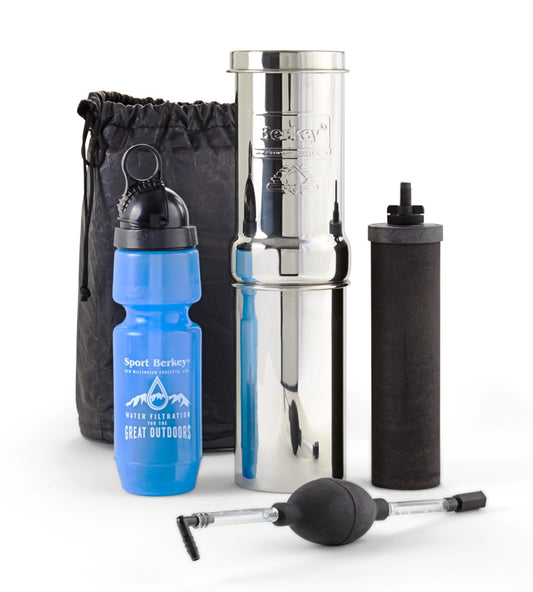
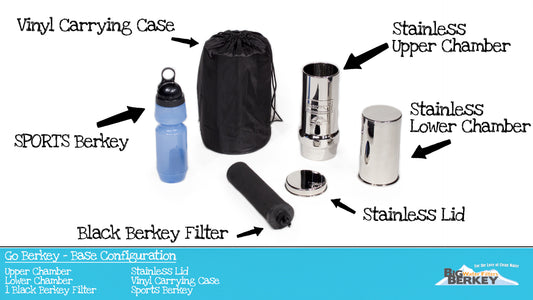
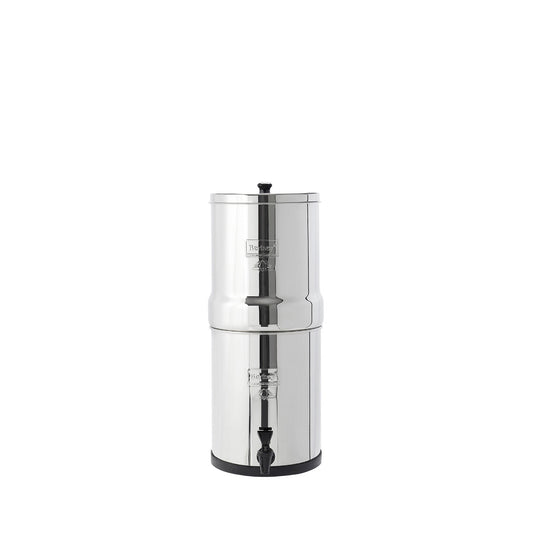
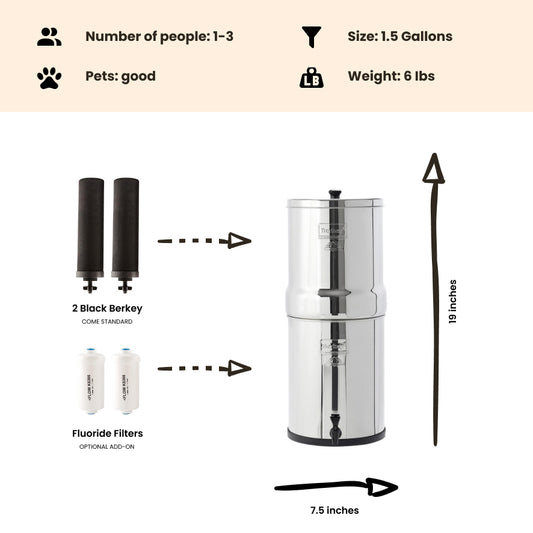
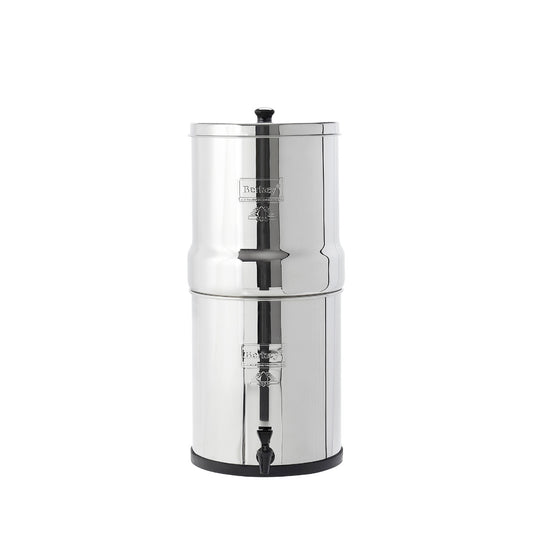
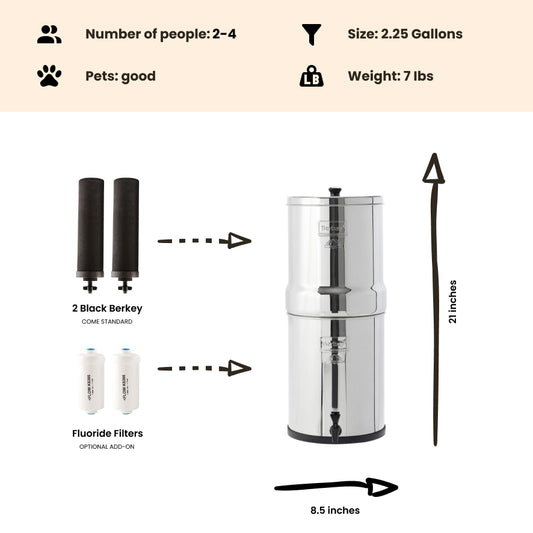
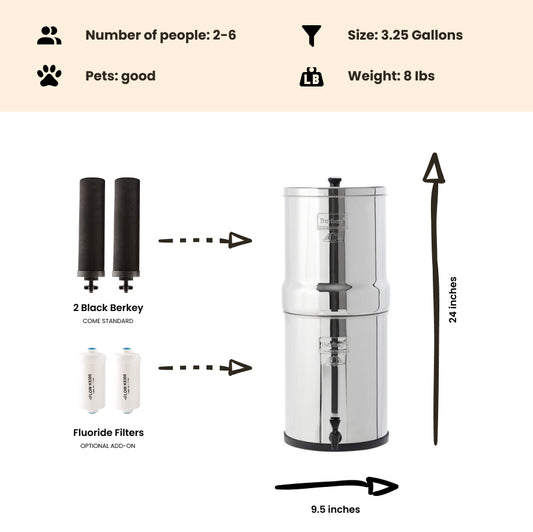
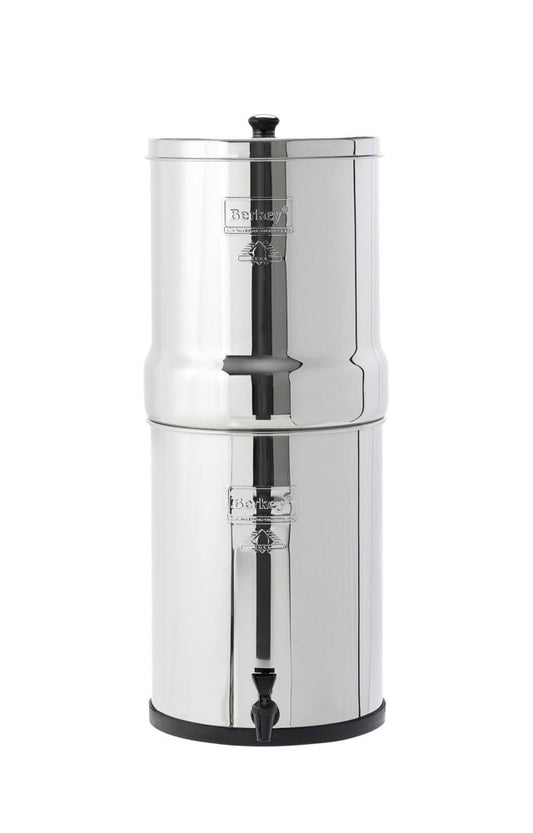
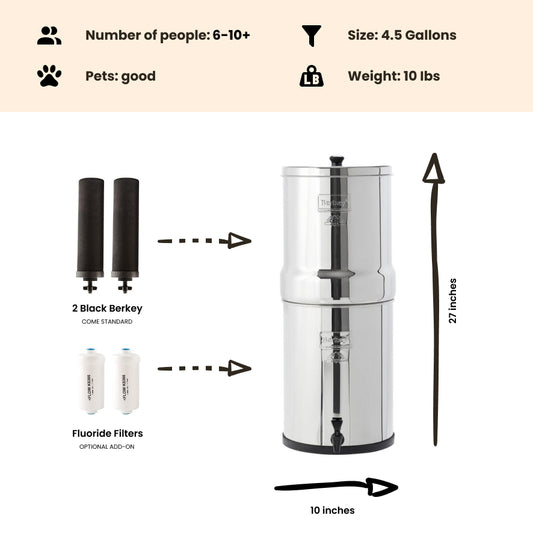
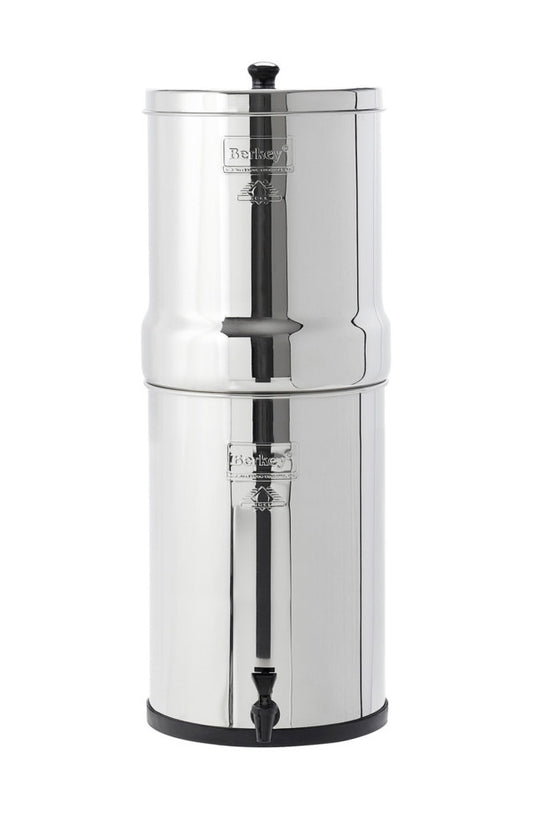
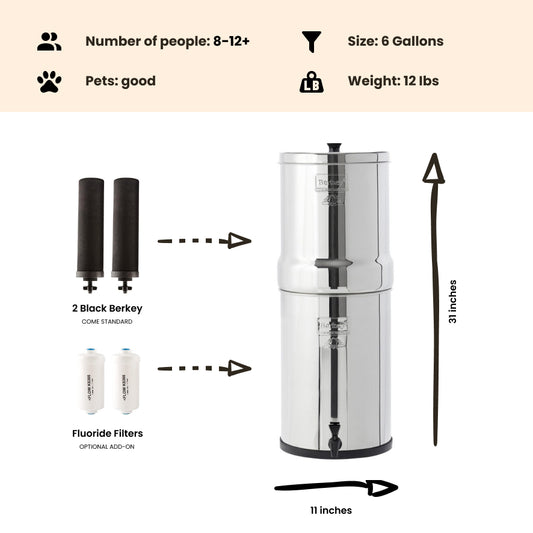
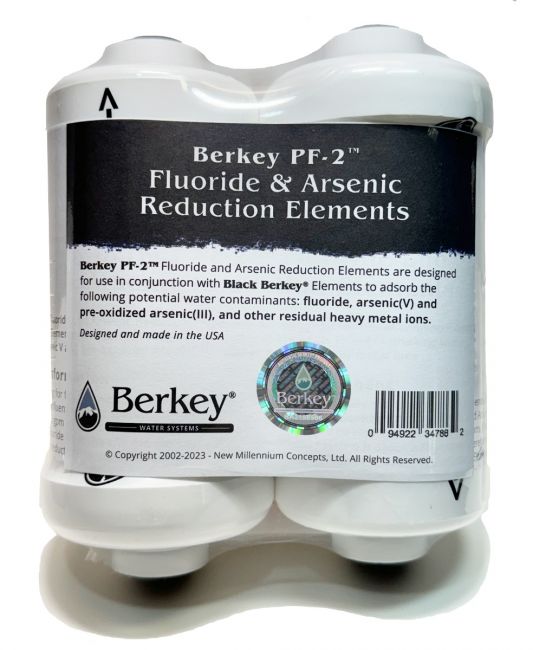
Berkey gravity systems are one option in this category. They use no plumbing or electricity and hold enough water for a household, and the Black Berkey and Berkey Phoenix Elements have been tested by independent laboratories for lead, chlorine, trihalomethanes, PFOA and PFOS, arsenic, and a long list of other chemical contaminants found in treated tap water. Those reports are published in full so you can check them against your own water test. The optional PF-2 element adds fluoride and arsenic reduction. See the complete list of what a Berkey reduces and the lab test results, then use the sizing guide to match a system to your household.
Frequently Asked Questions
Is filtered water good for you?
Yes, when the filter is matched to what is in your water. Filtering reduces lead from household plumbing, chlorine and its byproducts, PFAS, and other contaminants that municipal treatment leaves behind or cannot yet remove, and it improves taste enough that most people drink more water. Filtering does not add anything beneficial; the benefit is what it takes out.
Why do we need to filter water before drinking?
Because treatment happens at the plant and contamination can happen after it. Lead enters from pipes and fixtures inside the home, chlorine forms byproducts on the way to your tap, and some contaminants such as PFAS are not removed by conventional treatment at all. A point-of-use filter addresses the water as it actually arrives in your glass.
Is tap water safe to drink without a filter?
In most of the US, tap water meets federal standards and is safe to drink as delivered. Whether it is as clean as you want it is a separate question. Read your utility's annual Consumer Confidence Report, consider the age of your plumbing, and test a sample if you are unsure. If your utility has issued a boil-water or do-not-drink advisory, follow it; a home filter is not a substitute for that.
What does a water filter actually remove?
It depends entirely on the filter. Basic carbon pitchers reduce chlorine and taste. Better carbon-block and gravity elements are tested for lead, VOCs, disinfection byproducts, and PFAS. Fluoride and arsenic usually need a dedicated element. Reverse osmosis removes the widest range but wastes water and strips minerals. Always check for independent test results on the specific contaminant you care about.
Is filtered tap water better than bottled water?
For most people, yes. Bottled water is regulated by the FDA with lighter testing and disclosure rules than tap water, a 2024 study found an average of about 240,000 plastic particles per liter in popular brands, and it costs far more per gallon. Filtered tap water gives you control over what is removed at a small fraction of the cost and with no bottle waste.
Does filtering water remove healthy minerals?
Carbon and gravity filters generally leave dissolved minerals such as calcium and magnesium in the water. Reverse osmosis and distillation remove nearly everything, minerals included, which is why some RO systems add a remineralization stage.
How do I know which filter I need?
Start with your water quality report and, ideally, a test of your own tap. Then choose a filter with independent lab results for the contaminants that actually showed up. Buying a filter before testing usually means paying for reductions you do not need and missing the ones you do.
Sources
- US EPA, National Primary Drinking Water Regulations (limits for lead, arsenic, chlorine, TTHMs, HAA5)
- US EPA, Basic Information about Lead in Drinking Water
- US EPA, PFAS National Primary Drinking Water Regulation (April 2024)
- US EPA, PFAS Drinking Water Treatment Technology Options
- Columbia University Mailman School of Public Health, Bottled Water Can Contain Hundreds of Thousands of Nanoplastic Particles (Qian et al., PNAS, 2024)
- Big Berkey Water Filters, independent lab test results


 By
Dan DeBaun
By
Dan DeBaun