Last updated: September 2, 2026 | By Dan DeBaun
Tap water from a public system has to meet EPA safety standards when it leaves the treatment plant, but the EPA does not test the water that actually comes out of your faucet, and contaminants can still get in through aging pipes between the plant and your home. Private well water is not covered by EPA rules at all. The only way to know for certain what is in your water is to check what is already known about your source and test it yourself. This guide covers both: how to find existing water quality information for your area, how to test your own water, and what to do if you find something you would rather not drink.
Where Your Water Comes From
Water that reaches your tap starts as surface water (rivers, lakes, reservoirs) or groundwater (underground aquifers), depending on where you live. Along the way it can pick up sediment, naturally occurring metals like arsenic, agricultural runoff, industrial chemicals, and disease-causing microorganisms, plus disinfection byproducts like chlorine and chloramine added during treatment. Exposure to the more serious contaminants in this list has been linked to gastrointestinal illness, developmental and reproductive problems, and long-term health risks including cancer. Knowing what is actually in your water, rather than assuming it is fine, is the first real step toward protecting your family.
Is Municipal Tap Water Actually Safe?
Water leaving a public treatment plant has to meet EPA maximum contaminant levels, but two things complicate that guarantee. First, the EPA only monitors water at the treatment plant and at points along the distribution network, not at your kitchen faucet, so contamination from aging pipes, lead solder, or a damaged line between the plant and your home is not something the EPA is watching for you. Second, some of the maximum levels the EPA allows are higher than what many health researchers consider fully safe, and residual disinfectants like chlorine remain in the water you drink even when everything is working as designed.
If you're on a private well, none of this applies to you the way it applies to municipal customers. Well water is not regulated by the EPA at all. Testing it yourself, on a regular schedule, is the only way anyone is checking it.
How to Check What's Already Known About Your Water
Before you test anything yourself, it's worth checking what has already been documented about your water source.
The EPA's online tools
The EPA publishes online drinking water tools that let you look up known water quality issues by zip code, a hotline for local water quality questions, and dedicated guidance for private well owners.
Your Consumer Confidence Report
Public water utilities are required by law to send customers an annual Consumer Confidence Report (CCR) detailing what is in the water they supply. It's usually mailed with your water bill, but if you're on paperless billing you may need to look it up online through the EPA's CCR lookup tool. The CDC's guide to reading a CCR is useful if the report's terminology is unfamiliar.
Search for a specific contaminant
If you have a specific concern, such as chromium-6 or lead, the Environmental Working Group maintains a searchable tap water database covering utilities across the US.
How to Test Your Water Yourself
Checking existing reports tells you what your utility found at the treatment plant or in past sampling. It does not tell you what's actually coming out of your tap right now, especially if you're on a well, have older plumbing, or want to verify a filter is working. For that, you need to test the water directly.
Scroll right to see full table.
| Method |
What it's good for |
What it won't tell you |
| Drugstore test strips |
Fast, cheap check of chlorine, pH, and water hardness; a reasonable first pass |
Not lab-accurate, and most strips don't reliably detect lead, PFAS, or specific heavy metals |
| Certified home test kits |
Mail-in kits from an accredited lab, better accuracy than strips, useful for lead, arsenic, nitrates |
Still a single point-in-time sample, needs a follow-up lab test if results are borderline |
| Accredited laboratory testing |
The most reliable option, tests for the specific contaminants you request, gives you numbers you can act on |
Costs more and takes longer than a strip or home kit |
| Consumer Confidence Report |
Free, shows what your utility found at the treatment plant and in distribution testing |
Doesn't reflect anything that entered the water after it left the plant, and doesn't apply to private wells |
For anything you plan to act on, an accredited laboratory is the option worth paying for. Call the EPA's Safe Drinking Water Hotline to find a certified lab near you, request a sample kit, and follow their collection instructions exactly, since a contaminated sample container or the wrong collection method can throw off your results.
If you're on a private well: test at least once a year, since private wells aren't monitored by anyone but you. Test for nitrates, coliform indicators, and anything specific to your region (arsenic, radon, and agricultural runoff are common regional concerns) in addition to a standard panel.
Can Boiling Water Make It Safe to Drink?
It depends on what's actually in your water. Boiling reduces many disease-causing microorganisms, which is the main reason it's recommended during a boil water advisory. It does not remove heavy metals, PFAS, pesticides, or other dissolved chemicals, and boiling can actually concentrate those contaminants further as water is lost to steam. See our full breakdown of what boiling does and doesn't remove for the complete picture.
Is Tap Water Safe for Pets?
If your water is safe for you to drink, it's generally fine for your pets too. If you have any concern about what's in your water, it's worth thinking twice before giving it to them untreated. Dogs share many of the same vulnerabilities to contaminants that humans do, and cats are particularly sensitive, both to contamination and to taste, a cat that dislikes the smell or taste of its water may simply drink less than it should, which creates its own health risk. Filtered water is the safer default for pets when you're unsure about your source.
Is Hot Tap Water Safe to Drink?
No. Water from the hot tap should never be used for drinking, cooking, or mixing baby formula. Hot water dissolves lead more readily than cold water, so hot tap water can carry higher lead levels, particularly in homes with older plumbing or lead solder. Always draw water for consumption from the cold tap, and let it run for a few seconds first if the tap hasn't been used recently.
Is Bottled Water Safer Than Tap Water?
Not necessarily. Some bottled water is sourced from protected springs, but a significant share is simply filtered municipal tap water sold at a markup, and bottled water quality varies considerably between brands. Plastic bottles can leach BPA into the water, and independent testing has found microplastics in bottled water as well. See our full comparison of how tap and bottled water compare for more detail.
What to Do If Your Water Test Comes Back Contaminated
If your test results show contaminants you're not comfortable with, you have real options. Depending on what turned up, common treatment approaches include de-ironing and de-manganizing, water softening for hardness, nitrate-specific treatment, activated carbon filtration, and UV disinfection for biological contamination concerns on private wells. Which one applies depends entirely on your specific results, a lab report or a knowledgeable water treatment professional can help you match the treatment to the contaminant.
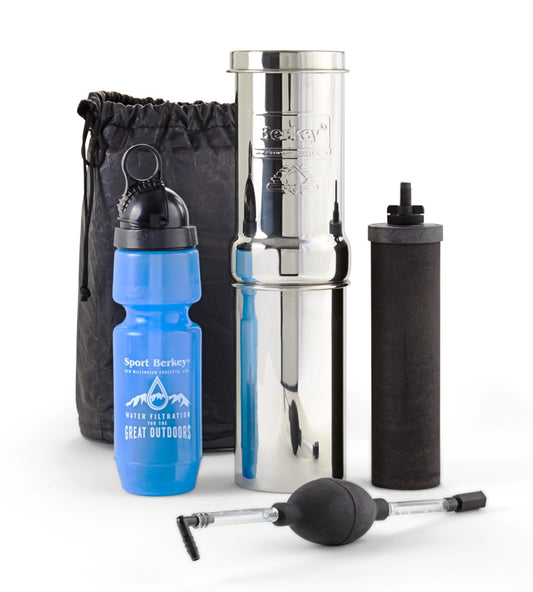
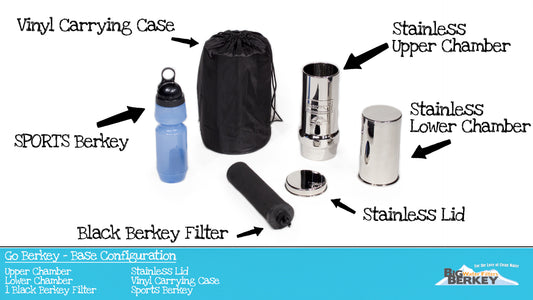
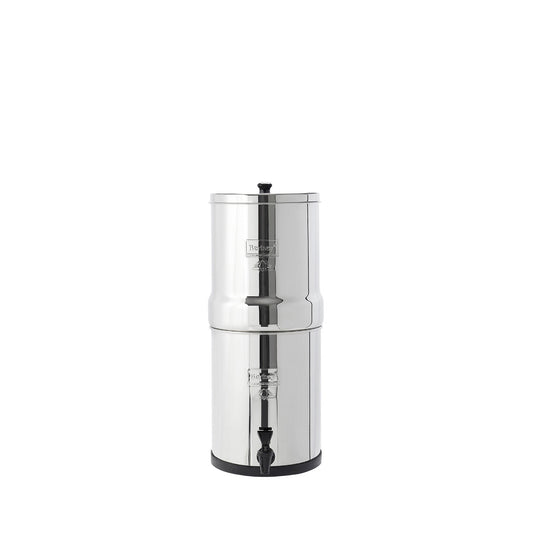
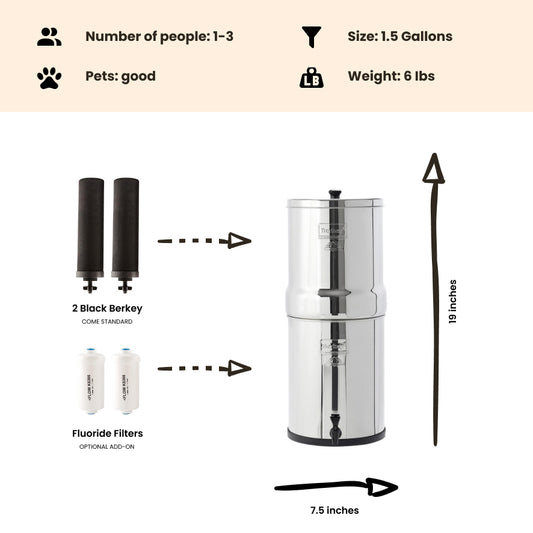
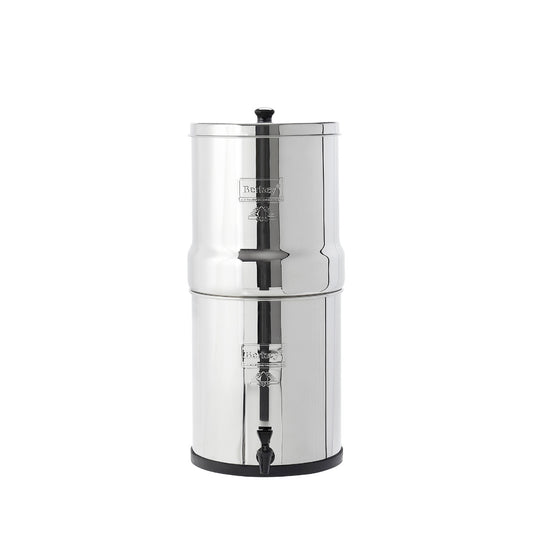
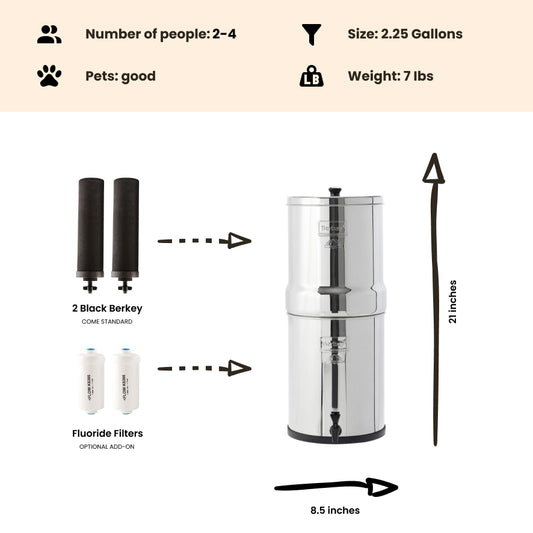
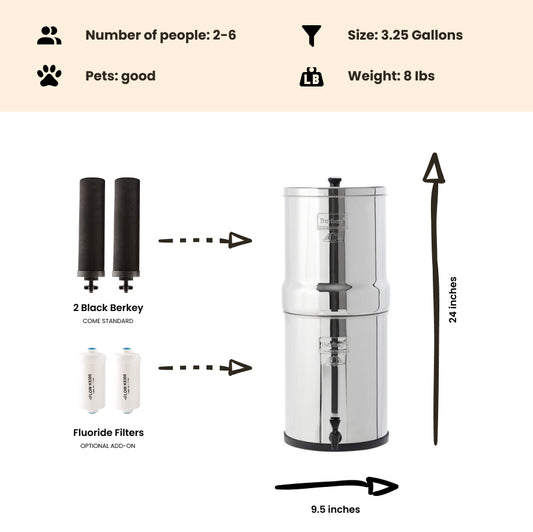
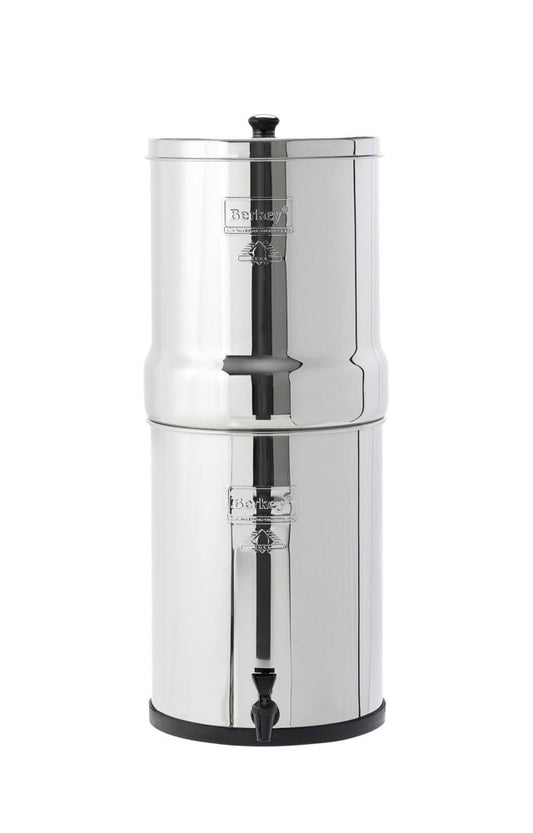
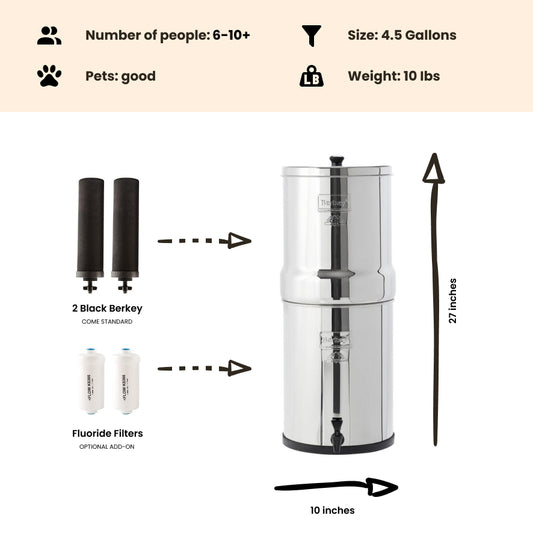
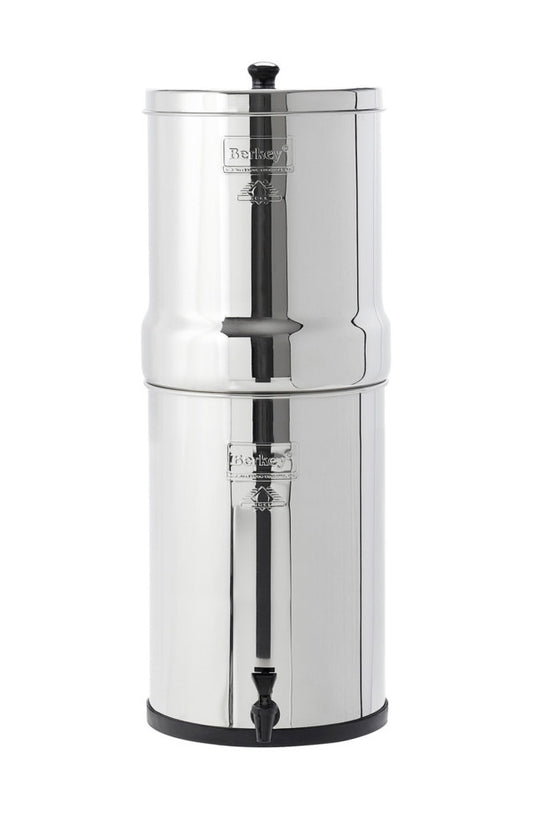
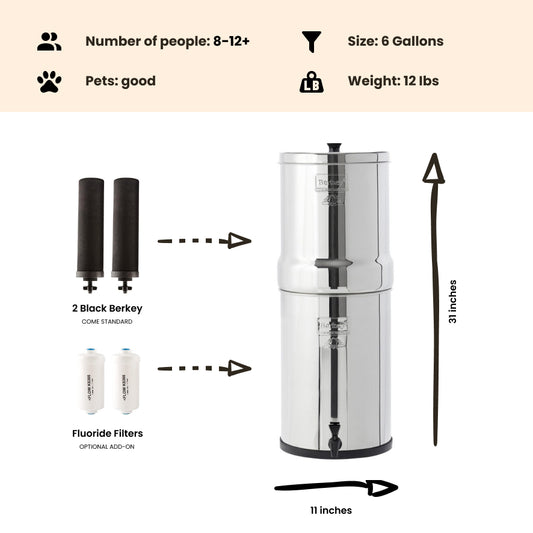
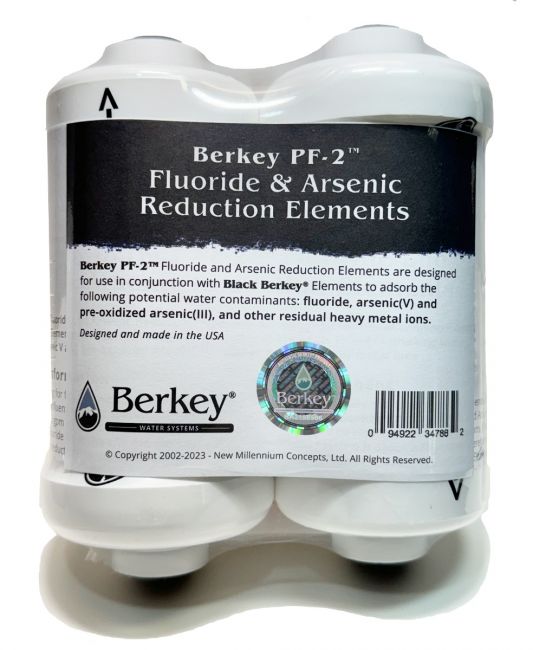
For most households, a drinking water filter with published, independent lab results is the most practical everyday solution once you know what you're dealing with. Every new Berkey system ships with Black Berkey Elements while supplies last. Black Berkey Elements are not sold as standalone replacements; the authorized replacement is the Berkey Phoenix New Millennium Edition, made by the same manufacturer and carrying NSF/ANSI 42 and NSF/ANSI/CAN 372 certification. Both element types are independently lab tested against a broad range of contaminants; see our full contaminant removal list and the underlying lab test results for exact figures. Black Berkey and Phoenix elements do not remove fluoride on their own; if fluoride is a concern, a PF-2 Fluoride and Arsenic Reduction filter set added to the lower chamber is required.
Frequently Asked Questions
Is tap water actually safe to drink?
Public water supplied by a municipal system has to meet EPA safety standards when it leaves the treatment plant, but the EPA does not monitor water quality at your faucet, and contamination can enter through pipes, plumbing, or a damaged line after that point. Whether your specific tap water is safe depends on your local system, your home's plumbing, and, if you're on a well, factors the EPA doesn't oversee at all. Checking your CCR and testing your own water are the only ways to know for certain.
How do I test if my water is safe to drink?
Start with a drugstore test strip for a fast read on chlorine, pH, and hardness. For anything you plan to act on, a certified home test kit or an accredited laboratory test is the more reliable option, especially for lead, arsenic, nitrates, or PFAS. Call the EPA's Safe Drinking Water Hotline to find an accredited lab near you.
How can I tell if my water is safe without a lab test?
You can't be fully certain without testing, but checking your utility's Consumer Confidence Report, searching the EWG's tap water database for your area, and looking for known local issues on the EPA's water quality tools will tell you what's already been documented. That's a reasonable starting point, but it isn't a substitute for testing your own water, particularly if you're on a private well.
Do I need to filter my tap water?
If your test results or CCR show contaminants you're not comfortable with, or you simply want a consistent safeguard against whatever might enter the water after it leaves the treatment plant, a certified filter is a reasonable everyday precaution. It's not strictly required if your specific results come back clean, but most households can't verify that without testing first.
Is it safe to drink hot tap water?
No. Hot water dissolves lead more readily than cold water, so hot tap water can carry higher lead levels than cold water from the same source. Always use cold water for drinking, cooking, and baby formula.
Is boiled tap water safe to drink?
Boiling reduces many disease-causing microorganisms but does not remove heavy metals, PFAS, or other chemical contaminants, and can concentrate them further as water evaporates. Boiling addresses one category of risk, not all of them.
Bottom Line
Municipal tap water has to meet EPA standards at the treatment plant, but that's not the same as knowing what comes out of your own faucet, and private well water isn't covered by EPA rules at all. Checking your CCR and the EWG database will tell you what's already documented; testing your own water, with a strip for a quick read or an accredited lab for anything you plan to act on, is the only way to know what you're actually drinking. If your results turn up something you're not comfortable with, a certified filter matched to your specific contaminants is a practical next step.


 By
Dan DeBaun
By
Dan DeBaun




Is tap water filtered through Burkey safe for infants on formula? We still intend to boil the filtered burkey water but just wondering if it is safe to use tap water at this age since it is filtered through Burkey. I would appreciate your thoughts.
Hi Janice -
Yes, the water will be purified and be safe for infant formula.
Thanks
Dan
Does your machine change the ph of water? I’m interested in this, as a person with fibromyalgia and other medical problems. Thanks!
Hi Vanessa -
The PH will be dependent on the source water PH. The berkey filters do not add anything to the water to increase the PH, they only remove acidic components that can result in a PH increase. With that being said, we cannot provide a estimated PH number for your end result filtered water. Most customers see a rise, but there is no guarantee.
Let me know if you have any other questions.
Thanks
Dan