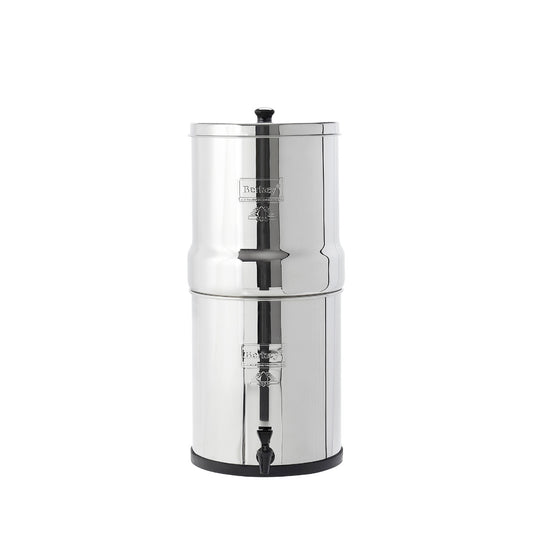
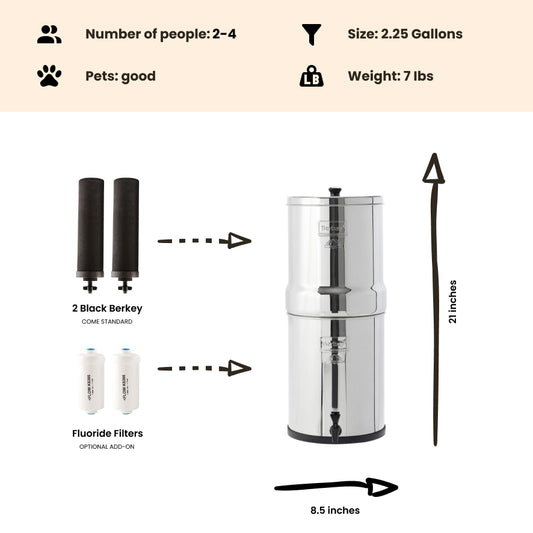
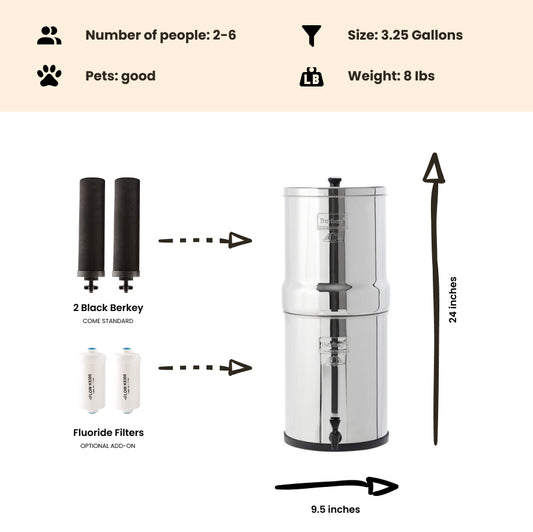
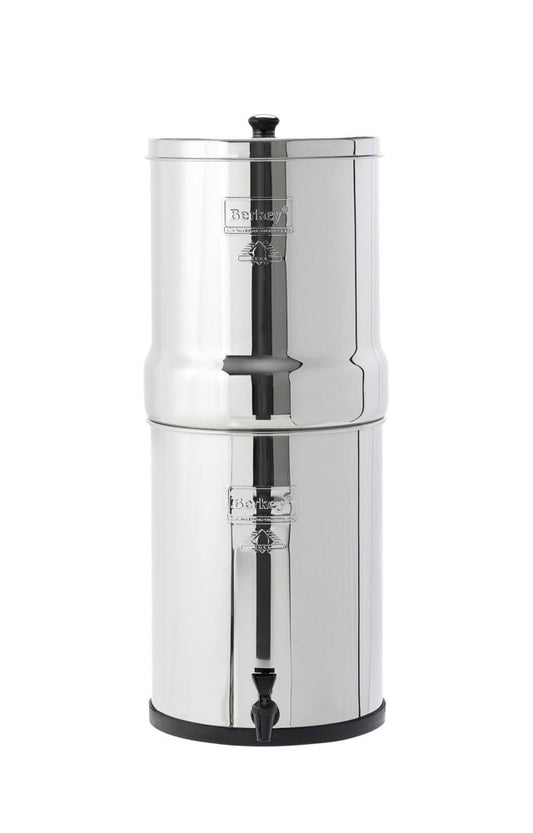
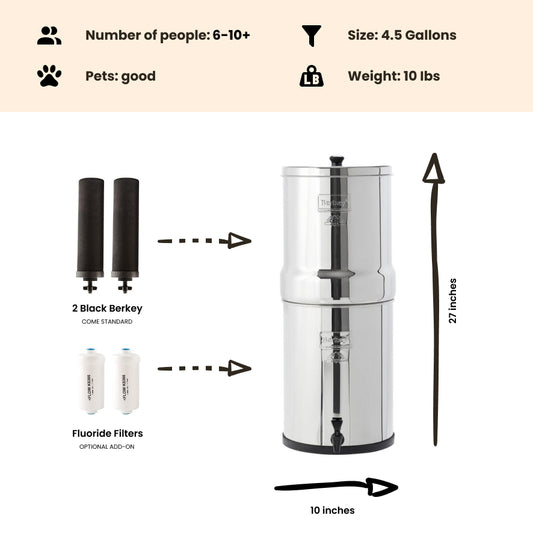
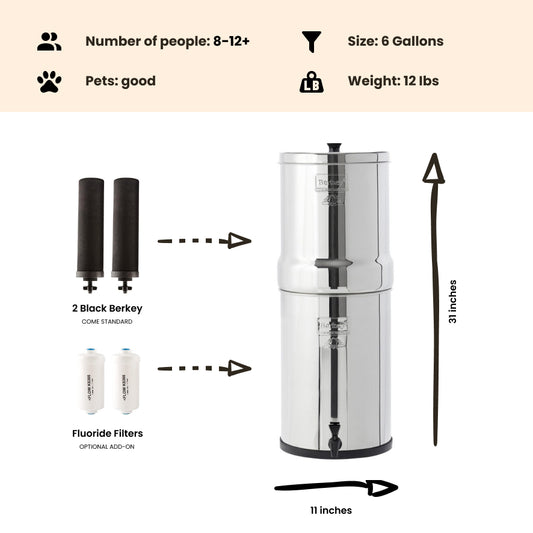
Black Berkey filter elements have been independently tested to reduce 200+ contaminants across 9 categories including PFAS forever chemicals, heavy metals, pharmaceuticals, petroleum contaminants, pesticides, VOCs, radiologicals, disinfectants, and algae toxins. All testing was conducted by independent, EPA-certified, NSF-accredited, or ISO 17025-certified third-party laboratories with no financial relationship to Berkey beyond paid testing services.
200+
Total contaminants tested across all categories
9
Contaminant categories covered by independent lab testing
5
Independent laboratories across all test series
Note on Black Berkey availability: Black Berkey filter elements are temporarily unavailable due to an EPA regulatory matter. The current in-stock replacement is the Berkey Phoenix New Millennium Edition, made by the same manufacturer, NMCL. All test data on this page refers to Black Berkey elements. For Phoenix filter element test results, see the
Phoenix lab results page.
Contaminant Categories at a Glance
Click any category to view the full article with detailed lab data, interval-by-interval results, and a downloadable PDF of the original report.
PFOA, PFOS, PFNA, PFDA, PFBS, PFHxS, PTFE, Fluorotelomer alcohol 8:2, Perfluorobutane Sulfonate. PFOA reduced to below the EPA's 4 ppt MCL.
Envirotek Laboratories, Report #16-296-PFOA, July 2016
View PFAS results
Lead, Mercury, Arsenic, Chromium VI, Cadmium, Copper, Nickel, Zinc, Iron, Manganese, Selenium, Antimony, Barium, Bismuth, Beryllium, Molybdenum, Thallium, Vanadium, Cobalt, Aluminum. Results consistent at both pH 6.5 and pH 8.5.
Envirotek Laboratories, Report #14-260, October 2014 and County of Los Angeles ETL, August 2012
View inorganic results
Ibuprofen, Acetaminophen, Naproxen Sodium, Caffeine, Carbamazepine, Ciprofloxacin HCl, Erythromycin, Trimethoprim, Sulfamethoxazole, Diclofenac Sodium, Gemfibrozil, Triclosan, Progesterone, Primidone, 4-para-Nonylphenol, 4-tert-Octylphenol, Bisphenol A (BPA).
Envirotek Laboratories, Report #14-260, October 2014
View pharmaceutical results
54 compounds including Benzene, Chloroform, Toluene, TCE, MTBE, Carbon Tetrachloride, all Dichloroethylene isomers, Ethylbenzene, Styrene, PCE, Dichloromethane, Ethylene Dibromide, DBCP, and haloacetic acids including total HAA5. Most reduced to below lab detection limits.
County of Los Angeles ETL, August 2012
View organic results
Atrazine, Simazine, Glyphosate, Chlordane, DDT, Heptachlor, Lindane, Toxaphene, PCBs, Carbofuran, Endrin, Methoxychlor, Alachlor, Molinate, 2,4-D, Silvex, Dinoseb, Oxamyl, Dieldrin, Aldrin, and 20+ additional compounds.
County of Los Angeles ETL, August 2012 and Envirotek Laboratories, Report #14-260, October 2014
View pesticide results
Gasoline, Diesel, Crude Oil, Kerosene, Mineral Spirits, Refined Oil, and Methylcyclohexane-Methane (MCHM), the industrial chemical involved in the 2014 West Virginia water contamination event.
Envirotek Laboratories, Report #14-260, October 2014
View petroleum results
Gross Alpha emitters (98.7%+): Radium-226 and -228, Uranium-235 and -238, Polonium-210, Thorium-232, Plutonium-238 and -239, Americium-241. Gross Beta emitters (95.3%+): Cesium-137, Strontium-90, Cobalt-60, Iodine-129 and -131, Technetium-99. Uranium independently tested at 97%+.
Envirotek Laboratories, Reports #16-101-GA/GB/GU, April 2016
View radiological results
Chloramines (99.9%), Free Chlorine (99.9%), Fluoride (99.9%), Chloride (99.6%), Total Chlorine (87.5%+), Nitrite (95%+), Turbidity (97.78%+), MBAS (96.67%+).
Envirotek Laboratories, Report #14-260, October 2014 and County of Los Angeles ETL, August 2012
View disinfectant results
Microcystin LR toxin reduced to non-detectable levels (below 0.15 ppb) from an influent of 42 ppb. Microcystis algae cells reduced from 1,100,000 cells/mL to below 1 cell/mL. Both elements A and B passed independently.
BCS Laboratory, ISO 17025:2005 and NELAP/TNI accredited, August 2018
View algae toxin results
Complete Compound List by Category
The table below lists every compound tested across all Black Berkey independent lab reports. Each result links to the full article and downloadable PDF for that test series.
Scroll to see full table
| Contaminant |
Reduction Rate |
Lab and Report |
| PFAS and Forever Chemicals |
| PFOA (Perfluorooctanoic Acid) |
>99.9% (to below 2 ppt) |
Envirotek #16-296-PFOA |
| PFOS (Perfluorooctane Sulfonate) |
>99.9% |
Envirotek #16-296-PFOA (surrogate) |
| PFNA (Perfluorononanoic Acid) |
>99.9% |
Envirotek #16-296-PFOA (surrogate) |
| PFDA (Perfluorodecanoic Acid) |
>99.9% |
Envirotek #16-296-PFOA (surrogate) |
| PFBS (Perfluorobutane Sulfonate) |
>99.9% |
Envirotek #16-296-PFOA (surrogate) |
| PFHxS (Perfluorohexane Sulfonate) |
>99.9% |
Envirotek #16-296-PFOA (surrogate) |
| PFHxA (Perfluorohexanoic Acid) |
>99.9% |
Envirotek #16-296-PFOA (surrogate) |
| PTFE (Polytetrafluoroethylene) |
>99.9% |
Envirotek #16-296-PFOA (surrogate) |
| Fluorotelomer Alcohol 8:2 (FTOH) |
>99.9% |
Envirotek #16-296-PFOA (surrogate) |
| Heavy Metals |
| Lead |
>99.9% |
Envirotek #14-260 and #16-101-Pb |
| Mercury |
>99.9% |
Envirotek #14-260 |
| Arsenic |
>99.9% |
Envirotek #14-260 |
| Chromium VI (Hexavalent) |
>99.8% |
LA ETL E1201232001 |
| Chromium |
>99.9% |
Envirotek #14-260 |
| Cadmium |
>99.7% |
Envirotek #14-260 |
| Copper |
>99.9% |
Envirotek #14-260 |
| Iron |
>99.9% |
Envirotek #14-260 |
| Zinc |
>99.9% |
Envirotek #14-260 |
| Manganese |
>99.9% |
Envirotek #14-260 |
| Nickel |
>99.9% |
Envirotek #14-260 |
| Selenium |
>99.9% |
Envirotek #14-260 |
| Antimony |
>99.9% |
Envirotek #14-260 |
| Beryllium |
>99.9% |
Envirotek #14-260 |
| Bismuth |
>99.9% |
Envirotek #14-260 |
| Aluminum |
>99.1% |
Envirotek #14-260 |
| Thallium |
>99.5% |
LA ETL E1201232001 |
| Barium |
>80.0% |
LA ETL E1201232001 |
| Cobalt |
>95.0% |
LA ETL E1201232001 |
| Molybdenum |
>90.0% |
LA ETL E1201232001 |
| Vanadium |
>87.5% |
LA ETL E1201232001 |
| Pharmaceuticals and Emerging Contaminants |
| Acetaminophen |
>99.5% |
Envirotek #14-260 |
| Ibuprofen |
>99.5% |
Envirotek #14-260 |
| Naproxen Sodium |
>99.5% |
Envirotek #14-260 |
| Caffeine |
>99.5% |
Envirotek #14-260 |
| Carbamazepine |
>99.5% |
Envirotek #14-260 |
| Ciprofloxacin HCl |
>99.5% |
Envirotek #14-260 |
| Erythromycin USP |
>99.5% |
Envirotek #14-260 |
| Trimethoprim |
>99.5% |
Envirotek #14-260 |
| Sulfamethoxazole |
>99.5% |
Envirotek #14-260 |
| Diclofenac Sodium |
>99.5% |
Envirotek #14-260 |
| Gemfibrozil |
>99.5% |
Envirotek #14-260 |
| Triclosan |
>99.5% |
Envirotek #14-260 |
| Progesterone |
>99.5% |
Envirotek #14-260 |
| Primidone |
>99.5% |
Envirotek #14-260 |
| 4-para-Nonylphenol |
>99.5% |
Envirotek #14-260 |
| 4-tert-Octylphenol |
>99.5% |
Envirotek #14-260 |
| Bisphenol A (BPA) |
>99.5% |
Envirotek #14-260 |
| Petroleum Contaminants |
| Gasoline |
>99.9% |
Envirotek #14-260 |
| Diesel |
>99.9% |
Envirotek #14-260 |
| Crude Oil |
>99.9% |
Envirotek #14-260 |
| Kerosene |
>99.9% |
Envirotek #14-260 |
| Mineral Spirits |
>99.9% |
Envirotek #14-260 |
| Refined Oil |
>99.9% |
Envirotek #14-260 |
| Methylcyclohexane-Methane (MCHM) |
>99.9% |
Envirotek #14-260 |
| Disinfectants and Inorganic Non-Metals |
| Chloramines |
>99.9% |
Envirotek #14-260 |
| Free Chlorine |
>99.9% |
Envirotek #14-260 |
| Fluoride |
>99.9% |
Envirotek #14-260 |
| Chloride |
>99.6% |
Envirotek #14-260 |
| Total Chlorine |
>87.5% |
LA ETL E1201232001 |
| Nitrite |
>95.0% |
LA ETL E1201232001 |
| Turbidity |
>97.8% |
LA ETL E1201232001 |
| MBAS (Methylene Blue Active Substances) |
>96.7% |
LA ETL E1201232001 |
| Radiologicals |
| Gross Alpha (100.5 pCi/L influent) |
>98.7% |
Envirotek #16-101-GA |
| Gross Beta (100.1 pCi/L influent) |
>95.3% |
Envirotek #16-101-GB |
| Uranium (49.1 µg/L influent) |
>97.0% |
Envirotek #16-101-GU |
| Algae Toxins |
| Microcystin LR Toxin |
>99.7% (non-detectable) |
BCS Laboratory, 2018 |
| Microcystis Algae Cells |
>99.9999% |
BCS Laboratory, 2018 |
| Volatile Organic Compounds (VOCs): 54 compounds, all reduced to below or near lab detection limits |
| Benzene |
>99.8% |
LA ETL E1201232001 |
| Chloroform |
>99.8% |
LA ETL E1201232001 |
| Toluene |
>99.8% |
LA ETL E1201232001 |
| TCE (Trichloroethylene) |
>99.8% |
LA ETL E1201232001 |
| PCE (Tetrachloroethylene) |
>99.8% |
LA ETL E1201232001 |
| Carbon Tetrachloride |
>99.8% |
LA ETL E1201232001 |
| MTBE |
>99.6% |
LA ETL E1201232001 |
| Total Xylenes |
>99.8% |
LA ETL E1201232001 |
| Ethylbenzene |
>99.8% |
LA ETL E1201232001 |
| Styrene |
>99.8% |
LA ETL E1201232001 |
| Dichloromethane (Methylene Chloride) |
>99.8% |
LA ETL E1201232001 |
| Ethylene Dibromide (EDB) |
>99.98% |
LA ETL E1201232001 |
| DBCP (Dibromochloropropane) |
>99.99% |
LA ETL E1201232001 |
| Bromoform |
>99.8% |
LA ETL E1201232001 |
| Bromodichloromethane |
>99.8% |
LA ETL E1201232001 |
| Dibromochloromethane |
>99.8% |
LA ETL E1201232001 |
| Freon 113 (Trichlorotrifluoroethane) |
>96.0% |
LA ETL E1201232001 |
| 1,2-Dichloroethane |
>99.8% |
LA ETL E1201232001 |
| 1,1-Dichloroethylene |
>99.8% |
LA ETL E1201232001 |
| 1,2-Dichloropropane |
>99.8% |
LA ETL E1201232001 |
| Haloacetic Acids (HAA5, total) |
>98.0% |
LA ETL E1201232001 |
| + 33 additional VOCs, pesticides, and halogenated compounds tested in the same series. See full article for complete list. |
| Pesticides and Herbicides (selected, 40+ compounds total) |
| Atrazine |
>99.9% |
Envirotek #14-260 |
| Glyphosate |
>75.0% (instrument floor) |
LA ETL E1201232001 |
| Chlordane |
>99.9% |
Envirotek #14-260 |
| DDT (4,4') |
>99.9% |
Envirotek #14-260 |
| Heptachlor |
>99.9% |
Envirotek #14-260 |
| Simazine |
>99.9% |
Envirotek #14-260 |
| Lindane (Gamma-BHC) |
>99.9% |
Envirotek #14-260 |
| PCBs (Aroclors) |
>99.9% |
Envirotek #14-260 |
| Toxaphene |
>99.9% |
Envirotek #14-260 |
| 2,4-D |
>90.1% |
LA ETL E1201232001 |
| Endrin |
>99.9% |
Envirotek #14-260 |
| Carbofuran |
>99.9% |
Envirotek #14-260 |
| + 28 additional pesticide and herbicide compounds. See full article for complete list. |
Important note on reported reduction percentages: All reduction percentages are minimums, not maximums. In most cases, post-filtration results fell at or below the laboratory instrument reporting limit, meaning the actual concentration could not be measured by the equipment. The glyphosate result of greater than 75% reflects the laboratory instrument sensitivity floor, not a performance ceiling. Actual reduction across all categories may be higher than the figures listed.
Frequently Asked Questions
How many contaminants does Black Berkey reduce?
Black Berkey elements have been independently tested against 200+ contaminants across 9 categories: PFAS, heavy metals, pharmaceuticals, petroleum contaminants, disinfectants, pesticides and herbicides, volatile organic compounds, radiologicals, and algae toxins. All testing was conducted by independent, EPA-certified, NSF-accredited, or ISO 17025-certified third-party laboratories.
Does Black Berkey remove PFAS?
Yes. PFOA was directly tested at 99.9%+ reduction, bringing levels to below 2 ppt, under the EPA's enforceable 4 ppt MCL finalized in April 2024. Eight additional PFAS compounds including PFOS, PFNA, PFBS, and PFHxS were evaluated via surrogate methodology using PFOA as the reference compound, all at 99.9%+. Full results are on the PFAS results page.
Does Black Berkey reduce lead?
Yes. Independent testing by Envirotek Laboratories confirmed 99.9%+ lead reduction maintained through 160 gallons at an influent concentration of 1,000 µg/L, which is 67 times the EPA action level. Reduction remained at 99%+ through all 200 gallons tested, with all results meeting EPA requirements. Full results are on the lead results page.
Does Black Berkey reduce chloramines?
Yes. Chloramines were reduced by 99.9% in independent testing by Envirotek Laboratories. Many water utilities have switched from chlorine to chloramines for disinfection. Standard carbon filters are often less effective at reducing chloramines, making this a notable result.
What labs conducted Black Berkey testing?
Testing was conducted by five independent laboratories with no financial affiliation to Berkey beyond paid testing services: the County of Los Angeles Environmental Toxicology Laboratory (California State DHS certified), Envirotek Laboratories of New Jersey (EPA ID #NJ01298), and BCS Laboratory (ISO 17025:2005, NELAP/TNI accredited). All methods used are EPA-approved protocols for drinking water analysis.
Where are the original lab reports?
Every lab report referenced on this page is available as a downloadable PDF. Visit the Berkey Test Results page to access all reports by category, or click any category link above to go directly to the full article and PDF download for that test series.
Are Black Berkey filters still available?
Black Berkey elements are temporarily unavailable due to an EPA regulatory matter. The current in-stock replacement is the Berkey Phoenix New Millennium Edition, made by the same manufacturer, NMCL. Phoenix elements are a direct drop-in replacement for any existing Berkey system. See the Phoenix Complete Contaminant List for the full contaminant breakdown, or the Phoenix lab results page for original test reports.


 By
Dan DeBaun
By
Dan DeBaun