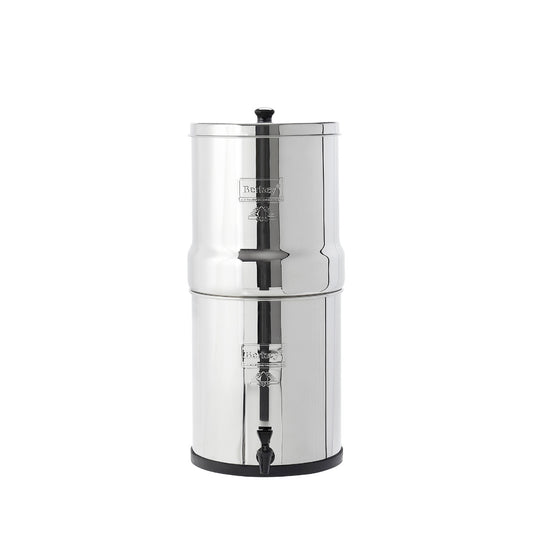
Chlorine is added to most municipal drinking water supplies to reduce disease-causing microorganisms, but it comes with tradeoffs: an unpleasant taste and smell, dryness and irritation for skin and eyes, and disinfection byproducts such as trihalomethanes (THMs) that form when chlorine reacts with organic matter already in the water. A gravity-fed filter such as Berkey can reduce chlorine and its byproducts to below detectable limits, without electricity or plumbing.
Quick answer: Yes, Berkey systems fitted with Black Berkey Elements or the newer Berkey Phoenix Element reduce chlorine and chlorine byproducts, such as THMs, to below detectable limits, along with 200+ other tested contaminants. The right model depends on household size and whether you also want chlorine reduction in shower water, which requires a separate shower filter.
Why Chlorine in Tap Water Is Worth Filtering Out
Chlorine gives tap water a chemical taste and smell, can dry out skin and hair, and irritate eyes and the respiratory tract for sensitive individuals. It also reacts with organic compounds naturally present in water to form disinfection byproducts, including trihalomethanes such as chloroform. Some studies have linked long-term exposure to elevated levels of these byproducts to increased health risks, which is part of why filtering chlorinated water is worth considering even though municipal chlorination itself plays an important role in reducing disease-causing microorganisms in the water supply.
Many utilities also use chloramine (a combination of chlorine and ammonia) instead of or alongside chlorine, since it is more stable in the distribution system. Chloramine forms its own set of byproducts and is harder for many carbon-based filters to reduce than chlorine alone, so it's worth checking your local water quality report to see which disinfectant your utility uses before choosing a filter.
A Good Chlorine Filter Handles
- Chlorine, reduced to below detectable limits
- Disinfection byproducts such as THMs
- Taste and odor improvement
- Chloramine, if the filter has published test data for it
Worth Checking Before You Buy
- Whether the filter is tested against byproducts, not just chlorine itself
- Whether it also reduces heavy metals and other contaminants you may have
- Flow rate and storage capacity for your household size
- Whether you need a separate filter for shower water
How Berkey Filters Reduce Chlorine and Its Byproducts
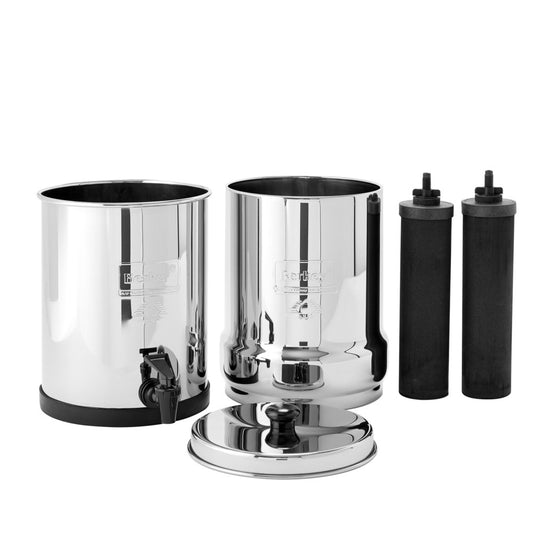
Every new Berkey system ships with Black Berkey Elements while supplies last, and the authorized replacement is the Berkey Phoenix Element, an NSF/ANSI 42 and NSF/ANSI/CAN 372 certified element made by the same manufacturer. Both element types use gravity flow rather than pressurized filtration, which gives water more contact time with the filter media, a key reason gravity filters can reduce such a broad range of contaminants including chlorine and its byproducts to below detectable limits. Both are independently tested across 200+ contaminants, from heavy metals to pharmaceuticals to VOCs; see our full contaminant breakdown for the complete lab-tested list.
Chlorine reduction in the shower is a separate consideration, since showering exposes you to chlorine through both skin absorption and inhalation of vaporized byproducts in steam. A dedicated Berkey Shower Filter uses KDF/Redox media designed specifically for that use case and is not interchangeable with the gravity system elements.
Choosing the Right Chlorine Water Filter
-
Byproduct coverage: Confirm the filter is tested against THMs and other byproducts, not just chlorine itself.
-
Broader contaminant reduction: A filter that only targets chlorine leaves you exposed to whatever else may be in your water. Check your utility's Consumer Confidence Report or the EWG tap water database to see what else may be present locally.
-
Capacity and flow rate: Match the system size and flow rate to your household. Larger families need more storage or a faster-flowing setup.
-
Long-term cost: Compare cost per gallon over the life of the filter elements, not just the upfront price.
-
Portability: If you want chlorine reduction while traveling, at a second home, or in a rental, a gravity system requires no power or plumbing, which is a meaningful advantage over pressurized filters.
Best Berkey Systems for Chlorine Reduction
Scroll table to see all columns
| Use Case |
Recommended System |
Why |
| Countertop, 1-4 people |
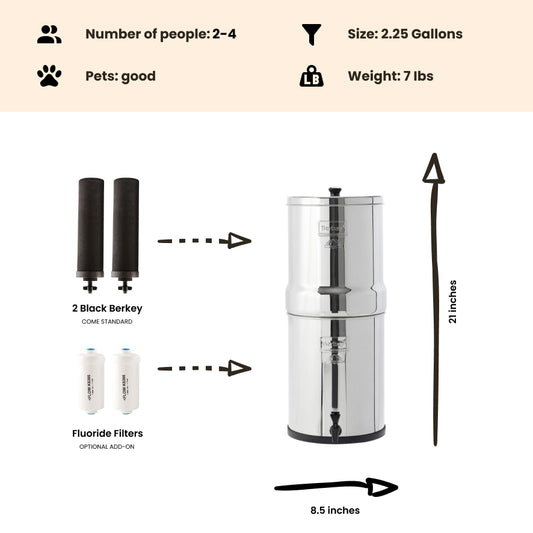
Big Berkey |
2.25 gallon capacity, the most popular all-around size |
| Larger household, 2-6 people |
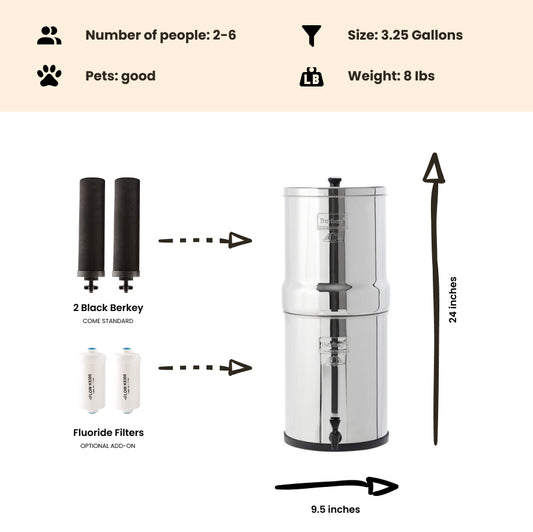
Royal Berkey |
3.25 gallon capacity for higher daily demand |
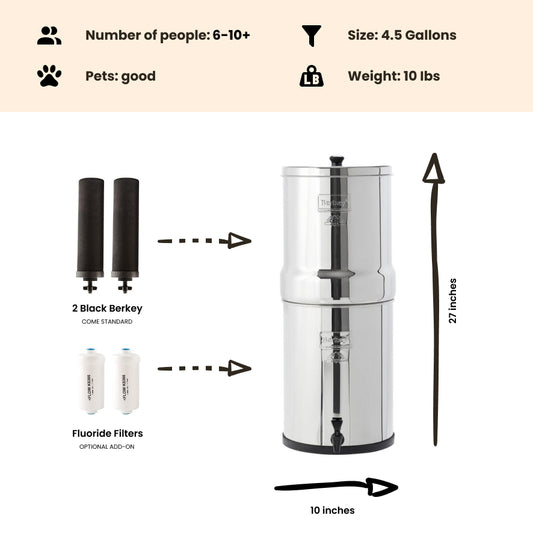
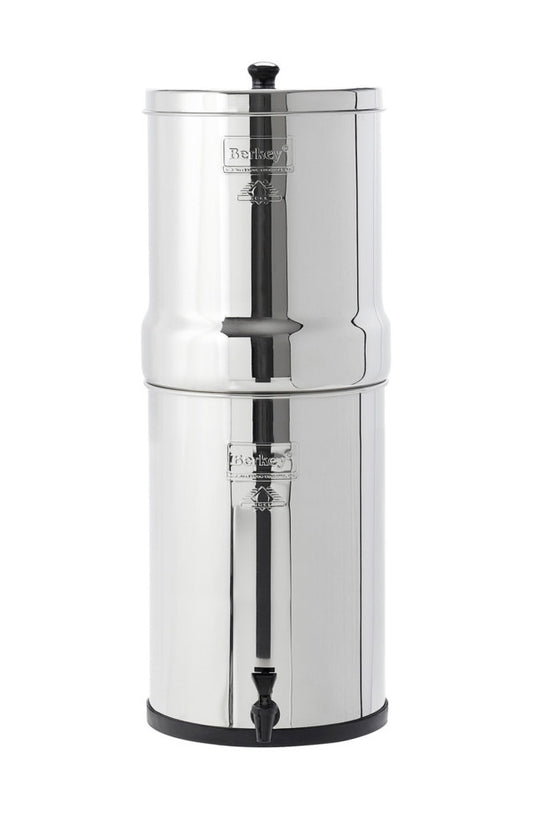
| Large family or groups, 6-10+ people |
Imperial Berkey |
4.5 gallon capacity for heavy daily use |
| Travel, second homes, small households |
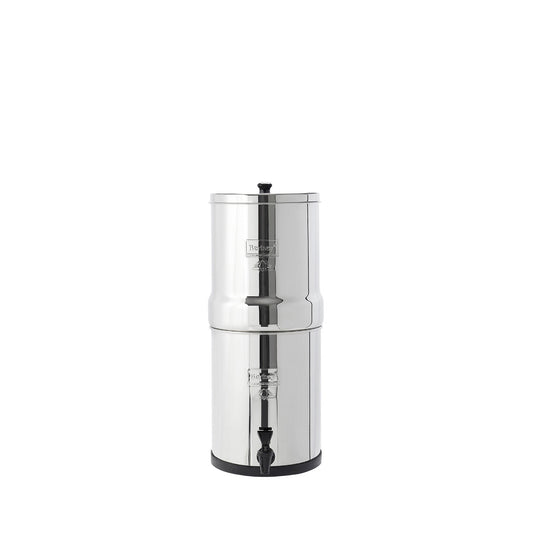
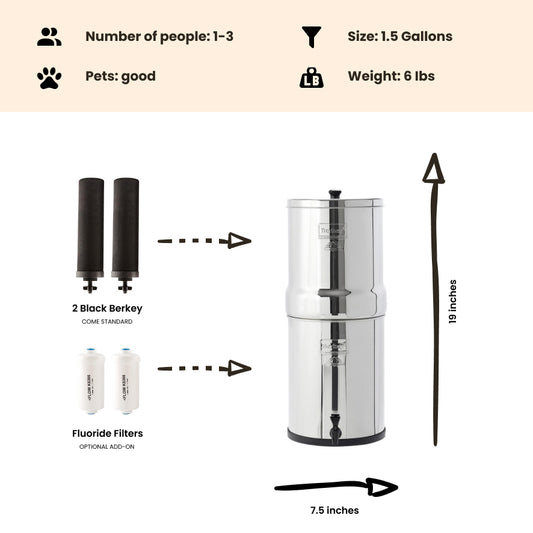
Travel Berkey |
1.5 gallons, compact and fully portable |
| Single-person, ultra-portable |
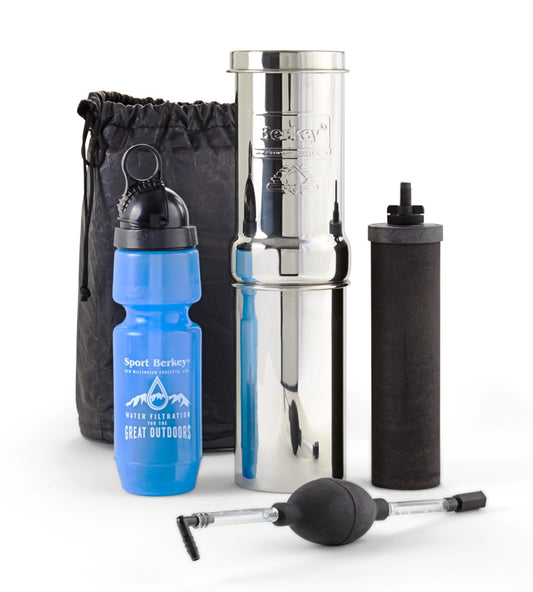
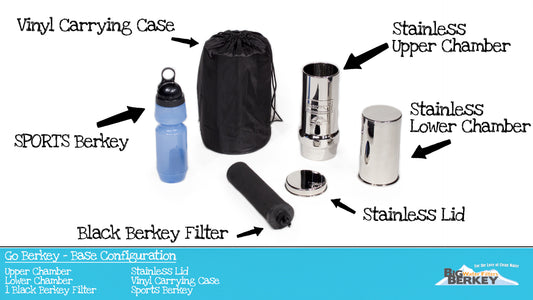
Go Berkey Kit |
Compact gravity kit plus a refillable filtered water bottle |
| Shower water |
Berkey Shower Filter |
Dedicated KDF/Redox shower media, separate from drinking water elements |
If you're unsure which size fits your household, our full sizing guide walks through capacity and flow rate by household size in more detail.
FAQ
Does a Berkey water filter remove chlorine?
Yes. Berkey systems fitted with Black Berkey Elements or the Berkey Phoenix Element reduce chlorine to below detectable limits, along with disinfection byproducts such as THMs that form when chlorine reacts with organic matter in the water.
Does a Berkey filter remove chloramine as well as chlorine?
Yes, and it is lab tested rather than assumed. Chloramine is generally harder for filter media to reduce than chlorine alone, but both Berkey elements have published results for it: independent testing of the Black Berkey Element (Envirotek Laboratories, report 14-260) reduced chloramines from 3.2 mg/L to below 0.1 mg/L, a 99.9% reduction, and the Berkey Phoenix Element was tested at 3.02 mg/L to below 0.1 mg/L, also 99.9%+. The full reports are on our test results page. If your utility uses chloramine, check your local water quality report for the level so you know what you are starting from.
Why does chlorinated water need to be filtered if chlorine keeps water safe?
Chlorination plays an important role in reducing disease-causing microorganisms in municipal water supplies. The tradeoff is that chlorine itself affects taste and can irritate skin and eyes, and it reacts with organic matter in the water to form byproducts like THMs. Filtering after treatment lets you keep the safety benefit of municipal disinfection while reducing the chlorine and byproducts that remain in your tap water.
Which Berkey system is best for a family of four?
The Big Berkey (2.25 gallons) is the most popular choice for a household of one to four people. Larger families or households with higher daily water use should consider the Royal Berkey (3.25 gallons) or Imperial Berkey (4.5 gallons).
Do I need a separate filter to remove chlorine from shower water?
Yes. A gravity drinking water system does not treat your shower line. A dedicated shower filter, such as the Berkey Shower Filter, uses KDF/Redox media built specifically to reduce chlorine in shower water and installs between your shower arm and shower head.
Is a portable chlorine filter available for travel?
Yes. The Go Berkey Kit and Travel Berkey are both fully portable, gravity-fed options that require no electricity or plumbing, making them practical for travel, second homes, rentals, and apartments.
Reduce Chlorine and 200+ Other Contaminants
Find the right Berkey system for your household and see the full lab-tested contaminant list.


 By
Dan DeBaun
By
Dan DeBaun